

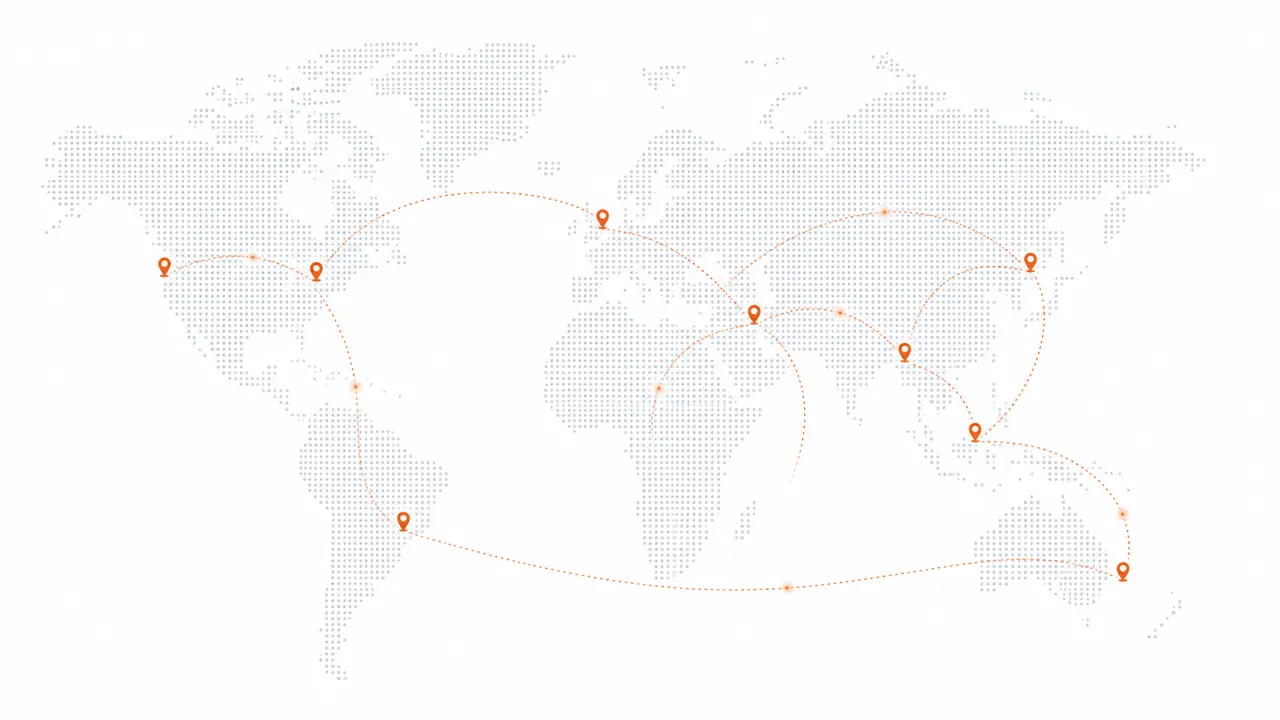
Oceania freight coordination
Australia and New Zealand are economically significant but geographically remote. They maintain strict biosecurity and environmental regulations. We navigate AQIS quarantine requirements, New Zealand import standards, and Pacific trade partnerships with expertise built from operational experience.
Oceania documented coverage markets.
Each country page carries ports, airports, documents, customs notes and the operating context behind the lane.
Complete logistics solutions for Oceania
Industries that drive Oceania
Mining & Resources
Australia: iron ore, gold, coal, lithium. Project cargo and bulk commodity logistics.
View industryAgriculture & Food
NZ dairy, meat exports; AU wine, fruit. Strict biosecurity and cold chain management.
View industryFMCG & Consumer Goods
Growing e-commerce market. Inbound machinery and equipment for growing manufacturing.
View industryInside the main Oceania markets.
Australia
Ports: Sydney, Melbourne, Brisbane, Fremantle, Port Adelaide
Airports: SYD Sydney, MEL Melbourne, BNE Brisbane, PER Perth
Key Products: Minerals, agricultural exports, machinery imports, industrial goods
Customs: AQIS (biosecurity), ABF, import duties, strict quarantine protocols
New Zealand
Ports: Auckland, Tauranga, Lyttelton, Wellington
Airports: AKL Auckland, CHC Christchurch
Key Products: Dairy, meat, wine, forestry, kiwifruit exports
Customs: MAF (Ministry for Primary Industries), strict phytosanitary standards
Pacific Islands & Oceania
Hubs: Fiji, Samoa, Vanuatu, Solomon Islands, Papua New Guinea
Trade: Regional consolidation, regional distribution center
Customs: Local authorities, PACER Plus, regional trade agreements
How cargo moves in and out of Oceania.
USA → Australia/NZ
Transit: 14–20 days | Destinations: Sydney, Melbourne, Auckland
Machinery, equipment, technology. AQIS compliance, FTA benefits, and US-Australia carrier access.
Australia → USA
Transit: 14–20 days | Origins: Sydney, Melbourne → Los Angeles, Houston
Minerals, wines, agricultural products. Export quarantine clearance and FDA compliance.
Asia → Australia/NZ
Transit: 5–10 days | Origins: Shanghai, Singapore → Sydney, Auckland
Electronics, consumer goods, manufactured products. Regional supply chain consolidation.
Intra-Pacific Distribution
Transit: 2–10 days | Corridors: Australia/NZ to Pacific Islands
Regional distribution hub logistics with customs coordination across multiple jurisdictions.
Rules that shape Oceania freight.
AQIS Quarantine & Biosecurity
Australian Quarantine & Inspection Service (AQIS) is one of the world's strictest. All agricultural, plant, and animal products require pre-clearance documentation. Our licensed broker partners prepare this paperwork to reduce the risk of holds.
New Zealand MAF Standards
Ministry for Primary Industries maintains rigorous import standards. Phytosanitary certificates, wood fumigation, packaging requirements — each product category has specific rules that our licensed broker partners handle.
FTA Benefits & Tariff Optimization
US-Australia FTA, CPTPP, and various regional agreements offer tariff savings. Correct certificates of origin and documentation are what unlock that preferential access.
Regional Trade Coordination
Pacific Islands operate under regional agreements like PACER Plus. Customs coordination across multiple jurisdictions needs brokers working in each one.
Oceania freight questions, answered.
Local constraints, service coverage and how to turn a regional plan into a quote.
Need a route plan for Oceania?
Send the lane, cargo and timeline. We will confirm the route options, documentation needs and all-in quote from the same operating thread.
Request a quote
Share the route, cargo and timing so the quote can state its scope and exclusions.
Start a quoteTalk on WhatsApp
Fastest channel for a route question, quote follow-up or urgent shipment check.
Open WhatsAppEmail the team
For attachments, RFQs or shipment context that needs a written trail.
contact@suaidglobal.com