

Send the lane and cargo
Origin, destination, commodity, volume, Incoterm and the timing you are working to.
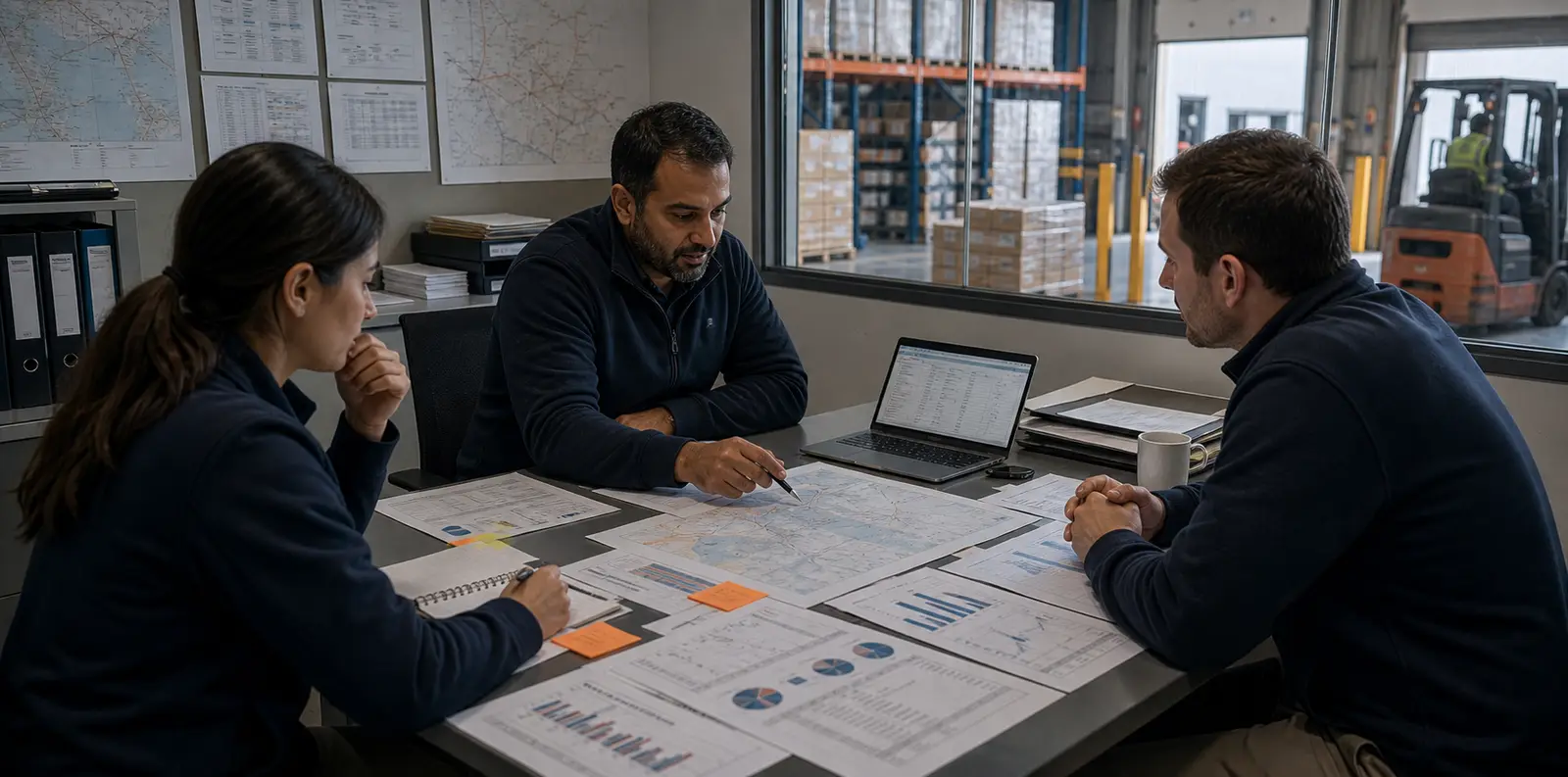
Route analysis, landed-cost modelling, carrier strategy and KPI discipline for teams that need decisions backed by real logistics operations.
Suaid Global connects route strategy to quoting, documents, customs, warehousing and carrier options, so recommendations can move from analysis into execution.
Freight rate, duties, fees, drayage, inventory timing and delay risk need to sit in one model before a route can be judged.
Reduce supply chain costs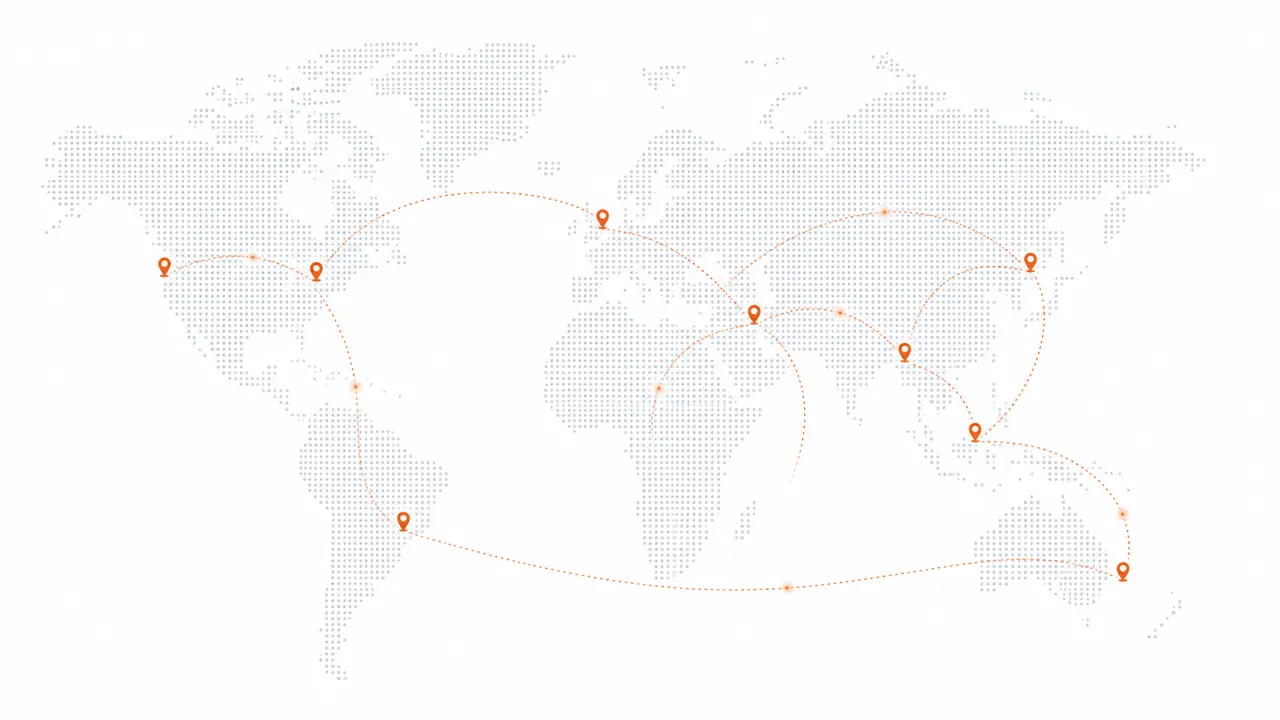

A strong network is not a single preferred carrier. It is a mix of capacity, reliability, backup options and lane-specific trade-offs.
Choose a forwarderClassification, origin, Incoterms and tariff changes can change the route decision before the shipment is booked.
Tariff guide Route Audit Compare current lanes by cost, time, risk, carrier mix and exception pattern. Discuss route audit Landed-Cost Model Bring freight, duties, fees, inventory and delivery cost into one decision view. Discuss landed cost
Options are compared on fit, cost and risk instead of a carrier's owned capacity.
A single coordinator keeps the shipment moving across parties and time zones.
Commercial documents, HS codes and handoff details are checked before they delay the move.
Recommendations are tied to landed cost, not surface-level rate comparisons.
Ports, modes, carriers and handoffs are compared before the recommendation is made.
The output is built to be used by teams, not archived as a slide deck.
Origin, destination, commodity, volume, Incoterm and the timing you are working to.
Current lanes, costs, constraints, vendors, tariff exposure and service failures are mapped into decision options.
One all-in proposal with the trade-offs shown before anything is booked.
The chosen playbook connects back to quoting, carrier selection, customs, warehousing and reporting.
The goal is better freight decisions, not theory.
Most excess cost is not in the freight rate. It sits in decisions made upstream that the freight bill only reveals later.
| Symptom | Usual root cause | Typical fix |
|---|---|---|
| Frequent air freight rescues | Lead time planned on best case, not average | Re-plan on realistic transit, hold a small buffer |
| High demurrage and detention | Customs data arrives after the vessel | Pre-file entries, fix the document handover |
| Half-empty containers | Order quantities set by purchasing alone | Align order size to container capacity |
| Duty higher than peers | Inconsistent or conservative classification | Review codes and check relief programmes |
| Stock-outs with high inventory | Stock in the wrong place, not too little stock | Re-position inventory closer to demand |
| Rates above market | No benchmark and no tender cycle | Benchmark, then tender the top lanes |
The sequence matters. Changing carriers before fixing data just moves the problem to a new supplier.
Advisory work is only as good as the constraints it respects. These are ours, stated up front.
Advisory work pays when the question is specific. These are the ones we see most often, and they all have measurable answers.
Definitions stated up front, so the recommendations are unambiguous.
Sectors that rely on this product the most.
Estimate audited U.S. HTS duty components for a selected product record. Other destinations and product lines require specialist verification.
Estimate ocean (FCL/LCL), air freight, and express shipping costs by route, weight, and volume. Compare all modes side-by-side.
Answer a few questions about who arranges transport, who bears risk, and who clears customs — get the Incoterm 2020 rule that matches, with a link to the full explanation.
Browse the full catalog by family. Every line connects to the same operating thread and the same accountable coordinator.
Moving the freight itself: ocean, air and inland legs matched to cargo, timing and landed cost.
Storage, equipment and clearance kept in the same operating thread as the move.
Route strategy, cost modelling and protection before the booking is placed.
Guides written by the Suaid Global editorial team.
Talk to a real freight coordinator. Pick the channel that fits how fast you need an answer.
Share the route, cargo and timing so the quote can state its scope and exclusions.
Start a quoteUse WhatsApp for route questions, quote follow-up or shipment details.
Open WhatsAppInclude your shipment details and preferred contact information.
contact@suaidglobal.comIndependent freight orchestrator for global ocean, air, ground, customs and warehousing. Carrier-neutral routing, one accountable team, no carrier lock-in.
Freight forwarding for importers and exporters. Compare ocean, air and ground options, with clear costs and coordination from pickup to delivery.
Suaid Global compares transport and logistics partners for your shipment. One coordinator connects the agreed services from the first request to final delivery.