

Send the lane and cargo
Origin, destination, commodity, volume, Incoterm and the timing you are working to.
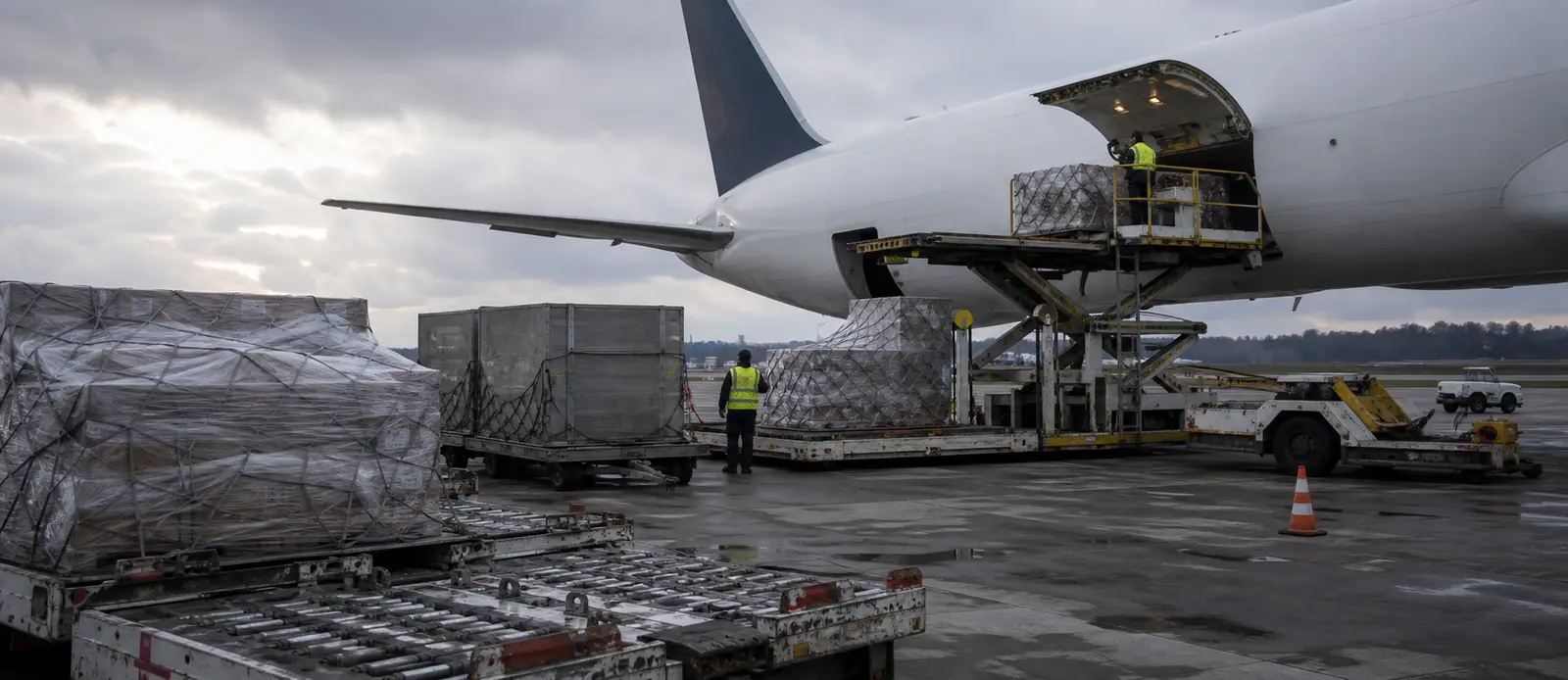
Air freight from China runs about US$3.50–5.50 per kg to the US West Coast and US$3.00–5.00 to Europe, airport to airport (2026). Peak season runs higher. We ship express, consolidated and charter cargo through licensed partners, planned around cutoffs, customs and final-mile delivery.
The flight is only one part of an air move. Cutoffs, export screening, customs, airport recovery and delivery decide whether the shipment actually lands on time.
Air freight runs about US$2.50–4.50 per kg from Europe to the USA and US$3.50–6.00 from Southeast Asia to the USA (2026). Use air when a delay costs you more than the extra freight. Think launches, stockouts, urgent parts and high-value cargo.
Air vs ocean, compared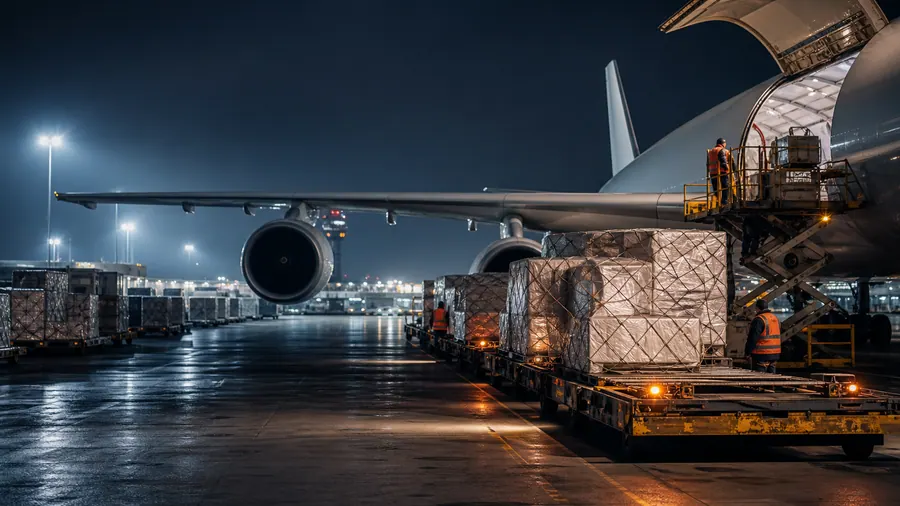

A fast flight can still fail after arrival. We plan pickup, tender, customs release and delivery as one chain so the shipment does not sit between airport and door.
Freight cost breakdownCommercial invoice, packing list, HS code and commodity restrictions are checked before tender. That keeps urgent cargo from losing its advantage at customs.
Customs checklist
 Consolidated Air Shared uplift for cargo that needs speed without paying for the most expensive option. Quote consolidated air
  Charter & Hand Carry Escalation paths for high-stakes shipments when scheduled capacity is not enough. Talk through urgency
 Options are compared on fit, cost and risk instead of a carrier's owned capacity.
A single coordinator keeps the shipment moving across parties and time zones.
Commercial documents, HS codes and handoff details are checked before they delay the move.
Tender times, flight windows and recovery plans are managed before the shipment leaves.
High-value, medical, samples and urgent parts get handling requirements documented up front.
Pickup and final-mile delivery are coordinated with the same urgency as the flight.
Origin, destination, commodity, volume, Incoterm and the timing you are working to.
Flight options, cutoffs, customs risk and delivery windows are compared against the real deadline.
One all-in proposal with the trade-offs shown before anything is booked.
Pickup, tender, uplift, customs recovery and final delivery are tracked as one time-critical move.
Speed only counts when the whole chain arrives on time.
Airport-to-airport transit times for major international routes. Door-to-door includes pickup, customs, and final delivery.
| Route | Airport-to-Airport | Door-to-Door Estimate |
|---|---|---|
| Shanghai (PVG) → Los Angeles (LAX) | 12-14 hours | 3-5 business days |
| Shanghai (PVG) → New York (JFK) | 14-16 hours | 3-5 business days |
| Hong Kong (HKG) → Miami (MIA) | 18-20 hours | 4-6 business days |
| São Paulo (GRU) → Miami (MIA) | 8-9 hours | 2-4 business days |
| Frankfurt (FRA) → Chicago (ORD) | 9-10 hours | 3-5 business days |
| Mumbai (BOM) → Los Angeles (LAX) | 18-22 hours | 4-6 business days |
| Seoul (ICN) → Los Angeles (LAX) | 11-12 hours | 3-5 business days |
| Tokyo (NRT) → New York (JFK) | 13-14 hours | 3-5 business days |
| Factor | Impact on Cost | Tip |
|---|---|---|
| Chargeable weight | Rates charged per kg of chargeable weight | Calculate volumetric: L×W×H(cm) ÷ 6000 |
| Trade lane demand | Peak routes cost 2-3x more | Book 1-2 weeks early on busy lanes |
| Service level | Express costs 30-50% more than standard | Use standard unless delivery is truly urgent |
| Fuel surcharge | Fluctuates monthly with oil prices | Lock in rates for recurring shipments |
| Dangerous goods | DG surcharge adds 20-50% to base rate | Ensure IATA DG docs are pre-approved |
| Peak season | Q4 holiday rush increases rates 50-100% | Book capacity early Sept-Nov |
Airlines sell space and lift together. You pay for whichever of the two your cargo uses more of, and that is what chargeable weight means.
Air freight is fast in the air and slow on the ground. Most of the elapsed time sits outside the flight itself.
The air waybill is short, and four of its fields decide most outcomes.
Sectors that rely on this product the most.
Estimate ocean (FCL/LCL), air freight, and express shipping costs by route, weight, and volume. Compare all modes side-by-side.
Calculate cubic meters from package dimensions. Multi-package support, container recommendations, and chargeable weight for air and ocean.
Estimate door-to-door shipping times for any route. Compare ocean, air, and express with detailed timeline breakdowns.
Browse the full catalog by family. Every line connects to the same operating thread and the same accountable coordinator.
Moving the freight itself: ocean, air and inland legs matched to cargo, timing and landed cost.
Storage, equipment and clearance kept in the same operating thread as the move.
Route strategy, cost modelling and protection before the booking is placed.
Guides written by the Suaid Global editorial team.
Talk to a real freight coordinator. Pick the channel that fits how fast you need an answer.
Share the route, cargo and timing so the quote can state its scope and exclusions.
Start a quoteUse WhatsApp for route questions, quote follow-up or shipment details.
Open WhatsAppInclude your shipment details and preferred contact information.
contact@suaidglobal.comIndependent freight orchestrator for global ocean, air, ground, customs and warehousing. Carrier-neutral routing, one accountable team, no carrier lock-in.
Freight forwarding for importers and exporters. Compare ocean, air and ground options, with clear costs and coordination from pickup to delivery.
Suaid Global compares transport and logistics partners for your shipment. One coordinator connects the agreed services from the first request to final delivery.