
Chemicals & Hazmat Logistics
Regulations, Compliance, Safety
Chemical shipping needs IMDG compliance, hazmat paperwork, and the right container setup. Suaid Global ships it all, DG-certified.
Hazmat logistics demands perfect regulatory compliance
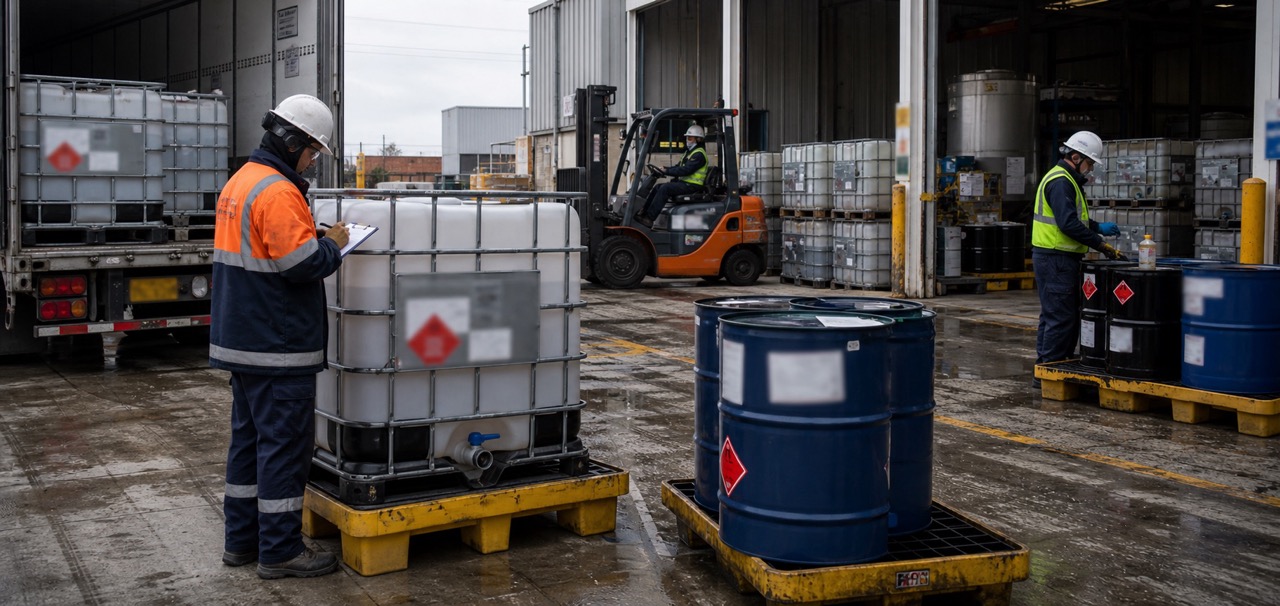
Chemical shipping falls under IMDG, IATA, and DOT rules. Bad packing, a wrong class code, or missing paperwork can trigger a port hold or a fine. We handle each step of dangerous goods shipping, from the shipper's form to final drop-off.
What Suaid coordinates for this sector.
Operational details vary by commodity, market and deadline. These are the control points we keep in one freight thread.
IMDG / IATA / DOT Compliance
DG-certified partners handle IMDG forms, UN codes, packing groups, and MSDS papers for sea, air, and ground moves. One error can stop your shipment cold. We check the papers with them before booking.
Dangerous Goods Handling
Certified DG partners handle proper split-up, packing, and labels. We work with approved carriers and terminals that accept hazardous goods.
UN Classification & SDS
We assign the right UN number. We set the right hazard class. We review the Safety Data Sheet (SDS) before each shipment. We catch class errors before regulators do.
EPA & FDA Import Compliance
Chemical imports to the US may need EPA TSCA sign-off, FDA sign-up, and special CBP entries. Licensed customs broker partners prepare each form, and we check the details with you before filing.
Key Chemical Trade Corridors
Use these as starting points. If your lane is not listed, Suaid can still route it through the global partner network.
China → US
This lane moves industrial chemicals, special coatings, adhesives, and plastics. Ships leave from Shanghai and Tianjin. They land in Los Angeles and Houston. TSCA SNUR rules and EPA import sign-off are required.
Europe → US
This lane moves special chemicals, drug base parts, and fine chemicals. Ships leave from Rotterdam, Antwerp, and Hamburg. They land in New York and Savannah. REACH papers and dual-use export checks apply.
South America → US
This lane moves farm chemicals, natural extracts, and industrial solvents from Brazil and Colombia. Ships leave from Santos and Cartagena. They land in Miami and Houston. Pesticides need EPA FIFRA sign-up. Plant extracts need FDA sign-off.
The dangerous goods classes you meet most
Class decides packaging, paperwork, stowage, and price. Get it right at the quote stage, not at the terminal.
| Class | Typical cargo | Shipping effect |
|---|---|---|
| Class 3 | Solvents, paints, alcohols | Flammable; segregated stowage and quantity limits |
| Class 5.1 | Oxidising agents | Must stay away from flammables |
| Class 6.1 | Toxic substances | Extra documentation and restricted routings |
| Class 8 | Acids and alkalis | Corrosion-resistant packaging required |
| Class 9 | Miscellaneous, including some resins | Often surprises shippers who expect general cargo |
| Non-regulated | Many finished chemicals | Still needs a safety data sheet to prove the status |
Chemical shipping paperwork, in order
Chemical bookings fail on documents more than on cargo. Build the file in this order.
- Safety data sheet — The starting point. It tells the forwarder whether the goods are regulated at all.
- Dangerous goods declaration — Signed by the shipper. It states class, packing group, and UN number.
- Packing certificate — Confirms the container was loaded and secured to the rules.
- UN-approved packaging marks — Drums and boxes carry a code showing what they were tested for.
- Import licence where required — Many countries control specific substances. Check before the goods leave.
- Emergency contact — A number staffed during transit must appear on the declaration.
What the packing group tells you
| Group | Danger level | What changes |
|---|---|---|
| Packing Group I | High | Strongest packaging; tightest quantity limits |
| Packing Group II | Medium | Standard tested packaging; common for solvents |
| Packing Group III | Low | Lighter requirements, still fully declared |
| Limited quantity | Small retail-sized units | Reduced paperwork within strict volume caps |
| Excepted quantity | Very small amounts | Minimal rules; the threshold is easy to exceed by accident |
Drums, IBCs, flexitanks, or isotanks?
For liquids, the container choice often matters more than the freight rate. Each option trades cost against risk.
| Option | Typical use | Trade-off |
|---|---|---|
| Drums | Small volumes and regulated goods | Highest handling cost per litre |
| Intermediate bulk containers | Mid-size volumes, easy to handle | Reusable but bulky when empty |
| Flexitank | Full container loads of non-hazardous liquids | Single use; not permitted for most dangerous goods |
| Isotank | Hazardous and temperature-sensitive liquids | Higher cost; needs cleaning certificates |
| Bulk vessel | Very large volumes | Only viable at scale, with terminal access |
Mistakes that stop chemical shipments at the gate
Terminals reject chemical bookings for a short list of reasons. Almost all of them are avoidable at the desk.
- Booking as general cargo — If the safety data sheet lists a class, the booking must say so from the start. Correcting it later means rebooking.
- Expired packaging certification — Tested drums and boxes carry a date. Terminals check it and reject old stock.
- Mixed classes in one container — Some classes cannot travel together. Segregation rules apply inside the box, not just on the vessel.
- Labels that do not match the papers — A single wrong UN number between the label and the declaration halts the load.
- No residue declaration on empties — An empty tank or drum that held regulated product is still regulated until cleaned and certified.
- Missing import permit — Many substances need destination approval before departure. Arriving without it means the cargo cannot be released.
- Temperature control ignored — Some products polymerise or degrade above a set temperature. A standard container in a hot lane is a real risk.
Key Challenges in Chemical Logistics
The work is not only moving cargo. It is removing the failure points that create holds, penalties and missed receiving windows.
Multi-Modal Regulation Differences
IMDG (sea), IATA DGR (air), and DOT 49 CFR (ground) each set their own rules for the same chemical. A class code right for sea may be wrong for air. We manage all three.
Carrier and Port Restrictions
Some chemicals get turned away by major carriers or blocked at certain ports. You need to know which carrier takes Class 3, 8, and 9 DG cargo on which lane. This stops booking loss.
Emergency Response Requirements
Each DG shipment needs a 24-hour emergency line (CHEMTREC), response guides, and the right labels. Miss one piece, and the shipment gets turned away on the spot.
Temperature and Segregation Rules
Reactive or flammable chemicals can't sit near oxidizers or corrosives. Partner warehouses in our network keep chemical zone maps and temp zones. This stops bad mix-ups.
Services for Chemical Shippers
Every service connects back to one accountable operating thread.
Value Protect
Cargo insurance designed for high-value and hazardous chemical shipments with specialized coverage terms.
Customs Clearance
EPA, TSCA, and FDA chemical import entries with DG expertise and restricted-substance screening.
Ocean Freight
DG-approved ocean freight on all major trade lanes with carrier pre-screening and IMDG documentation.
Related Industries
Agriculture & Commodities
Fertilizers, pesticides, and agrochemicals require the same DG compliance and EPA import oversight.
Healthcare & Pharma
Pharmaceutical raw materials and intermediates often involve DG classification and cold chain requirements.
Industrial & Machinery
Industrial operations use chemicals for manufacturing processes with similar import compliance needs.
Common questions about Chemicals & Hazmat.
Short answers for shippers comparing routes, documents, cost and service fit.
Send the lane. We'll shape the plan.
Tell us the commodity, origin, destination and timing. A coordinator who works Chemicals & Hazmat freight reviews your request.
Ship your chemicals compliantly with Suaid Global
From IMDG forms to EPA clearance, our certified DG partner network coordinates your chemical shipments to the US with safety and compliance in mind.
Request a quote
Share the route, cargo and timing so the quote can state its scope and exclusions.
Start a quoteTalk now on WhatsApp
Use WhatsApp for route questions, quote follow-up or shipment details.
Open WhatsAppEmail the team
Include your shipment details and preferred contact information.
contact@suaidglobal.com