

Send the lane and cargo
Origin, destination, commodity, volume, Incoterm and the timing you are working to.
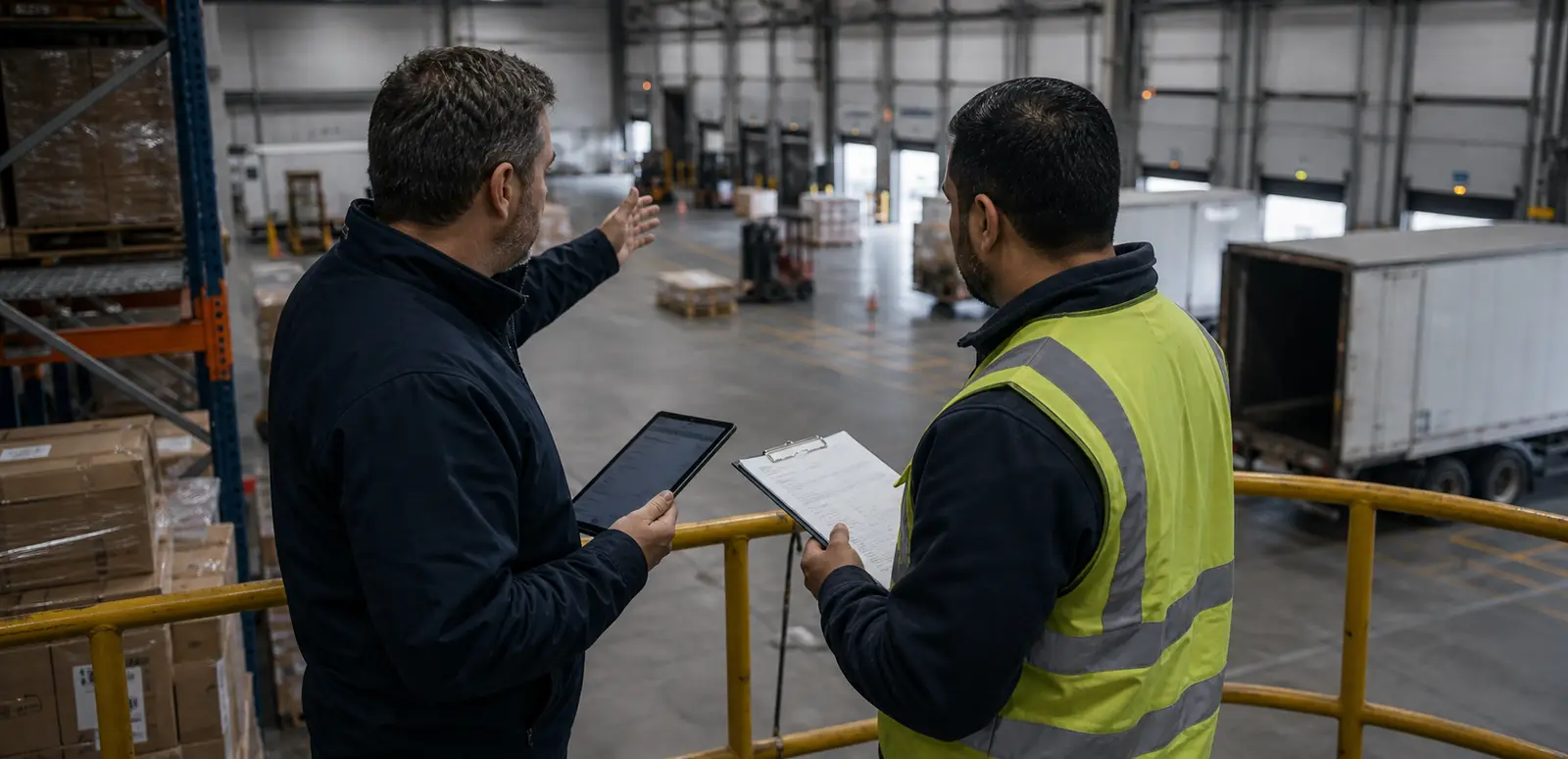
Network design, vendor selection, process improvement and KPI implementation for teams that need practical freight decisions, not generic recommendations.
The work starts with how freight actually moves: vendors, documents, approvals, warehouse handoffs, customer promises and the numbers that show whether the system works.
Supplier geography, ports, airports, warehouse nodes, delivery promise and customs exposure all decide the shape of the logistics network.
Choose a forwarder

Many logistics failures are unclear handoffs. We document who owns each step, what information is required and where exceptions escalate.
Digital forwarding analysisDashboards are only useful when they guide action: cost per lane, on-time performance, exception rate, customs holds and inventory impact.
Reduce supply chain costs Network Design Map supplier, port, warehouse and customer nodes into a cleaner operating model. Discuss network design
 Vendor Selection Compare forwarders, carriers and warehouses using fit, risk and cost criteria. Discuss vendors
 Options are compared on fit, cost and risk instead of a carrier's owned capacity.
A single coordinator keeps the shipment moving across parties and time zones.
Commercial documents, HS codes and handoff details are checked before they delay the move.
The work centers on how your team will actually run the process.
Carrier, forwarder and warehouse choices are compared against requirements, not preference.
Measures are designed around decisions your team needs to make weekly.
Origin, destination, commodity, volume, Incoterm and the timing you are working to.
Current process, vendor mix, shipment data, service failures and business goals are mapped into practical options.
One all-in proposal with the trade-offs shown before anything is booked.
Recommendations become SOPs, vendor criteria, KPI views and implementation steps your team can run.
The output should change how freight is managed.
An assessment is not a sales call. It is a read of your current flow, your data, and your contracts, followed by a list of changes ranked by payback.
Every engagement ends with documents you can act on without us. That is the point.
Advisory work is worth buying at specific moments. Outside them, an operational fix is usually the better spend.
Short, defined, and measurable. A consulting project that cannot be measured afterwards was not scoped properly at the start.
So findings are comparable, we use these definitions throughout.
Sectors that rely on this product the most.
Estimate audited U.S. HTS duty components for a selected product record. Other destinations and product lines require specialist verification.
Search 200+ harmonized system codes by product name. Find duty rates, chapter info, and customs notes for US imports.
Answer a few questions about who arranges transport, who bears risk, and who clears customs — get the Incoterm 2020 rule that matches, with a link to the full explanation.
Browse the full catalog by family. Every line connects to the same operating thread and the same accountable coordinator.
Moving the freight itself: ocean, air and inland legs matched to cargo, timing and landed cost.
Storage, equipment and clearance kept in the same operating thread as the move.
Route strategy, cost modelling and protection before the booking is placed.
Guides written by the Suaid Global editorial team.
Talk to a real freight coordinator. Pick the channel that fits how fast you need an answer.
Share the route, cargo and timing so the quote can state its scope and exclusions.
Start a quoteUse WhatsApp for route questions, quote follow-up or shipment details.
Open WhatsAppInclude your shipment details and preferred contact information.
contact@suaidglobal.comIndependent freight orchestrator for global ocean, air, ground, customs and warehousing. Carrier-neutral routing, one accountable team, no carrier lock-in.
Freight forwarding for importers and exporters. Compare ocean, air and ground options, with clear costs and coordination from pickup to delivery.
Suaid Global compares transport and logistics partners for your shipment. One coordinator connects the agreed services from the first request to final delivery.