

Verified Duty Components
Verified Duty Components
Verified Duty Components
| Tariff Type | Authority | Rate | Duty Amount |
|---|
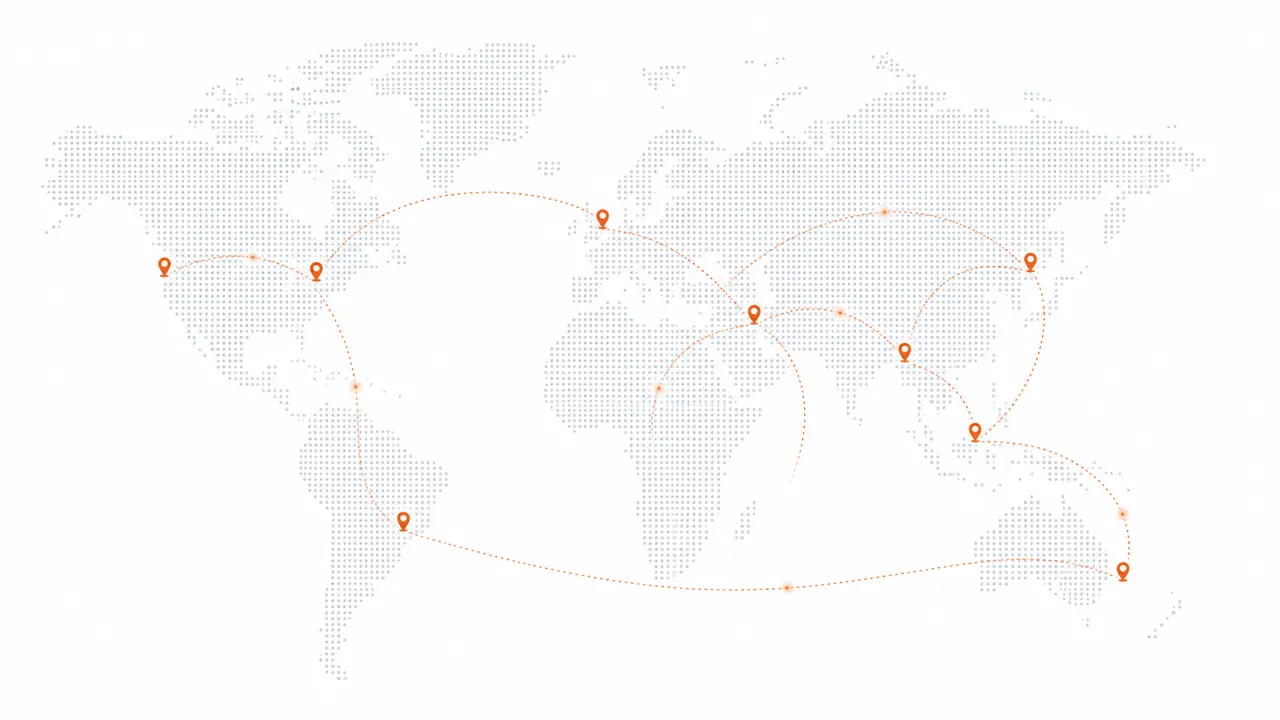
Interactive Origin Map
Why Use Suaid Tariffs?
An import-duty workflow from freight forwarding experts: audited U.S. HTS components where supported, with specialist review for everything else.
Special-Duty Review
Section 232 and 301 amounts are not added automatically without explicit product evidence; potential stacking is flagged for specialist review.
Destination Verification
Automated numeric estimates are limited to audited U.S. HTS components. Other destinations and product lines require specialist verification, and FTA eligibility requires rules-of-origin review.
Duty Components Review
Review known duty components only. Freight and insurance are not calculated, and the result is not a complete or true landed-cost estimate.
Need Help Navigating Tariffs?
Send your case for a review with licensed customs broker partners to plan your import strategy and duty exposure.
Read the duty result in layers: base rate, treaty rate, extra duties
The result you see is built in layers. The base layer is the MFN rate, the default rate the United States charges most trading partners. A trade deal can swap that base for a lower treaty rate. The swap only holds when your goods meet the deal's rules of origin. Extra duties, such as Section 301 measures, sit on top and depend on the origin and the product.
That is why the same HS code gives a new result each time you switch origin. Origin decides which treaty can apply and which extra duties attach. So treat the output as a plan, not a final duty bill. Rates shift, rulings change, and the entry date matters. Only CBP sets the final duty at entry, based on the code and origin proof a licensed customs broker files.
- Spot which layer drives the total: base rate, treaty claim or extra duty.
- Re-run the same product for each origin on your shortlist.
- Ask a licensed customs broker to confirm the code and the treaty claim first.
Turn the duty picture into an import cost strategy
Duty is one slice of landed cost. Freight, insurance, entry fees, broker fees and the inland haul sit beside it. The tool does not price those parts. Build the full picture before you compare suppliers or origins. A lane with a lighter duty load can still lose on freight or lead time.
When the duty load looks heavy, work the levers with a licensed customs broker. A review may find a better-fitting code, a treaty claim you can back with papers, or a sourcing shift worth testing. Every treaty claim rests on origin papers, such as supplier statements and certificates of origin. Line up those papers before you count any saving.
- Price the full landed cost, not just the duty line, before you decide.
- Ask a licensed customs broker to review the code before you change sourcing.
- Collect origin papers early; a treaty rate is only as strong as its proof.
US Tariffs 2026 Guide
Prepare a US tariff review with HTS codes, origin, entry dates and official sources for Section 301, Section 232, IEEPA...
Customs Documents
Complete checklist of documents for international shipping — commercial invoice, Bill of Lading, customs forms, and...
FOB vs CIF vs DDP
FOB, CIF or DDP? Decide fast: who pays each cost, where risk transfers, and which Incoterm fits your shipment —...