

Construction & Steel Logistics
Heavy Materials, Complex Routes
Steel coils from Japan. Precast concrete from Europe. Building gear from Brazil. Your job site needs it all at once, on one day.
Construction logistics coordinate massive material flows
Construction jobs need material drops in sync. Steel, cement, gear, and parts come from different sources but must land together to avoid site delays and storage costs. We run complex, multi-supplier construction logistics with tight schedule sync.
What Suaid coordinates for this sector.
Operational details vary by commodity, market and deadline. These are the control points we keep in one freight thread.
Steel & Structural Material Logistics
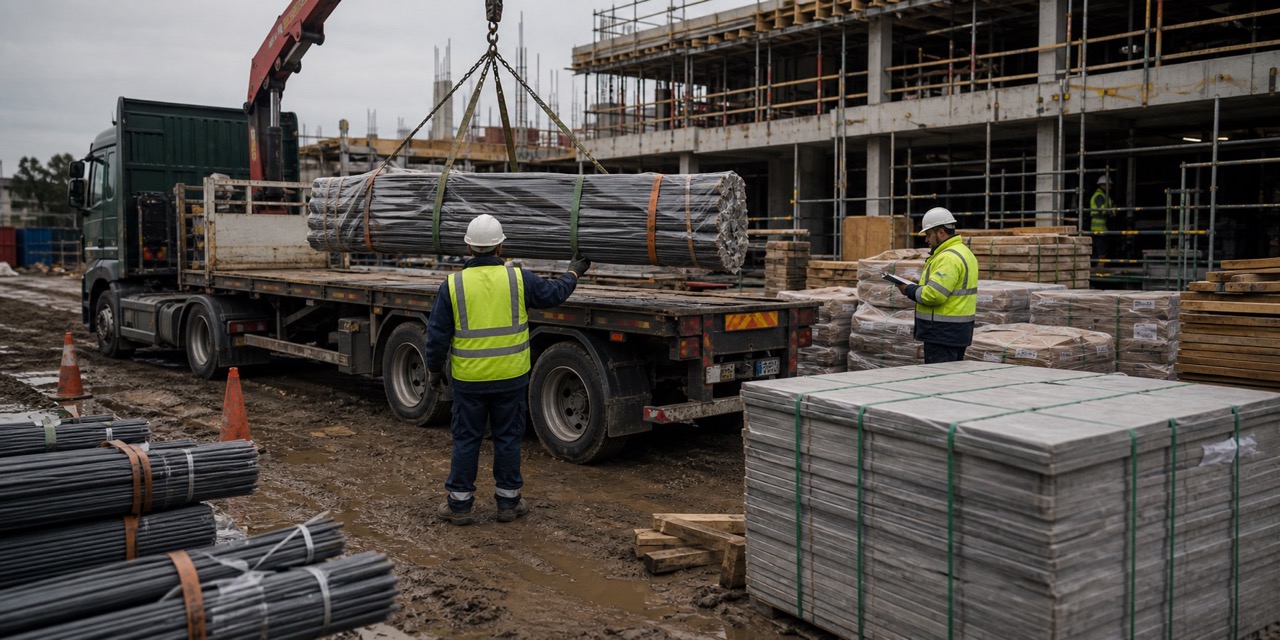
Steel coils, I-beams, rebar, and structural steel on flatracks and breakbulk ships. Right weight spread, rust guard, and port-to-site drop with overweight permits.
Just-in-Time Site Delivery
Building loads synced to your project schedule. No early drops that pile up storage costs. No late drops that leave crews idle. We time each drop to your plan, with backup steps ready if the timeline shifts.
Port-to-Site Heavy Transport
Inland moves with oversize/overweight permits for heavy steel, precast concrete, and big building parts. We check every route from port to the final install site.
Multi-Origin Material Consolidation
Steel from Korea, glass from China, MEP gear from Germany — grouped and timed to land in the same drop window at your site.
Key Construction Material Import Corridors
Use these as starting points. If your lane is not listed, Suaid can still route it through the global partner network.
South Korea → US
Steel coils, plates, structural beams, pipes. Ports: Busan, Incheon → Houston, Los Angeles. Section 232 steel tariffs apply. Weight certificates are a must for heavy lifts.
China → US
Construction hardware, precast parts, tiles, glass, aluminum profiles. Ports: Shanghai, Tianjin → Long Beach, New York. AD/CVD antidumping orders hit many steel products.
Europe → US
Architectural glass, marble, granite, specialty finishes, MEP gear. Ports: Genoa, Rotterdam, Gdansk → New York, Baltimore. CE paperwork, country-of-origin certificates.
Matching building materials to the right mode
Construction cargo is heavy, bulky, and time-bound. The material decides how it should move.
| Material | Usual method | Main risk |
|---|---|---|
| Cement and aggregates | Bulk vessel or bagged in containers | Moisture ruins the load |
| Steel bar and sections | Flat rack or break-bulk by length | Rust and bent ends from poor securing |
| Prefabricated panels | Flat rack or open top | Cracking from flex during handling |
| Tiles, sanitary ware, glass | Containerised on pallets | Breakage from weak stacking |
| Structural timber | Containerised or break-bulk | Needs treatment certificates to enter many markets |
| Site machinery | RoRo or flat rack | Height and permits on the last mile |
Why site deliveries fail
A container that reaches the port on time can still miss the pour. These are the usual causes.
- No unloading equipment — Sites often have no forklift rated for a full pallet of tile or stone. Confirm before the truck arrives.
- Access not checked — A forty-foot trailer cannot turn into every site. Send the driver a route note, not just an address.
- Detention on site — Trucks charge by the hour once the free time runs out. Slow unloading turns into a real bill.
- Deliveries out of build order — Fittings arriving before the structure creates storage problems and damage.
- Missing test certificates — Steel and cement often need mill or batch certificates for the site inspector.
- Weather windows ignored — Some materials cannot be unloaded in rain. Build a buffer into the schedule.
Certificates construction cargo usually needs
| Certificate | Applies to | Purpose |
|---|---|---|
| Mill test certificate | Steel | Proves grade and chemical composition |
| Fumigation certificate | Timber and pallets | Required by many countries against pests |
| ISPM 15 stamp | Wooden packing | Marks heat-treated wood; unmarked pallets get rejected |
| Batch certificate | Cement and chemicals | Links the delivery to a tested production run |
| Certificate of origin | Most goods | Decides duty rate under trade agreements |
| Conformity certificate | Fittings and electricals | Required by several markets before release |
Ordering materials to the build programme
Construction freight is judged on sequence, not speed. Arriving early can cost as much as arriving late.
- Work backwards from the pour — Fix the site milestone first, then set the sailing date, then the factory date.
- Group by trade, not by supplier — Consolidating what one trade needs into one container reduces site handling.
- Keep a buffer on the critical path — Structural items justify a wider buffer than finishes, which can wait.
- Plan where early stock will sit — Sites rarely have covered storage. Early delivery becomes damage.
- Split high-risk items — Sending glass or sanitary ware across two containers limits the damage from one incident.
- Confirm site access per delivery — Access changes as a build progresses. What worked at foundation stage may not work at fit-out.
Key Challenges in Construction Logistics
The work is not only moving cargo. It is removing the failure points that create holds, penalties and missed receiving windows.
Project Timeline Synchronization
Loads that arrive before the site is ready mean costly storage. Loads that arrive late mean idle crews and delays. Each drop must hit a tight window, with zero slack.
Overweight & Oversize Permits
Steel coils, precast panels, and steel beams beat standard road weight limits in most US states. You must book permits weeks ahead and line up pilot cars for big convoys.
Port Demurrage on Construction Delays
When schedules slip, materials sit at port. Demurrage fees of $150-$300 per container per day pile up fast. We manage port time ahead of schedule to cut this risk.
Multi-Origin Coordination
Modern job sites pull materials from 5+ countries. Steel from Korea, façade from Italy, MEP gear from Germany — all must land in sync. Any gap stalls the whole project.
Services for Construction Shippers
Every service connects back to one accountable operating thread.
Project Cargo
Heavy-lift and OOG transport for large structural components, precast panels, and oversized construction materials.
Ocean Freight
FCL, flatrack, and breakbulk ocean freight for steel, construction materials, and building components.
Ground & Drayage
Oversize permitted transport from US ports to construction sites nationwide with full route survey and escort coordination.
Related Industries
Industrial & Machinery
Construction equipment and site machinery require the same OOG project cargo and heavy-transport expertise.
Prefabricated & Modular Homes
Prefab construction shares steel, structural, and sequence-critical delivery requirements with commercial construction.
Energy & Renewables
Renewable energy infrastructure construction shares the same heavy material, multi-origin, and project timeline logistics needs.
Common questions about Construction & Steel.
Short answers for shippers comparing routes, documents, cost and service fit.
Send the lane. We'll shape the plan.
Tell us the commodity, origin, destination and timing. A coordinator who works Construction & Steel freight reviews your request.
Keep your construction project on schedule with Suaid Global
From steel coils to glazing systems, we line up multi-origin material drops around every build milestone, to cut the risk of demurrage, delays, and surprises.
Request a quote
Share the route, cargo and timing so the quote can state its scope and exclusions.
Start a quoteTalk now on WhatsApp
Use WhatsApp for route questions, quote follow-up or shipment details.
Open WhatsAppEmail the team
Include your shipment details and preferred contact information.
contact@suaidglobal.com