

Auto Parts & Components Logistics
Just-in-Time, Every Time
Auto parts and components logistics — OEM supply chains, aftermarket shipping, and rush air freight for the line. USMCA, Mercosur, and HS 8708 skills from Suaid Global.
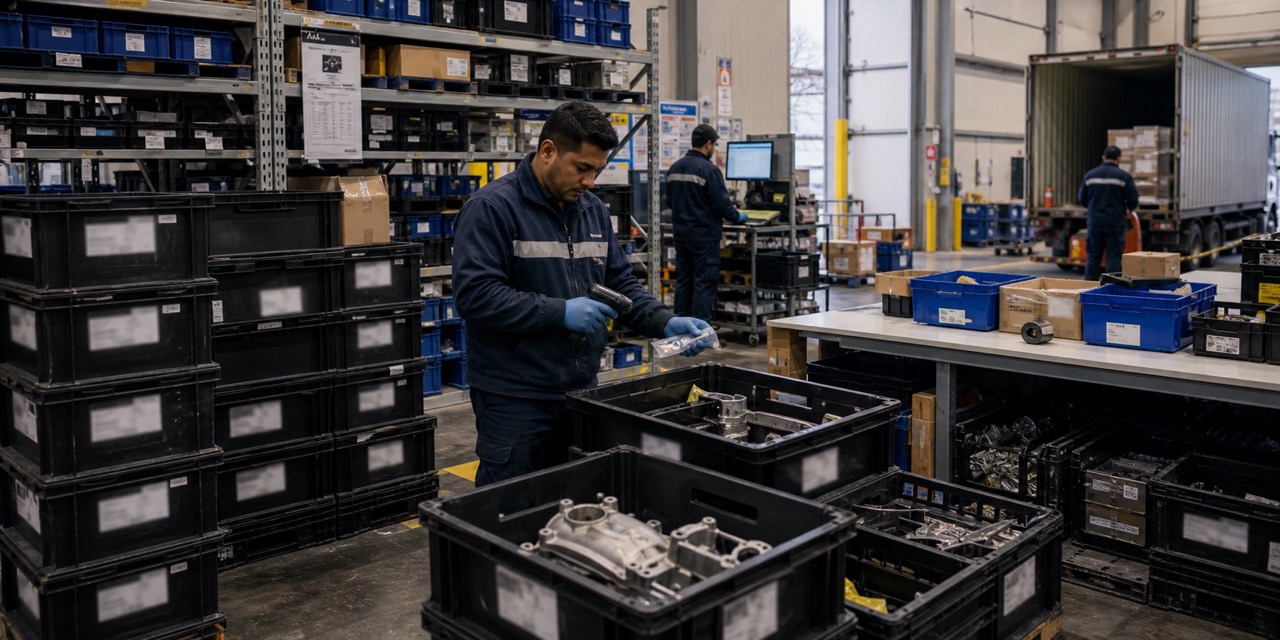
Automotive supply chains demand zero-defect logistics
Brazil is the world's 8th-largest vehicle maker and the hub of Mercosur, with over 25 OEM plants and 500+ Tier 1 suppliers. Auto parts logistics runs on tight plant schedules, where one late load can stop a $50 million line. We plan JIT drop times, handle origin papers for lower tariffs, and rush fixes when supply chains break. In auto work, the line never waits.
What Suaid coordinates for this sector.
Operational details vary by commodity, market and deadline. These are the control points we keep in one freight thread.
JIT & JIS Delivery Sequencing
We plan just-in-time and just-in-sequence drops to OEM plants, with windows as tight as 2 hours. Milk-run routes, cross-dock stops, and live tracking keep parts moving in the exact order the line needs.
USMCA & Mercosur Rules of Origin
Auto parts face some of the toughest origin rules in world trade. We draft USMCA origin papers with regional value content (RVC) math that meets the 75% mark. We also draft Mercosur origin papers for lower duty across Argentina, Brazil, Paraguay, and Uruguay.
OEM Packaging & Quality Standards
Auto OEMs need set pack rules — VDA 4500, GM 1738, Ford ES-M1A33. We check that supplier packs meet spec, manage return-bin pools, and use damage guards for paint, circuit parts, and precision-cut parts.
HS 8708 Customs Classification Expertise
Heading 8708 (motor vehicle parts) has over 40 sub-codes with duty rates from 0% to 25%, based on class. We check specs to find the right sub-code, spot duty savings through smart tariff plans, and file binding-ruling asks when the class is unclear.
Consolidation & Deconsolidation Centers
Our partner network runs grouping hubs near major supplier clusters in São Paulo, Guangdong, and Bavaria. Inbound parts from many Tier 2 suppliers get grouped into line-ready loads, cutting OEM receiving work and freight cost by 15–30%.
Expedited Air Freight for Line-Down Emergencies
When a missing part risks a line stop, hours count — one idle day can cost $1–3 million. Our partner network works to secure air space on key lanes and arranges pickup-to-plant moves from Asia and Europe to Brazil and US plants; timing depends on origin and carrier space.
Common lanes for this industry.
Use these as starting points. If your lane is not listed, Suaid can still route it through the global partner network.
Germany & Japan → Brazil (OEM Components Import)
Engine blocks, gearboxes, and circuit systems from Stuttgart, Munich, and Nagoya to São Paulo OEM plants. Ocean transit 25–35 days via Santos and Paranaguá. Our licensed Brazilian customs broker partners file the import entry, plus II (up to 35%), IPI, PIS/COFINS, and ICMS math, using Mercosur origin papers where they fit.
Brazil → Mexico & USA (Mercosur/USMCA Export Corridor)
Brazil-built engines, axles, and stamped body panels to plants in Puebla, Saltillo, and Detroit. Ocean transit 12–18 days Brazil to Mexico, 8–14 days to the US Gulf Coast. USMCA and Mercosur-Mexico FTA origin papers set up for lower duty.
China → Brazil (Aftermarket & Electronic Components)
Aftermarket parts, EV battery parts, and auto circuit goods from Guangdong and Zhejiang to Santos and Itajaí. Transit time 30–40 days. We work through Section 301-style duty, INMETRO checks, and Brazil auto rules (CONAMA emissions limits).
Where shipments usually break down.
The work is not only moving cargo. It is removing the failure points that create holds, penalties and missed receiving windows.
Complex HS Classification (8708 Subheadings)
Auto parts class under HS 8708 gets tricky fast. A brake pad set may class apart from its own parts, with duty gaps of 5–15%. Wrong class brings back-dated duty bills, fines, and cost blowouts that hit OEM budgets hard.
USMCA & Mercosur Origin Calculation
USMCA needs 75% regional value content for auto parts to earn lower duty — the highest bar in any trade pact. Working out RVC across supply chains with parts from 10+ countries takes deep BOM checks and supplier tracing most freight firms can't do.
Quality Damage During Transit
Painted bumpers, chrome trim, circuit units, and precision-ground engine parts need damage-free transport. Shake during ocean transit, heat shifts, and damp or dust harm can make parts unusable. Reject rates above 50 PPM trigger OEM supply chain reviews and risk supplier delisting.
Production Line-Stop Urgency
A line that builds 1,200 cars a day loses $1.5–3 million for each day it stops cold. When a key part runs short, the fix must land in hours, not days. Standard freight is too slow — fast recovery needs reserved capacity and close coordination across partners.
Tariff Engineering for Cost Optimization
US Section 301 duty on Chinese auto parts sits at 25%. EU anti-dumping fees hit some parts, and Brazil import duty (II + IPI + ICMS) can reach 50–70% in real terms. Tariff plans drive part cost and price power, so routing, plant site, and origin papers must line up as one plan.
Services this industry uses most
Every service connects back to one accountable operating thread.
Air Freight
Expedited air freight for production-critical parts from Asia and Europe to assembly plants; timing depends on origin and carrier space.
Ocean Freight
FCL and LCL ocean shipping for scheduled auto parts supply — production-sequenced container loading.
Customs Brokerage
HS 8708 classification, USMCA/Mercosur origin certificates, and Brazilian import duty optimization.
Adjacent supply chains.
Automotive
Finished vehicle logistics, CKD/SKD assembly kits, and OEM supply chain management for the broader automotive sector.
Industrial Machinery
Heavy manufacturing equipment and precision components sharing quality standards and just-in-time delivery requirements.
Technology & Electronics
Automotive electronics, sensors, and control units requiring similar ESD protection, temperature control, and compliance documentation.
Common questions about Auto Parts & Components.
Short answers for shippers comparing routes, documents, cost and service fit.
Send the lane. We'll shape the plan.
Tell us the commodity, origin, destination and timing. A coordinator who works Auto Parts & Components freight reviews your request.
Need auto parts delivered on the line's schedule? Let's talk.
Tell us your part numbers, origin, and plant delivery needs. We'll build the plan — class codes, origin papers, and drop timing — and send you a quote.
Request a quote
Share the route, cargo and timing so the quote can state its scope and exclusions.
Start a quoteTalk now on WhatsApp
Use WhatsApp for route questions, quote follow-up or shipment details.
Open WhatsAppEmail the team
Include your shipment details and preferred contact information.
contact@suaidglobal.com