

Chocolate & Cocoa Logistics
Temperature-Perfect, Bean to Bar
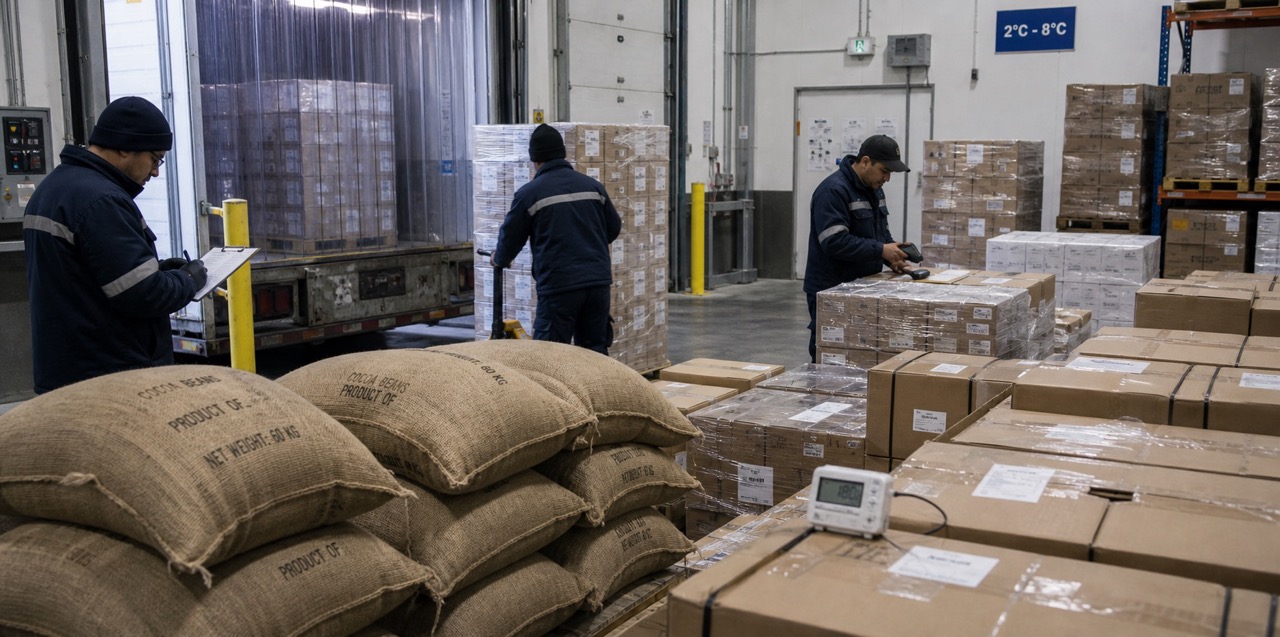
Chocolate and cocoa logistics — temp-held shipping for raw cocoa beans, cocoa butter, cocoa powder, and finished chocolate goods, with full rule sign-off.
One degree too warm and the entire shipment blooms — precision is everything
The chocolate and cocoa supply chain needs tight temp control from farm to shelf. Brazil is both a top cocoa grower (7th in the world) and a rising top-shelf chocolate seller. The country turns raw beans into butter, powder, and finished goods. Whether you import raw cocoa to process, or export craft chocolate bars, we're ready. We run the cold chain, the paperwork, and the timing that guard your goods and your margin.
What Suaid coordinates for this sector.
Operational details vary by commodity, market and deadline. These are the control points we keep in one freight thread.
Temperature-Controlled Shipping (64–68°F)
Finished chocolate must move at 64–68°F (18–20°C) to stop bloom (white marks on the surface from fat or sugar shift). We use reefer boxes with tight set points and steady temp checks via IoT loggers all through transit.
Cocoa Butter & Powder Bulk Handling
Cocoa butter ships in flexitanks or IBC totes at set temps to stop it from going hard or turning rank. Cocoa powder needs damp-proof packing and dry box space. We handle both bulk and bagged forms with box specs set to fit the goods.
Seasonal Demand Planning
Easter, Halloween, and Christmas drive 60% of yearly chocolate sales. We plan inbound raw stock and outbound finished goods around these peaks, booking reefer space 60–90 days out to lock in room in busy stretches.
FDA Compliance for US Imports
All chocolate and cocoa imports into the US need FDA prior notice, plant sign-up, and food safety rules under FSMA. We coordinate the FDA filings and FSVP papers with our licensed broker partners, who work with US Customs for smooth entry at port.
EU Food Safety (EFSA) Compliance
Exports to the EU must meet EFSA rules, plus cadmium limits in cocoa (EU Rule 488/2014), trace rules, and the new EU Deforestation Regulation (EUDR). We check that all papers meet EU entry rules before the ship sails.
Shelf-Life Management & FEFO Rotation
Finished chocolate holds a shelf life near 12–18 months, but transit and storage can eat into that span. We run First-Expired-First-Out (FEFO) rack order and time drop-offs to keep as much shelf life at the end point as we can.
Common lanes for this industry.
Use these as starting points. If your lane is not listed, Suaid can still route it through the global partner network.
Brazil → USA (Finished Chocolate & Cocoa Derivatives)
Brazil top-shelf chocolate brands are gaining ground in the US. We ship finished bars, cocoa butter, and cocoa powder from Santos and Itajaí to Miami and New York in reefer boxes. Transit time 15–20 days. FDA prior notice and FSVP sign-off needed for all food imports.
West Africa → Brazil (Raw Cocoa Bean Imports)
Brazil brings in raw cocoa beans from Côte d'Ivoire, Ghana, and Nigeria to top up home stock for its process plants. We run FCL loads from Abidjan and Tema to Santos with pest-check sign-off, fumigation certs, and MAPA import checks set up. Transit time 18–22 days.
Brazil → Europe (Premium Chocolate Exports)
More EU buyers want single-farm Brazil chocolate. We export finished goods to Hamburg, Rotterdam, and Antwerp in temp-held boxes that meet EFSA rules. Transit time 18–25 days. EUDR trace papers and cadmium test certs needed.
Where shipments usually break down.
The work is not only moving cargo. It is removing the failure points that create holds, penalties and missed receiving windows.
Heat Damage & Chocolate Bloom Risk
Chocolate bloom hits when temps top 75°F (24°C), pushing cocoa fat up to the surface as white streaks. Safe to eat, but bloomed chocolate won't sell in stores. Our partner network keeps a steady cold chain from plant to hub, with live alerts if set points drift past 2°F.
Raw vs. Processed Cocoa Classification
Customs class shapes duty rates in a big way. Raw cocoa beans (HS 1801) enter the US duty-free, while processed chocolate (HS 1806) faces duty of 2–8.5%, based on cocoa share and sugar level. Wrong class brings fines and holds. We set the right HS code for every item in your load.
Shelf-Life Constraints on Finished Goods
Stores often ask for at least 60–70% of shelf life left on arrival. A 30-day ocean run on a 12-month product eats 8% of shelf life before it even hits the warehouse. We pick fast routes and time plant-to-ship to hold the biggest sell window.
Import Duty Variations by Composition
US duty on chocolate goods shifts with cocoa share, milk fat level, sugar level, and if the item holds alcohol. A dark bar faces a different rate than a milk truffle. We check your mix to find the fair — and correct — duty class.
Tempering Stability During Transit
Well-tempered chocolate has a shine and a clean snap. Temp swings in transit can break that temper, leaving soft, dull goods that fail checks. We pick reefer boxes with tight temp hold (±1°F) and skip transship at hot ports to keep goods sound.
Services this industry uses most
Every service connects back to one accountable operating thread.
Ocean Freight
Reefer and dry container services with temperature monitoring by the carrier, carrier selection optimized for cold chain reliability.
Air Freight
Time-critical shipments for seasonal product launches, sample deliveries, and emergency stock replenishment with temperature-controlled handling.
Value Protect
Comprehensive cargo insurance covering temperature excursion damage, spoilage, and transit risks for high-value perishable goods.
Adjacent supply chains.
Food & Beverage
Cold chain logistics, FDA compliance, and shelf-life management for the broader food and beverage industry.
Coffee
Brazilian agricultural export logistics with similar origin infrastructure, port operations, and phytosanitary requirements.
FMCG & Consumer Goods
High-volume distribution, retail compliance, and promotional logistics for fast-moving consumer products.
Common questions about Chocolate & Cocoa.
Short answers for shippers comparing routes, documents, cost and service fit.
Send the lane. We'll shape the plan.
Tell us the commodity, origin, destination and timing. A coordinator who works Chocolate & Cocoa freight reviews your request.
Get a Chocolate & Cocoa Logistics Quote
Tell us your product type, volume, and end markets — we'll send a full plan with reefer specs, transit windows, and all-in pricing.
Request a quote
Share the route, cargo and timing so the quote can state its scope and exclusions.
Start a quoteTalk now on WhatsApp
Use WhatsApp for route questions, quote follow-up or shipment details.
Open WhatsAppEmail the team
Include your shipment details and preferred contact information.
contact@suaidglobal.com