
LCL Cost per CBM 2026 Full Breakdown & Savings
Summary: LCL pricing can be hard to grasp, but it matters a lot for your supply chain choices. This guide breaks down every cost part, shows real 2026 rates by trade lane, and reveals what drives pricing up or down.

Understanding LCL Cost per CBM
CBM (cubic meter) is the standard unit for LCL pricing. One CBM equals 1 meter × 1 meter × 1 meter of cargo space. LCL pricing follows the 'revenue ton' or W/M (Weight/Measure) rule. Carriers charge you for whichever is more — the volume in CBM, or the weight in metric tons.
To find CBM: (Length in cm × Width in cm × Height in cm) ÷ 1,000,000 = CBM. For example, a carton that measures 80cm × 60cm × 50cm comes to 0.24 CBM. If your cargo weighs more than 1,000 kg per CBM (heavy or dense goods), you'll be charged on weight instead of volume — the 'heavy' rate wins over the volume rate.
The revenue ton idea matters a lot. If you have 5 CBM weighing 6,000 kg, the ratio comes to 1,200 kg per CBM. You'd be charged as 6 metric tons, not 5 CBM. This is why very dense cargo (machinery, metals, ceramics) sometimes costs more in LCL than in FCL.
2026 LCL Rates by Trade Lane
| Trade Lane | Rate per CBM (USD) | Transit Time (CFS-to-CFS) | Peak Season Surcharge |
|---|---|---|---|
| China → US West CoastQuote this route | $85 – $165 | 28-38 days | 15-25% |
| China → US East CoastQuote this route | $110 – $195 | 35-46 days | 18-28% |
| China → Europe (North Sea) | $75 – $155 | 30-42 days | 12-20% |
| China → Europe (Mediterranean) | $80 – $160 | 32-45 days | 15-22% |
| India → US West CoastQuote this route | $95 – $180 | 32-42 days | 20-30% |
| India → Europe | $70 – $150 | 25-36 days | 15-25% |
| India → Middle East | $45 – $95 | 12-18 days | 10-15% |
| Southeast Asia → US | $90 – $175 | 30-46 days | 18-28% |
| Southeast Asia → Europe | $75 – $155 | 28-40 days | 15-22% |
| Vietnam → US West CoastQuote this route | $88 – $168 | 29-40 days | 16-26% |
| Bangladesh → USQuote this route | $100 – $185 | 32-45 days | 20-30% |
| Europe → US East Coast | $65 – $140 | 18-27 days | 10-18% |
| US → Europe | $60 – $130 | 16-25 days | 8-15% |
| Brazil → US East CoastQuote this route | $70 – $145 | 20-28 days | 12-18% |
| Intra-Asia (Singapore↔Hong Kong↔Shanghai) | $40 – $90 | 8-18 days | 5-12% |
What Factors Affect Your LCL Rate per CBM?
Trade Lane Demand: Routes with high shipper demand (say, China to USA) see tighter competition and lower per-CBM rates. Low-volume lanes (say, Central Africa routes) carry higher per-CBM premiums, since firms wait longer to fill containers. Peak demand months like October-December push rates up 15-30%.
Seasonal Swings: LCL rates spike before major holidays (October-December pre-Christmas), before Chinese New Year (January-February), and during back-to-school season (July-August). Off-peak months (March-May, August-September) offer the best rates — often 10-20% lower than peak.
Cargo Type & Goods: Electronics and light goods get lower rates because firms can fill more of the container's volume. Heavy, dense cargo (machinery, metals, stone) carries higher per-CBM rates or weight surcharges. Hazardous goods (DG) draw restricted handling fees and fewer firm options, adding 20-50% to base rates.
Total Shipment Volume: A 1 CBM shipment pays more per CBM than a 5 CBM shipment, due to fixed CFS handling costs. Minimum charges (usually equal to 1 CBM) mean shipments under 0.5 CBM cost you more per unit. At 10+ CBM, some firms offer volume discounts of 5-15%.
Port Congestion: Busy ports (Shanghai, Singapore, Los Angeles, Rotterdam) cause delays. Firms pass these delays to you as congestion fees ($50-$300 per shipment). These fees shift weekly, based on how long the port queue runs. When a terminal gets backed up, firms may also hold shipments longer, which delays departures.
Carrier & Consolidator Selection: Firms with strong container volumes get better carrier rates, and pass some savings on to you. Large freight forwarders (with 100+ weekly LCL loads) often offer 5-15% better rates than smaller firms. Carrier alliances (2M, THE Alliance, Ocean Alliance) shape pricing through space and schedules.
Surcharges & Fuel Costs: Bunker Adjustment Factor (BAF), Currency Adjustment Factor (CAF), and Peak Season Surcharge (PSS) all shift over time. BAF can add $10-$40 per CBM, based on oil prices. These fees are listed apart from the base rate, so your all-in cost is base rate plus surcharges.
Complete LCL Cost Breakdown
| Cost Component | Typical Range per CBM | Notes |
|---|---|---|
| Ocean freight (base rate) | $40 – $180 | Varies by route, season, and demand. This is the carrier's rate for space. |
| Origin CFS charges | $15 – $40 | Handling, documentation, storage at origin Container Freight Station. Per-CBM or minimum. |
| Origin pickup/delivery | $50 – $200 (per shipment) | Local drayage from supplier to origin CFS. Usually not per-CBM but fixed shipment cost. |
| Documentation & filing | $50 – $150 (per shipment) | Bill of lading, Shipper's Letter of Instruction (SLI), export documentation processing. |
| Ocean surcharges (BAF/CAF/PSS) | $5 – $40 per CBM | Bunker Adjustment Factor (fuel), Currency Adjustment Factor, Peak Season Surcharge. Variable and updated monthly. |
| Destination CFS charges | $15 – $40 | Handling, storage, deconsolidation at destination. Per-CBM or minimum charge. |
| Customs clearance & brokerage | $100 – $350 (per shipment) | Broker fees for customs filing. Usually fixed per shipment, not per-CBM. |
| Destination drayage/delivery | $100 – $500 (per shipment) | Local delivery from destination CFS to final address. Depends on destination city. |
| Cargo insurance | $0.8 – $2 per CBM | Optional. Covers loss/damage. Usually 0.8-1.5% of cargo value. |
How to Calculate Your Total LCL Cost
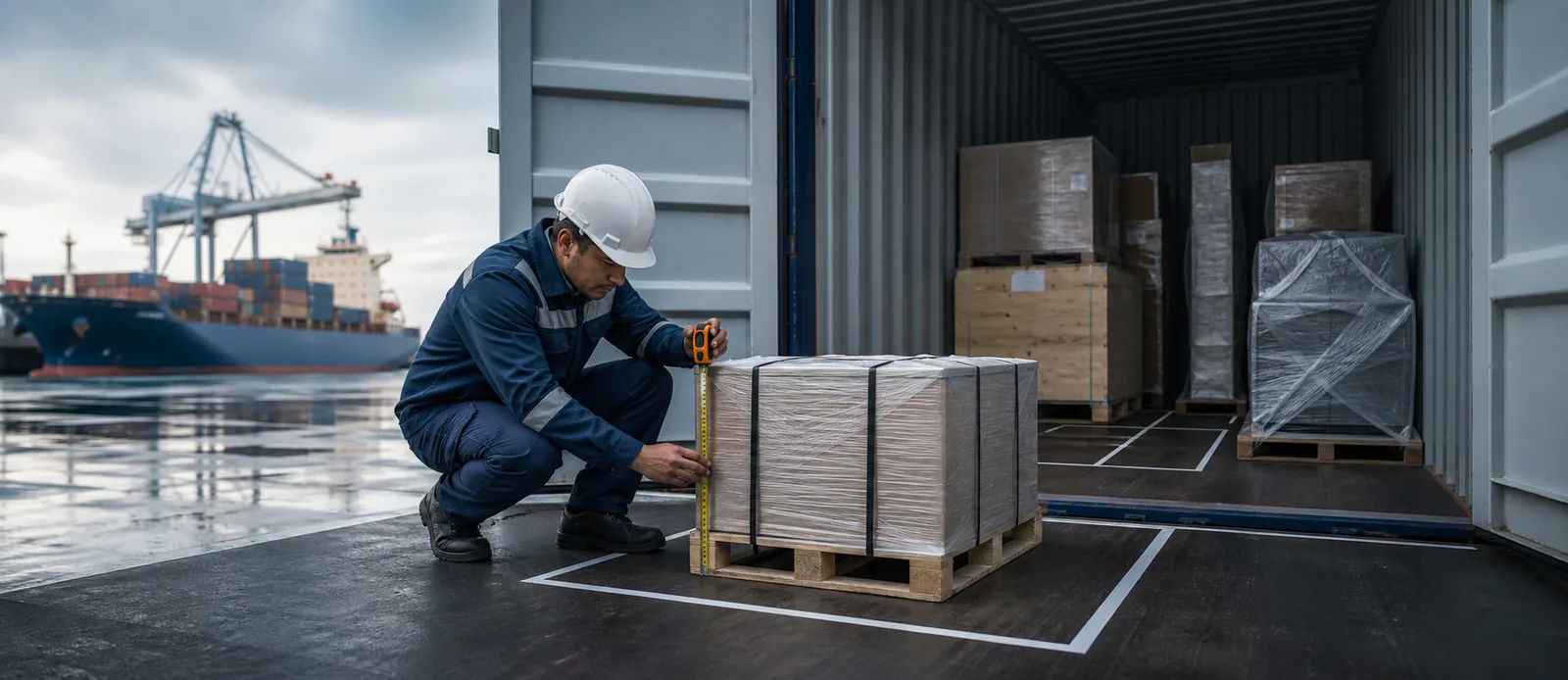
- Step 1: Measure and calculate CBM: Measure each piece of cargo (length, width, height in centimeters). Calculate CBM for each: (L × W × H) ÷ 1,000,000. Add up all pieces. Example: 10 cartons of 60cm × 40cm × 50cm = 10 × 0.12 CBM = 1.2 CBM total.
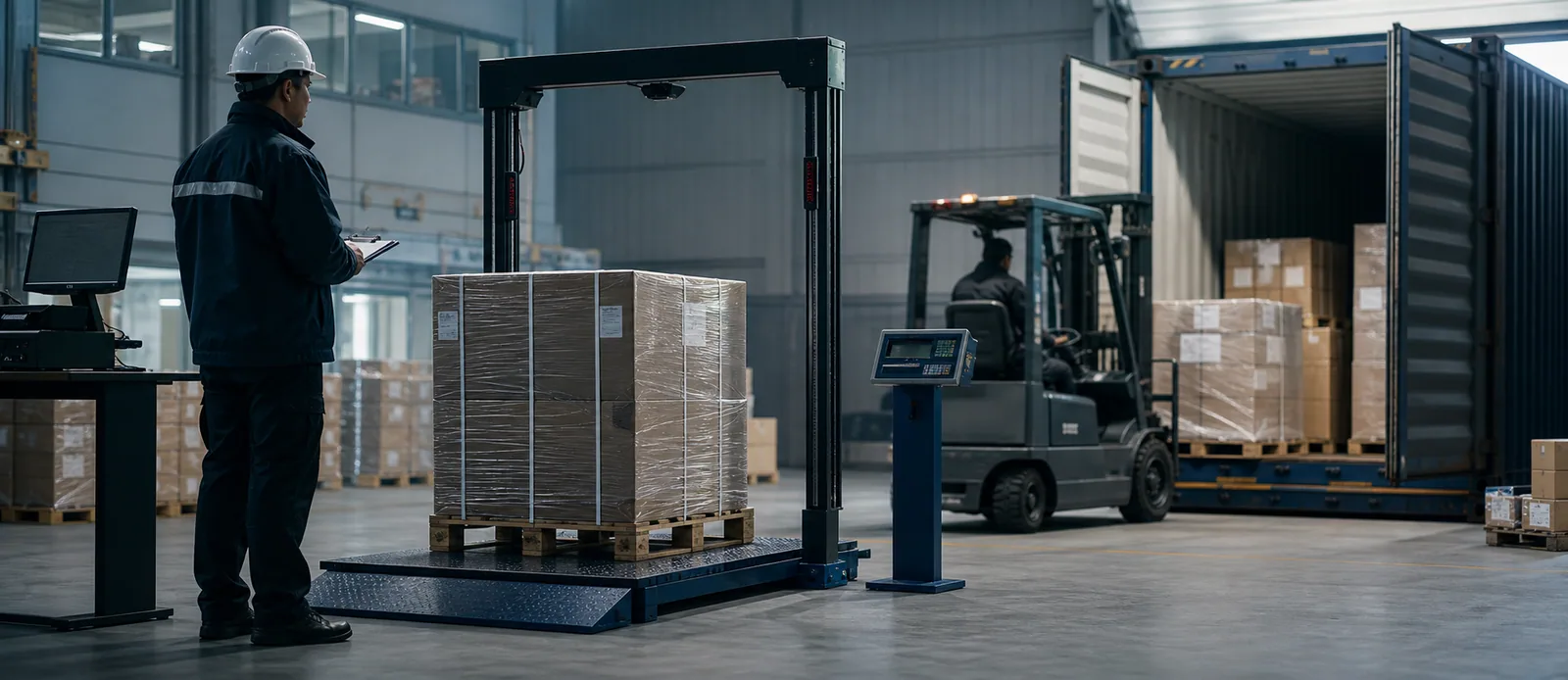
- Step 2: Check your weight-to-volume ratio: Divide total weight in kg by total CBM. If the result exceeds 1,000 kg/CBM, you'll be charged by weight (as metric tons) instead of volume. Example: 1.2 CBM weighing 1,800 kg → 1,500 kg/CBM. You'd be charged as 1.8 metric tons, not 1.2 CBM.
- Step 3: Determine your chargeable unit: Use whichever is greater: total CBM or weight in metric tons. This is the revenue ton calculation. For our example: 1.8 tons (weight) vs 1.2 CBM (volume) → charge as 1.8 metric tons or equivalent in CBM (1.8 metric tons = ~1.8 CBM for pricing).
- Step 4: Get the route rate: Request a rate quote from your freight forwarder for your origin port, destination port, and commodity. Example: Shanghai to Los Angeles, electronics, 1.2 CBM = $120/CBM.
- Step 5: Calculate ocean freight: Multiply chargeable units by the per-CBM rate. Example: 1.2 CBM × $120 = $144 ocean freight. If weight applied: 1.8 metric tons with a rate card of $100/ton = $180. Use whichever is higher.
- Step 6: Add CFS and surcharges: Origin CFS ($25/CBM × 1.2 = $30). Ocean surcharges (BAF $15/CBM × 1.2 = $18). Destination CFS ($30/CBM × 1.2 = $36). Total: $144 + $30 + $18 + $36 = $228.
- Step 7: Add fixed per-shipment charges: Documentation ($75), customs clearance ($200), destination drayage ($300). Add these to the per-CBM total: $228 + $75 + $200 + $300 = $803 all-in for this shipment.
- Step 8: Calculate cost per CBM landed: Divide total cost by original CBM for cost transparency: $803 ÷ 1.2 CBM = $669 per CBM all-in (vs. $120 ocean rate alone). This shows the true cost of LCL including all handling.
LCL Rate Trends 2024-2026
2024 Baseline: LCL rates in early 2024 settled into the $60-$120/CBM range for major Asia-US routes, after post-pandemic ups and downs. Carrier space returned to normal, and schedules got more reliable. Seasonal swings stayed, but were easier to predict than in 2022-2023.
2025 Update: Mid-2025 saw big seasonal swings, driven by e-commerce demand. Peak season (September-December 2025) rates jumped to $140-$180/CBM for China-US, as retailers stocked up early ahead of tariff worries. Off-peak rates (January-March 2025) fell to $50-$90/CBM as demand dried up. Bunker prices (the BAF part) stayed fairly stable at $15-$25/CBM.
2026 Outlook & Current Market: Early 2026 rates have settled into the $85-$165/CBM range for China-US West Coast. Trade policy shifts and port labor deals in 2026 keep rates moving up and down. Firms are passing through green compliance costs (IMO2030 fuel rules) as green surcharges (+$5-$10/CBM expected by late 2026). Freight forwarders still compete hard, with weekly rate deals common. See current LCL shipping rates to compare today's pricing by lane.
Post-Pandemic Reset: The trade has moved from crisis-driven pricing (2021-2023) to steadier, demand-driven pricing (2024-2026). Carrier profits are stable, but lower than pandemic peaks, which drives cost-cutting moves. LCL profit margins have shrunk as forwarders compete, but volumes stay high.
LCL vs FCL: The Breakeven Point
There is no universal breakeven point between LCL and FCL: it depends on the trade lane, the cargo and the offers you receive (see our LCL shipping rates guide).
Breakeven math: If FCL for a 20ft container (28 CBM) costs $2,800, the cost per CBM is $100. LCL at $120/CBM costs more above 23 CBM. Extra charges move this point, and both options have them: CFS, customs and drayage add about $300-$500 per LCL shipment, and FCL carries its own local charges. Compare full LCL and FCL quotes for the same cargo.
Breakevens by Route: On China-USA routes, the early-2026 LCL base references in our LCL shipping rates guide are USD 45–160 per CBM to the West Coast and USD 65–180 to the East Coast. Our price guides publish no 20ft China–US figure, so work out your own breakeven: divide your 20ft FCL quote by your LCL rate per CBM. On lower-volume India-Europe routes, FCL rates run higher and LCL groupings happen less often, so the point where FCL pays off tends to sit higher; compare both quotes for your cargo.
| Volume (CBM) | LCL Cost (all-in)* | 20ft FCL Cost (all-in)** | Winner |
|---|---|---|---|
| 5 CBM | $590 ($118/CBM all-in) | $2,800 ($100/CBM) | LCL (40% cheaper) |
| 10 CBM | $1,090 ($109/CBM all-in) | $2,800 ($100/CBM) | FCL (24% cheaper) |
| 13 CBM | $1,430 ($110/CBM all-in) | $2,800 ($100/CBM) | FCL (50% cheaper) |
| 15 CBM | $1,640 ($109/CBM all-in) | $2,800 ($100/CBM) | FCL (71% cheaper) |
| 20 CBM | $2,190 ($110/CBM all-in) | $2,800 ($100/CBM) | FCL (22% cheaper) |
8 Ways to Reduce Your LCL Cost per CBM
- Optimize packaging dimensions — Remove excess air from cartons, use right-sized boxes, and consolidate items. Every centimeter reduced in carton dimensions saves volume. Vacuum-sealing soft goods can reduce CBM by 10-30%. For a 1.2 CBM shipment, this might save $120-$350.
- Consolidate shipments by timing — Instead of shipping weekly (5 × 1 CBM), batch monthly (1 × 5 CBM). Fixed per-shipment costs ($75 documentation, $200 customs) are spread across 5 CBM instead of 1. Monthly consolidation saves 25-40% on total cost.
- Ship during off-peak seasons — Rates in March-May and August-September are 10-25% lower than October-December and January-February peaks. If possible, shift inventory purchases to off-peak months and maintain higher warehouse stock.
- Use a consolidator with high frequency on your route — Consolidators moving 50+ weekly shipments negotiate carrier rates 10-20% better than those moving 10 weekly. Ask your forwarder about weekly LCL consolidation services; they usually offer 5-15% discounts vs standard rates.
- Choose lighter, less-dense commodities when possible — Light goods (textiles, electronics, foam products) maximize container volume utilization and avoid weight surcharges. Heavy goods (machinery, ceramics, metals) hit weight limits quickly, increasing per-CBM cost. If sourcing options exist, lighter is cheaper by LCL.
- Negotiate annual contracts — If you ship 50+ CBM annually on the same route, propose a contract with a consolidator. Even small volume commitments unlock 10-20% rate reductions. Lock in rates for 6-12 months to avoid seasonal spikes.
- Bundle cargo types at the CFS — Some consolidators offer reduced CFS fees if you consolidate multiple shipments in one LCL container. Ask your forwarder if combining two 6-CBM shipments into one CFS bill reduces per-CBM CFS handling from $25 to $18.
- Use FCL co-shippers on break-even volumes — At 10-12 CBM, compare LCL all-in cost to FCL. You might find two shippers willing to split a 20ft FCL (14 CBM each), paying $1,400 each instead of $1,300 for LCL all-in. The FCL option offers faster transit as a bonus.
Hidden Costs in LCL Pricing
Many shippers look only at the per-CBM rate, and miss the fixed per-shipment costs that push up the real cost a lot. A $100/CBM rate becomes $140-160/CBM all-in once you add origin CFS ($25), papers ($75/shipment ÷ volume), customs ($200/shipment ÷ volume), and drayage ($300/shipment ÷ volume). For a 1 CBM shipment, this adds $600 to the $100 base — a 6× jump.
Peak season surcharges (PSS), bunker adjustment factor (BAF), and currency adjustment (CAF) often get quoted apart from the base rate. A '$100/CBM' quote becomes $115-130/CBM once surcharges get added. Always ask for an all-in rate that includes all surcharges, to avoid surprises.
CFS minimum charges mean shipments under 1 CBM still trigger the full $15-40 CFS fee, even if your cargo is 0.5 CBM. Extra storage days at CFS (past the free days) add $50-100/day per shipment. Make sure your CFS schedule fits your delivery deadline.
Weight surcharges on heavy cargo can push the real rate far above the quoted per-CBM rate. Dense goods at 1,200+ kg/CBM get charged by weight. A shipper quoted $100/CBM, but weighing 2,000 kg in 1.5 CBM, gets charged as 2 metric tons instead — raising the real rate to $133/CBM or more.
Demystifying LCL Rate Quotes
When you ask for LCL rates, share: exact origin city and port, exact destination city and port, goods description (HS code helps), total CBM and weight, packing type (cartons, pallets, mixed), needed arrival date (in-stock date), and any special handling (fragile, temperature, hazmat). Vague requests get padded rates with backup buffers built in.
Rate quotes usually stay valid for 3-5 days. After that, fuel surcharges, carrier schedules, and grouping costs may shift. Peak season quotes (September-November) stay valid for only 24-48 hours, since rates change fast then.
Know the gap between 'freight-only' rates and 'all-in' rates. A freight-only rate covers just the ocean carrier cost, and leaves out CFS, papers, or drayage. A rate that looks very low may be freight-only. Always ask: 'Is this all-in, including CFS, surcharges, and customs?' An all-in rate gives you the true cost.
Ask for a rate breakdown that shows: ocean freight, origin CFS per CBM, origin CFS minimum, surcharges, destination CFS per CBM, minimum charges, and paper fees. This open view lets you see where costs come from, and negotiate each line item.
Frequently Asked Questions About LCL Cost per CBM
Sources & references
- Drewry — World Container Index (ocean spot-rate benchmark) — Reporting unit stated by the index: USD per 40ft container. It publishes no LCL rate per cubic metre. Checked 17 September 2026.
- Freightos Baltic Index (FBX) — global container freight pricing — The index measures 40ft container prices; it publishes no LCL rate per cubic metre. Checked 17 September 2026.
- Xeneta — ocean & air freight rate analytics — Container and air-cargo rate analytics. It is not the source of the per-cubic-metre figures on this page.