
Warehouse Costs 2026: Complete Pricing Guide
Summary: Warehousing is often the second-biggest logistics cost after freight, at 20-30% of total supply chain spend. Whether you lease your own space, use a 3PL, or check out fulfillment centers, knowing the real cost of warehouse storage in 2026 helps you make a better call. This guide covers every pricing model, rate gaps by region, and proven ways to cut your warehousing costs.

Average Warehouse Costs in the US: 2026 Overview
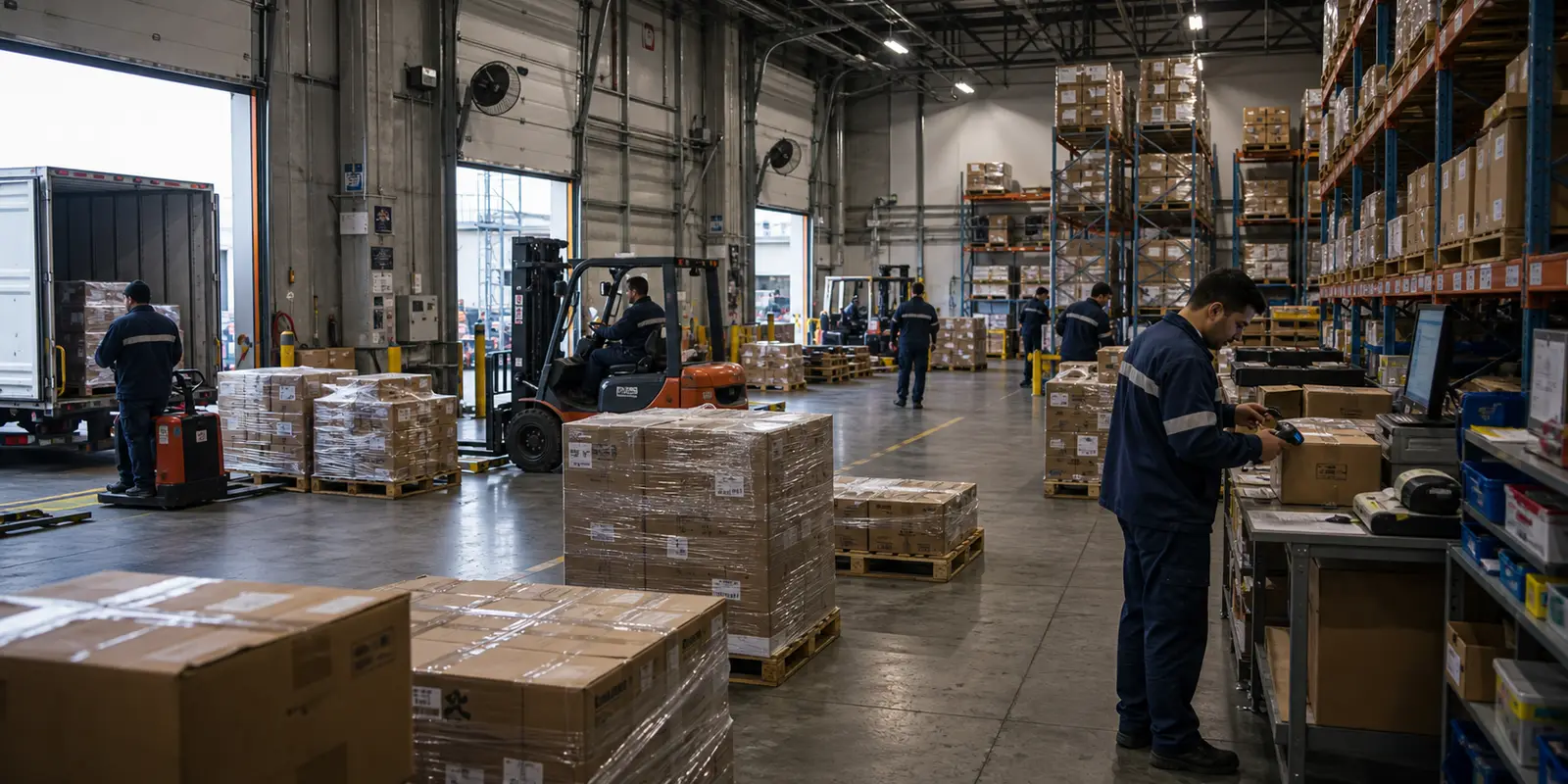
Warehouse storage costs across the US have settled down in 2026, after years of sharp jumps. The national average for 3PL, or third-party logistics, warehouse storage sits at $1.73 per square foot per month, in a typical range of $1.25 to $2.25, based on location, facility type, and what services come with it. For leased warehouse space, the national average runs about $9.00 per square foot per year.
After rent jumped by double digits in 2021 through 2023, the warehouse market has cooled off by a lot. Rent growth slowed to about 2% a year in 2025-2026, and rates on the West Coast and in the Northeast actually fell 3-5%. This sets up good terms for firms that want to lock in a warehouse deal, or renegotiate one they already have.
That said, the headline rate tells only part of the story. Warehouse costs add up from storage fees, handling charges, value-added services, and other surcharges, and together they make up your true spend. Know the full cost picture, and you can budget right and compare quotes fair and square.
Warehouse Pricing Models: How You Will Be Charged
Warehouse providers price their service in a few different ways, based on the service type and your own needs. Pick the right model, and it shapes both your total cost and how flexible you stay.
| Pricing Model | Rate Range (2026) | Best For |
|---|---|---|
| Per square foot (shared) | $1.25 – $2.25/sqft/month | Dedicated floor space in a shared facility |
| Per pallet position | $12 – $30/pallet/month | Palletized goods with standard dimensions |
| Per cubic foot | $0.35 – $0.60/cuft/month | Irregular-sized goods, non-palletized cargo |
| Per unit (each) | $0.20 – $0.75/unit/month | Small items in bin or shelf storage |
| Percentage of goods value | 1.5% – 3.0% of value/month | High-value inventory (electronics, luxury goods) |
| Fixed monthly fee | $1,500 – $15,000+/month | Dedicated space or guaranteed capacity blocks |
| Leased space (own ops) | $5 – $25/sqft/year | Full warehouse lease with your own staff/equipment |
Warehouse Costs by US Region
Location is the single biggest driver of warehouse price. Port cities and major hubs charge a premium, due to demand, labor cost, and how close they sit to shoppers. This gap by region can run huge — warehouse space in Los Angeles costs 2-3 times more than the same space in the Midwest.
When you pick a warehouse spot, your total logistics cost matters more than the rate alone. A cheap warehouse in an inland market can end up costing more overall, once it adds big last-mile shipping costs. The best spot depends on where your customers live and which port your goods land at.
| Market | 3PL Storage (sqft/month) | Lease Rate (sqft/year) | Key Factors |
|---|---|---|---|
| Los Angeles / Inland Empire | $1.80 – $2.50 | $15 – $22 | Largest US port complex, highest demand |
| San Francisco / Oakland | $2.00 – $2.75 | $17 – $22 | Limited supply, tech-driven demand |
| Miami / South Florida | $1.50 – $2.20 | $12 – $18 | Latin America trade hub, reefer capacity |
| New York / New Jersey | $1.75 – $2.50 | $14 – $20 | Largest consumer market, port proximity |
| Chicago / Midwest | $1.00 – $1.60 | $6 – $10 | Central distribution, lower labor costs |
| Dallas / Houston | $1.10 – $1.70 | $7 – $12 | Growing market, nearshoring from Mexico |
| Atlanta | $1.10 – $1.65 | $7 – $11 | Southeast distribution hub, port of Savannah access |
| Phoenix / Las Vegas | $1.20 – $1.80 | $8 – $13 | Growing population, overflow from LA |
| Seattle / Portland | $1.40 – $2.00 | $10 – $15 | Asia trade gateway, Amazon HQ effect |
| Savannah / Charleston | $0.90 – $1.40 | $5 – $9 | Fast-growing ports, competitive rates |
Hidden Warehouse Costs: What Most Quotes Don't Show
The storage rate is just the start. Warehouses charge for every task past basic storage, and these handling fees can match, or even beat, your storage cost. When you compare quotes, check that each provider lists the same line items. Here are the most common extra charges.
| Service | Typical Cost | When It Applies |
|---|---|---|
| Inbound receiving | $25 – $45 per pallet | Every shipment received into the warehouse |
| Outbound shipping/handling | $3 – $6 per order | Each order picked, packed, and shipped |
| Pick and pack fee | $0.50 – $3.00 per item | Individual item picking for e-commerce orders |
| Case pick | $1.50 – $4.00 per case | Picking full cases rather than individual units |
| Pallet in / pallet out | $5 – $15 per pallet | Moving pallets within the warehouse |
| Kitting / assembly | $0.30 – $2.00 per unit | Combining products into sets or bundles |
| Labeling / relabeling | $0.15 – $0.50 per unit | SKU labels, barcodes, compliance labels |
| Returns processing | $3 – $8 per return | Receiving, inspecting, and restocking returns |
| Container unloading (devanning) | $300 – $600 per container | Unloading ocean containers at the warehouse |
| Inventory management fee | $50 – $200/month | WMS access, cycle counts, reporting |
| Minimum monthly fee | $500 – $2,000/month | Guaranteed minimum regardless of volume |
| Account setup / onboarding | $250 – $1,000 (one-time) | WMS integration, SKU setup, training |
3PL Warehousing vs Leasing Your Own Space
One of the biggest calls in a warehouse strategy is whether to use a 3PL, or lease and run your own space. The right call rests on your volume, your growth rate, and how complex your operations run.
| Factor | 3PL Warehouse | Leased Space (Own Operations) |
|---|---|---|
| Upfront cost | Low (monthly fees only) | High (deposit, fit-out, equipment, staff) |
| Monthly cost (10,000 sqft) | $12,500 – $22,500 | $4,200 – $8,300 + staff + equipment |
| Scalability | High (scale up/down monthly) | Limited (locked into lease term) |
| Control | Limited (3PL manages operations) | Full (your staff, your processes) |
| Technology | Included (WMS, reporting) | You provide (or buy WMS: $500-$5,000/mo) |
| Labor | Included in fees | Your responsibility ($15-$25/hr + benefits) |
| Lease commitment | Month-to-month or 3-12 months | 3-10 year lease typical |
| Break-even volume | Under 5,000 pallets/month | Over 5,000 pallets/month |
| Best for | Growing businesses, seasonal demand, new markets | Established businesses with predictable volume |
How to Reduce Warehouse Costs: 7 Strategies
- Negotiate based on volume commitment: Warehouse providers give real discounts for a volume guarantee. Commit to a set number of pallets, or a block of floor space, for 12+ months, and you can cut storage rates by 10-20%. Get quotes from at least 3 providers, so they compete for your business.
- Optimize your inventory levels: Every pallet that sits in a warehouse costs you money. Move to just-in-time ordering to bring your average inventory down. Check your SKU speed — the slowest 20% of your SKUs often drive 50%+ of your storage cost, while bringing in almost no revenue.
- Consolidate shipments before warehousing: Import more than one LCL shipment a month? Combine them into fewer, bigger deliveries, and you cut your receiving charges. Each inbound delivery runs $25-$45 per pallet in receiving fees, so fewer, larger shipments mean fewer fees to pay.
- Choose the right location for your distribution pattern: A central warehouse, say in Dallas, Chicago, or Atlanta, can cut your total logistics cost, even if the storage rate runs higher than a remote spot. Work out your total cost: the warehouse plus outbound shipping to every customer. Pay $1.50/sqft near your customers, and it can still beat $0.90/sqft in a remote spot plus a higher shipping bill.
- Use seasonal storage for peak periods: Does your inventory spike by season, say around the holidays? Use overflow storage instead of sizing your main warehouse for peak demand. Many 3PLs sell short-term storage at a slightly higher rate, which still costs less than holding excess space all year round.
- Maximize vertical space and pallet density: Most warehouse quotes price by floor space, but you pay for cubic volume in real terms. Stack pallets higher, within the warehouse's height limit, and you cut your true cost per pallet. Work with your supplier to build packing that stacks well and makes the most of pallet height.
- Audit your 3PL invoices monthly: Warehouse billing errors happen a lot — studies find that 5-10% of invoices carry an overcharge. Check pallet counts, handling fees, and storage math every month. Set up an automated match-up between your system and the warehouse's WMS.
Warehouse Costs for Importers: Port-to-Warehouse Pipeline
For importers, warehouse costs sit inside a bigger logistics chain that starts at the port. Know how your warehouse choice feeds into your total landed cost, and you can fine-tune the whole pipeline.
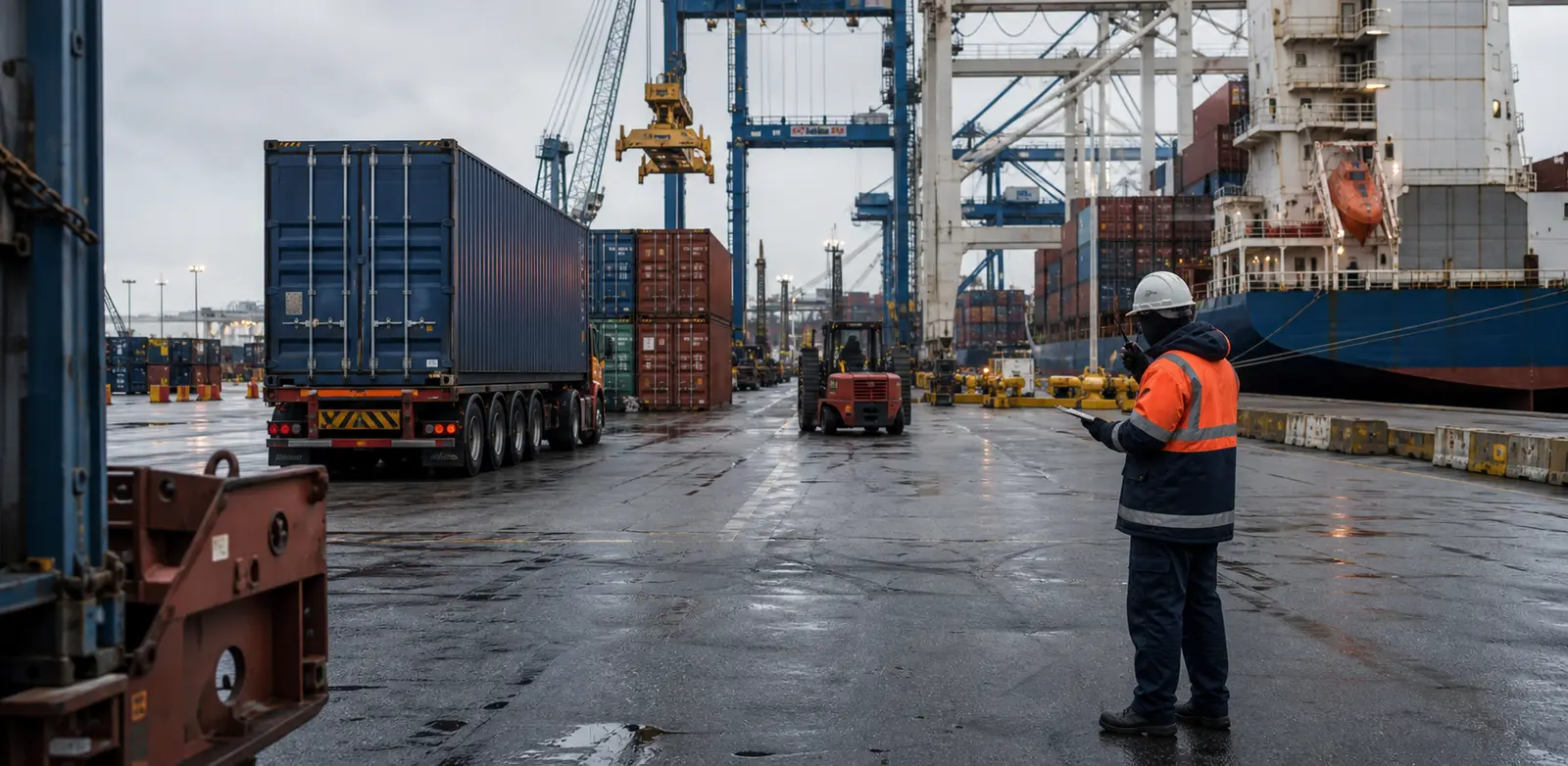
A container lands at a US port, say Port of Los Angeles or Port Miami, and first clears customs, then drayage, meaning a truck, moves it to your warehouse for unloading and storage. Each step carries its own cost and its own timing to plan for.
The key call for importers is where the warehouse sits relative to the port. Keep it within 30 miles of the port, and drayage costs hold at $400-$600 per container. Move it further inland, and you add $200-$500 for each 50 miles. That said, if most of your customers sit in the Midwest or on the East Coast, a warehouse near the port may add a big outbound shipping bill.
For a full breakdown of the import process, from container to warehouse, check our guides on customs clearance steps and broker fees. Need help linking your import freight to warehouse and distribution? Suaid Global manages the full supply chain, from origin to your customer's door.
Warehouse Market Outlook: What to Expect in Late 2026
The warehouse market is moving into a steadier phase, after years of fast change. A few key trends will shape warehouse costs for the rest of 2026 and into 2027.
New warehouse builds are catching up to demand. About 400 million square feet of new industrial space came online in the US in 2025, and another 350+ million sits in the pipeline for 2026. This new supply is holding rent growth down, most of all in markets like the Inland Empire in CA, Dallas-Fort Worth, and Phoenix, where builders stayed busiest.
The nearshoring trend is shifting where warehouse demand lands. As more firms move sourcing from China to Mexico, demand is growing in border cities such as Laredo, El Paso, and San Diego, plus Sun Belt hubs like Dallas, Houston, and Atlanta. This may push local prices up in these markets.
Automation now plays into cost too. Warehouses that invest in robots, automated storage systems, and AI-driven WMS charge a premium rate, but offer a lower per-unit handling cost at scale. For high-volume shops, 10,000+ orders a month, an automated site can cut total warehousing cost by 15-25%, even with a higher rate per square foot.
For importers, the takeaway is clear: 2026 is a good year to negotiate a warehouse deal. The market has softened just enough to hand tenants real bargaining power, but a prime spot in a major hub still draws strong demand. Lock in a good rate now — the market is not likely to get much cheaper from here.
Frequently Asked Questions: Warehouse Costs
Sources & references
Explore more on these topics
Model warehouse cost from inventory behavior
Warehouse cost is driven by more than the space you fill. The way the cargo behaves sets the total. Think receiving method, pallet and bin storage, SKU count, order profile, pick units, packaging and returns. Stock turns, system links and value-added work matter too.
Build the comparison from one shared model month. Set the inbound units, average and peak storage, orders, lines per order and units per line. Add the outbound method and the exception work. Then split one-time onboarding from the month-to-month charges. Those cover minimums, storage, handling and the tech fees.
- Inbound receiving and put-away profile
- Average, peak and slow-moving storage
- Orders, lines, units and packaging needs
- Returns, labeling, kitting and compliance work