
On-Time — Pharma Air Freight.
How a temperature-sensitive pharmaceutical supply chain achieved near-perfect reliability across 11,000 km.
The Challenge
A major Indian pharmaceutical manufacturer was expanding US distribution of temperature-sensitive generic medications. Their previous logistics arrangement resulted in 8% shipment delays and 2 cold-chain breaches in the prior year. Each breach required full batch destruction worth $200K+. The shipments were small in volume next to an ocean program. The value sat in the product, not in the freight, and that is what made each failure so costly.
Cold-chain freight fails in a costly and final way. A late container of hardware can still be sold. A drug batch that leaves its 2–8°C range often cannot. Once the temperature record shows a breach, the batch is written off in full. That is why 2 events erased more than $400K of finished product.
Delays carried a second cost, quieter but steady. US distribution centers plan restocking around a promised arrival week. An 8% delay rate made that plan hard to trust. Buyers then hold extra safety stock, or they add a second supplier. Either answer weakens the position the company was trying to build.
The route added its own pressure. The lane runs about 11,000 km from Mumbai to US distribution centers. Cargo changes hands many times along the way. Each handover — truck, ramp, aircraft hold, customs area — is a point where the temperature can drift. US import rules add another layer, because drug shipments need FDA prior notice before the aircraft lands.
Cost sat on the other side of the problem. Generic medicines compete on price, so freight spend shows up directly in margin. Air freight guards a cold chain better than any other mode, but it also costs the most. They needed a partner who could hold cold-chain integrity from Mumbai to US distribution centers. That partner also had to meet FDA import rules and keep air freight costs in check.
The Solution
Suaid Global built an end-to-end program for the lane instead of quoting it shipment by shipment. The design started from one rule. The cargo must stay between 2–8°C from the factory dock to the US distribution center. Every other choice followed from that rule. Speed, routing, staging and paperwork were all judged against that single condition.
Air was the right mode here, and not only for speed. A shorter transit means fewer hours of temperature exposure. It also means fewer handovers, and handovers are where most cold-chain events begin. Ocean freight would have cut the freight bill, but it would have stretched the controlled window from days to weeks. So the program runs on temperature-controlled air freight, with cost managed through routing rather than through mode.
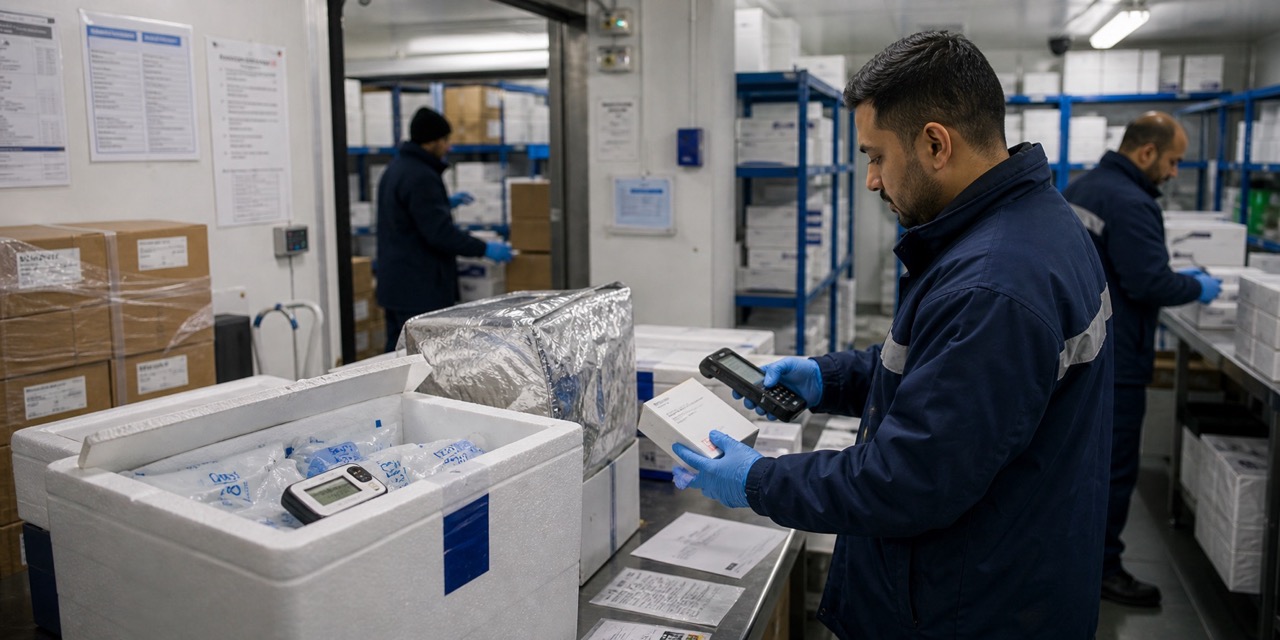
Active temperature monitoring runs on every shipment, not on a sample. Each unit carries a data logger, so the temperature record travels with the batch. A reading that drifts toward the edge of the 2–8°C band raises an alert. A defined corrective step then applies at the next touch point. The record also matters after arrival, because the receiving site needs proof that the batch held its range.
Handling at each transfer point follows GDP-aligned procedures agreed with the ground partners. Customs work is filed by licensed customs broker partners, who prepare FDA prior notice and the entry package before departure. Filing early means the paperwork is already under review while the cargo is still in the air. That shortens the time a batch waits on the ramp after landing. On a 2–8°C shipment, ramp time is the part that hurts most.
Pharma-qualified staging in Miami is handled by a partner warehouse facility, not by Suaid Global directly. The site gives cargo a controlled place to wait when a distribution center cannot receive it the same day. Without it, a missed delivery slot turns into hours on an open dock. Monthly performance reporting closes the loop between the plan and what actually happened. Each late arrival or excursion gets a root cause, and the finding feeds back into the routing plan.
Services Used
How the Program Went Live
The program started with a lane map, not a booking. Suaid Global walked the route with the customer: factory dock, road leg to Mumbai, airline handover, US gateway, customs, road leg to the distribution center. Each step was written down with the party responsible and the temperature condition required. That document became the working standard for everyone on the lane. Nobody had to guess who owned which leg, or who to call when a leg slipped.
Paperwork was fixed before the first shipment moved. Commercial invoice, packing list, air waybill, certificate of analysis and FDA prior notice now follow one template per product. Licensed customs broker partners checked the pack against the importer's registration details. Getting this right once removes the most common cause of airport holds. Most holds start with a form, not with the cargo itself.
The first shipments ran as controlled tests rather than as normal freight. Loggers were read at every leg, not only at delivery. Reading the full curve shows where exposure builds, instead of only whether the batch arrived in range. Ground time — waiting for a truck, waiting for a dock, waiting for release — is usually where the risk sits. Handling steps were tightened around those waits.
The operating cadence is deliberately simple and fixed. Bookings are placed against a standing plan, so space is requested with the carrier ahead of the ready date. Each shipment gets milestone tracking at departure, transit, arrival, customs release and delivery. The customer sees the same milestone set every time. That makes an exception easy to spot.
Two things changed once the program settled into a rhythm. Routing is now reviewed lane by lane instead of being accepted as one fixed path. That review is where the 15% air freight cost reduction came from. The monthly report also became a working session instead of a document. Every alert, hold or late arrival gets a root cause, and the fix is written back into the lane standard.
The Results
The zero-breach record is the headline, and it follows from the design. Cutting exposure hours, fixing the document pack and reading every leg removed the conditions behind the earlier breaches. Across 18 consecutive months the lane has recorded no cold-chain breach. Nothing about that run is luck or a soft measurement. It is the same route, the same checks and the same paperwork every time.
The $400K+ saved by eliminating batch destruction events is the same result read in money. Each earlier breach destroyed a batch worth $200K+. Product that reaches the shelf instead of the incinerator is the largest single saving in a pharma lane. No freight rate can match it. The saving also repeats every month the record holds.
The 15% air freight cost reduction came from lane optimization, not from a thinner service level. Reviewing gateways, routings and grouping options across the year found cheaper paths for the same temperature rule. The temperature rule itself never moved. Only the way to meet it did. That matters in generics, where every dollar of freight spend competes with margin.
Volume followed reliability, which is the only order that works. The company moved from 2 shipments per month to 8, and later added a European distribution lane with Suaid Global. That growth is the real test of a pharmaceutical logistics program. A customer only ships more when the last shipments arrived intact. The lane earned the next lane.
Shipping Temperature-Sensitive or Regulated Cargo?
We coordinate pharma shipments with specialist partners, checking compliance and handling requirements at every step.