
Demurrage and Detention: Stop Paying for Idle Containers
Summary: Demurrage and detention charges punish every day your container sits idle. Rates typically run $150 to $450 or more per container, per day, and they escalate fast. This guide explains what each charge means, where it accrues, and eight practical ways to keep your invoice at zero.

What Demurrage, Detention, and Per Diem Mean
Demurrage and detention are the two most common surprise fees in ocean freight. Both are billed per container, per day. Both start after your free time runs out. The key difference is location.
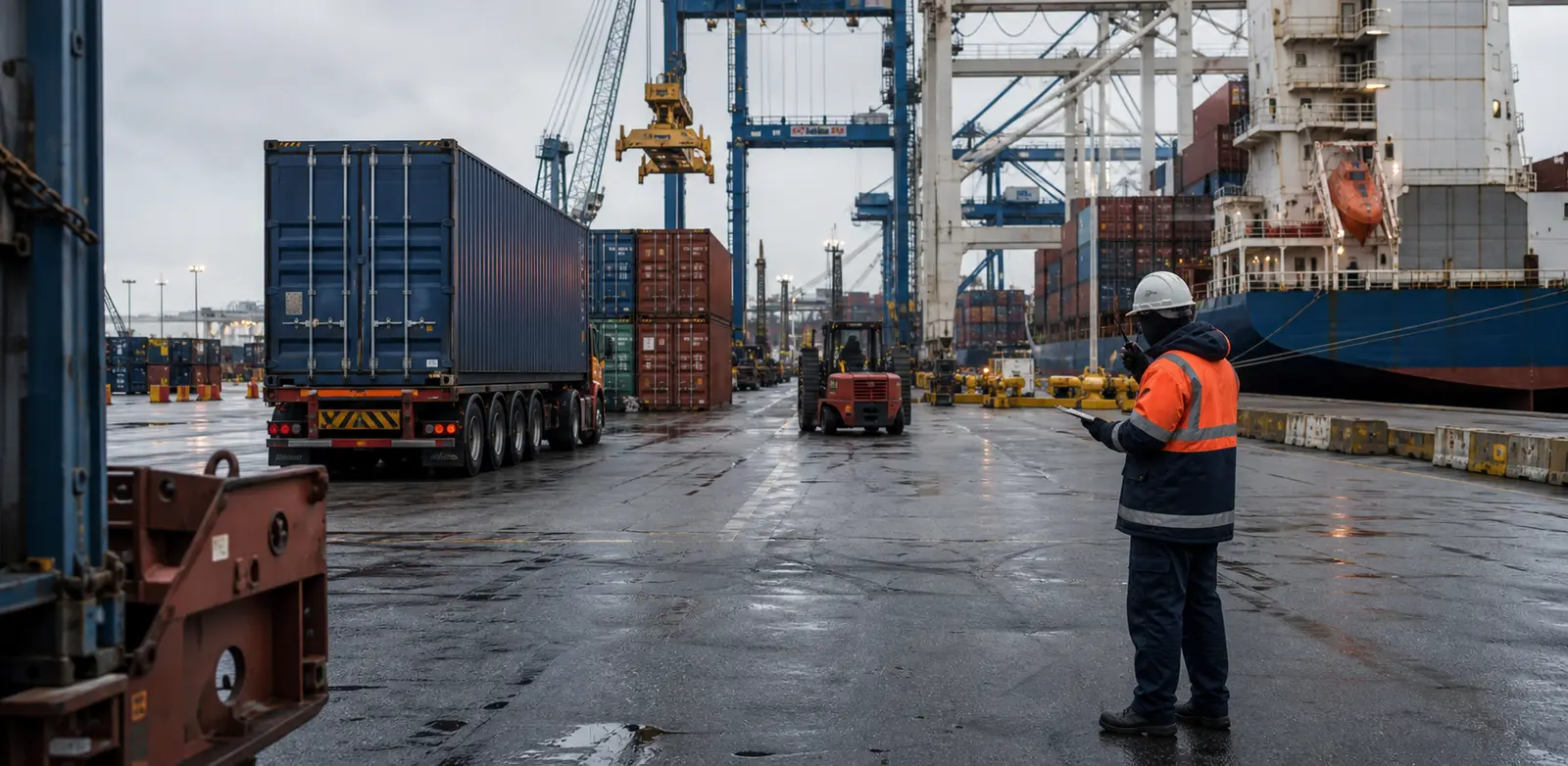
Demurrage applies while a loaded container sits inside the port or terminal. Your cargo arrived, but nobody picked it up in time. The terminal or carrier charges you for the space the box occupies. The clock usually starts when the container is discharged from the vessel.
Detention applies after the container leaves the port. You picked it up, but you have not returned the empty box to the carrier. The carrier charges you for the extra days you keep its equipment. Many US carriers and truckers call this per diem. The two terms mean the same thing.
One container can rack up both charges on the same trip. A slow pickup at the terminal triggers demurrage. Slow unloading at your warehouse triggers detention. Importers who plan for only one of the two often pay twice.
Where Each Charge Accrues: Port vs Off-Port
Think of the terminal gate as the dividing line. Demurrage accrues on the port side of the gate. Detention accrues on your side of the gate. The moment a trucker pulls your container out, the demurrage clock stops and the detention clock starts.
For imports, the typical flow looks like this. The vessel arrives and the container is discharged. Demurrage free time begins. You clear customs, book a trucker, and gate the box out. Detention free time begins. You unload at your warehouse and return the empty container to the depot. Both clocks stop.
Exports work in reverse. Carriers often grant free time between empty pickup and the gate-in cutoff at the port. Keep the empty too long before loading, and detention applies. Deliver the loaded box to the terminal too early, and some ports charge demurrage or early-arrival storage.
Storage is a third, separate charge. It covers physical ground space at a terminal, depot, or warehouse. We compare all three side by side later in this guide.
Free Time: How Many Days You Typically Get
Free time is the grace period before charges start. It is set by your carrier contract, the port, and sometimes the terminal. Most ocean carriers grant 3 to 5 free days for import demurrage at US ports. Negotiated contracts can extend this to 7 days or more.
Detention free time typically runs 3 to 5 working days from the moment the container gates out. High-volume shippers on busy lanes like China to the USA often negotiate 7 to 10 combined days. Spot bookings usually get the shortest windows.
Watch the fine print on how days are counted. Some tariffs count calendar days, including weekends and holidays. Others count working days only. A container discharged on a Friday can burn three calendar days before Monday morning.
| Charge type | Typical free time | When the clock starts |
|---|---|---|
| Demurrage (import) | 3-7 calendar days | Container discharged from the vessel |
| Detention / per diem | 3-5 working days | Container gates out of the terminal |
| Demurrage (export) | 5-7 days around cutoff | Empty pickup or early gate-in, per tariff |
Daily Rates and How the Tiers Escalate
Demurrage and detention rates are tiered. The longer the container sits, the more each extra day costs. As of mid-2026, most carriers and US terminals price the first tier between $150 and $275 per day for a dry container.
By the third tier, daily rates often reach $350 to $450 or more. Special equipment costs more. Reefers can run two to three times the dry-box rate because they occupy powered plugs at the terminal.
The table below shows typical tier ranges for a standard import container at major US ports. Your exact tariff depends on the carrier, terminal, and contract. Always check the published tariff for your specific port pair.
| Tier | Days past free time | Typical demurrage per day | Typical detention per day |
|---|---|---|---|
| Tier 1 | Days 1-4 | $150-$275 | $100-$200 |
| Tier 2 | Days 5-9 | $275-$350 | $200-$250 |
| Tier 3 | Day 10 and beyond | $350-$450+ | $250-$300+ |
How Charges Snowball: A Worked Example
Here is how one ordinary delay turns into a four-figure invoice. Say your 40ft container is discharged in Los Angeles on a Monday. Your contract gives you 4 free demurrage days, so the clock starts billing on Friday.
Customs flags the entry for a document review. That takes three days to resolve. Your trucker then has no appointment until the next Wednesday. The box gates out after 5 chargeable days. At tier-one and tier-two rates, that is roughly $150, $150, $150, $150, and $275. Demurrage subtotal: about $875.
The snowball keeps rolling off-port. Your warehouse is backed up, so the container is unloaded four days after delivery. The empty is returned two days later. With 4 free detention days, you pay 2 chargeable days at roughly $125 each. Add chassis rental at $35 to $50 per day for the full off-port week.
Total damage: roughly $1,375 to $1,475 on a single container. Nothing went badly wrong here. One customs query and one slow warehouse week did all of it. Run ten containers a month with the same pattern and you lose five figures. Our freight calculator can help you budget the base freight, but idle-time fees are pure leakage on top.
Demurrage vs Detention vs Storage: Side by Side
These three charges get mixed up constantly, and invoices do not always label them well. Some terminals bill storage on top of carrier demurrage for the same days. Knowing which is which is the first step to disputing the wrong ones. For a similar breakdown of consolidated-cargo fees, see our guide to LCL charges and fees.
| Factor | Demurrage | Detention (per diem) | Storage |
|---|---|---|---|
| Who bills you | Carrier or terminal | Carrier | Terminal, depot, or warehouse |
| Where it accrues | Inside the terminal | Outside the terminal | Wherever cargo physically sits |
| What it covers | Loaded box occupying port space | Use of carrier equipment off-port | Ground space and handling |
| Typical daily cost | $150-$450+ | $100-$300+ | $20-$100 |
| Main fix | Faster customs and pickup | Faster unload and empty return | Move cargo to cheaper space |
How to Avoid Demurrage and Detention Charges
Most demurrage and detention is avoidable. The fixes are operational, not legal. Tight coordination between your customs broker, your drayage provider, and your warehouse removes almost every chargeable day. Work through these eight steps on every shipment.
- Pre-clear customs before the vessel arrives: File your ISF on time and submit entry documents 3 to 5 days before arrival. US Customs allows entry filing up to 5 days before the vessel docks, so a released container can gate out on day one of free time.
- Book your trucker before the container lands: Arrange drayage when the vessel departs origin, not when it arrives. Terminal appointments at busy ports can be scarce, and a trucker booked late can lose you 2 to 4 free days.
- Plan dispatch around your free time: Map the free-time window on a calendar the moment you get the arrival notice. Flag weekends and holidays that burn calendar days, and schedule pickup for day one or two, never the last free day.
- Negotiate extended free time in your contract: Carriers regularly grant 7 to 14 free days to steady volume. If you ship even a few containers per month, ask for extended free time at every rate negotiation. It is often easier to win than a rate cut.
- Track vessel ETA and container availability daily: Watch the carrier portal or tracking feed from one week out. Early vessels start your clock early, and terminal holds show up there first. A daily check costs minutes and saves days.
- Keep backup trucker capacity: Have a second drayage option approved for each port you use. When your primary trucker has no appointments or no chassis, switching fast keeps the box moving inside free time.
- Unload fast and return empties quickly: Tell your warehouse the delivery date in advance and reserve dock time. Aim to strip the container within 24 to 48 hours and return the empty straight away, confirming the depot accepts that box type.
- Audit every demurrage and detention invoice: Check the free-time math, the start date, and the tier rates against your contract on every bill. Industry experience suggests a meaningful share of these invoices contain errors worth disputing.
How to Dispute Incorrect Charges
Bad invoices are common. Clocks start on the wrong date, free time is miscounted, or you get billed for days when the terminal itself was closed. Here is a practical dispute sequence that works for most carriers.
- Collect your evidence first. Save the discharge date, arrival notice, customs release, gate-out ticket, empty-return receipt, and any appointment screenshots. Timestamped records win disputes.
- Recalculate the free time yourself. Check the start date, the calendar-versus-working-day rule, and the tier rates against your contract or the published tariff. Simple math errors are the most common win.
- Identify days you could not act. Terminal closures, no available appointments, carrier system outages, and holds you did not cause are all strong grounds for waiver requests.
- File a written dispute quickly. Most carriers set a 30-day window for billing disputes. Send a short, factual email with your evidence attached and reference the invoice number.
- Escalate politely if refused. Ask for the dispute to be reviewed by the carrier billing or legal team. Persistence with documentation resolves many cases at this stage.
- Use the FMC route for US shipments. If the carrier will not engage, US importers can file a charge complaint with the Federal Maritime Commission. The credible threat alone often unlocks a waiver.
FMC Rules: What OSRA Changed for US Importers
The US Ocean Shipping Reform Act of 2022 reshaped how demurrage and detention can be billed. The Federal Maritime Commission finalized its billing rule in 2024, and it remains the framework as of mid-2026. Treat the details below as a general guide, not legal advice, and confirm current rules for your case.
Under the FMC rule, invoices must include specific data elements. These typically cover the billed dates, the rate applied, the free time granted, and the start and end of the clock. An invoice missing required elements is generally not enforceable as issued.
The rule also limits who can be billed. Charges generally must go to the party with the contractual relationship, not to a random third party such as your trucker. Carriers typically must issue invoices within roughly 30 days and resolve disputes within set timeframes.
The practical takeaway: US importers have real leverage now. Demand itemized invoices, dispute in writing, and reference the FMC billing requirements. Carriers know unsupported charges may not survive a complaint.
How Suaid Global Helps
Suaid Global is an asset-light freight forwarder. We do not own terminals or trucks, and that is the point. We coordinate our partner network of customs brokers, drayage carriers, and depots so your container keeps moving through every handoff.
On import shipments, we time entry filing ahead of arrival, line up trucking before discharge, and track free-time clocks for every container. When an invoice looks wrong, we help you assemble the evidence and push the dispute with the carrier.
If demurrage and detention have been eating your margins, send us a recent shipment timeline. We will show you where the days leaked and quote your next move with idle-time risk planned out from the start.