
LCL Consolidation: The Complete CFS Guide
Summary: Consolidation is the backbone of LCL shipping. Your cargo moves from the origin CFS to the final drop-off. Here's how it gets combined with other loads. See what it costs and how to avoid delays.

What is LCL consolidation?
LCL consolidation is the process of combining cargo from many shippers into one full container. Instead of renting a whole 20ft or 40ft container for yourself, your shipment shares space with cargo from other importers and exporters heading to the same place.
The consolidation process happens at special sites called Container Freight Stations (CFS). These warehouse-like sites handle the physical work, plus all the papers that go with it. Without it, LCL ocean shipping simply wouldn't exist. It's the backbone of flexible, low-cost freight for small shipments worldwide.
How CFS (Container Freight Station) works
A Container Freight Station is a licensed site run by freight forwarders, NVOCCs, or direct CFS operators. They handle cargo from many shippers and plan the timing of each run. They also manage the paperwork and get containers ready to ship.
The CFS operator keeps close ties with shipping lines, has access to vessel space, and can fill containers well. They also handle the reverse process. When containers arrive at destination, workers deconsolidate them. They release the cargo to each consignee.
Major CFS operators worldwide include DHL Global Forwarding, Kuehne+Nagel, Panalpina (now part of DSV), Geodis, and other regional forwarders. Each CFS has its own gear (forklifts, palletizers, strapping machines), warehouse staff, and paperwork experts.
Origin CFS vs Destination CFS: Understanding the two stages
LCL consolidation involves two separate CFS steps: origin and destination.
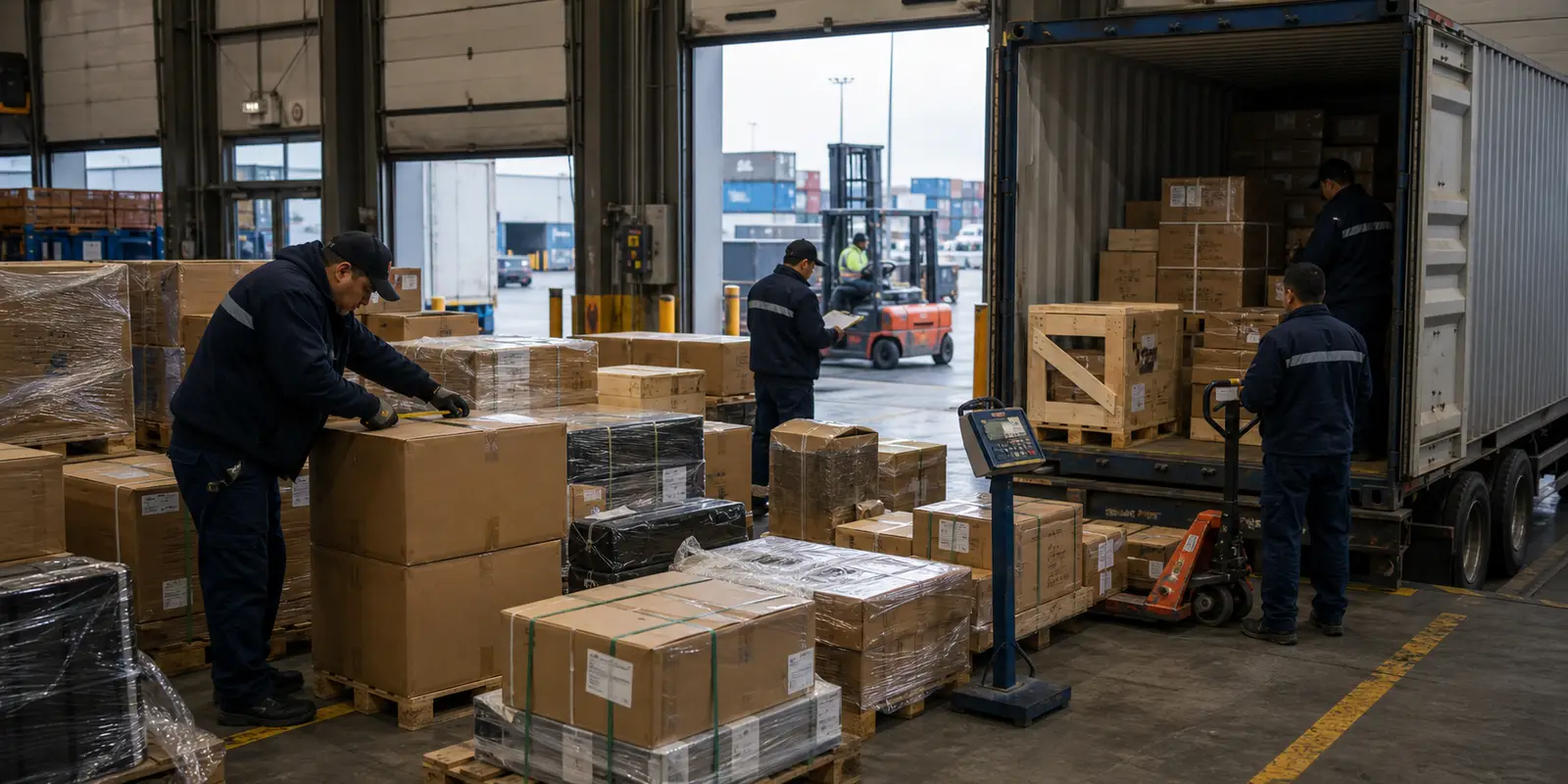
At the origin CFS, your cargo lands and gets consolidated with other shipments. The site takes in cargo from many shippers over a few days. Staff check weight and size and update the papers. Then they pack it all inside the container in a clear stowage plan. Most origin CFS sites run a weekly or biweekly consolidation schedule to keep wait time short.
At the destination CFS, the full container lands and gets deconsolidated. Warehouse staff unpack each shipment, check its condition, handle any small repair or repacking if needed, and get it ready to go out. Deconsolidation often takes 2-4 business days.
The consolidation process step-by-step
- Booking and Pre-Alert: You contact a freight forwarder or NVOCC and book your LCL shipment. You give them the shipper address, consignee address, cargo description, weight, and CBM size. The CFS sends a pre-alert to confirm it got your booking.
- Cargo Delivery to Origin CFS: Your cargo (already packed and labeled) lands at the origin CFS. Staff check it against the booking, confirm size and weight, and issue a receipt. Your shipment is now in the system.
- Consolidation Waiting Period: Your cargo waits at the CFS for consolidation. This often takes 2-7 days, depending on the destination and the schedule. The CFS gathers cargo from many shippers heading to the same port.
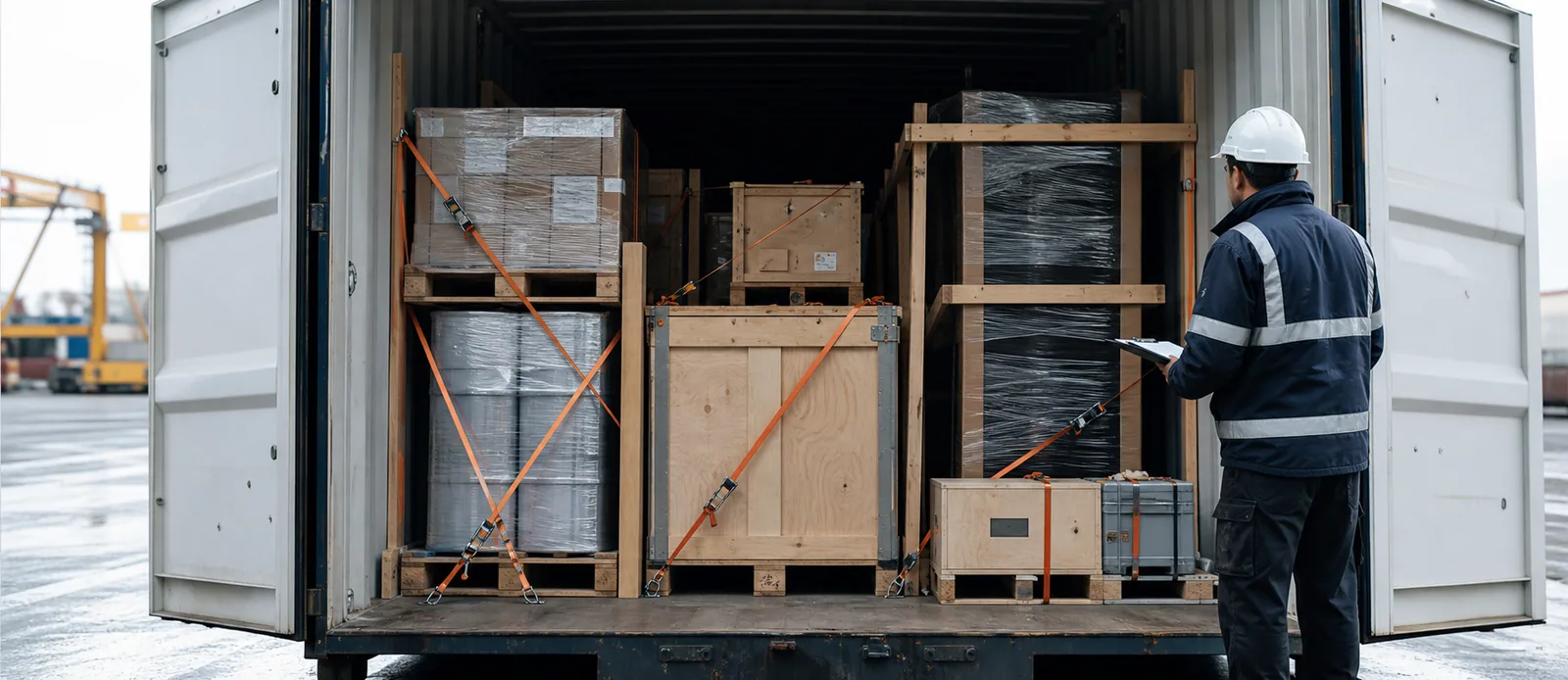
- Stowage Planning: Once enough cargo has come in (often 15-20 CBM), the CFS warehouse team plans the stowage layout. Heavy items go on the bottom, fragile goods on top. Dividers keep each shipper's cargo apart. Even weight spread matters for safe transport.
- Container Loading and Sealing: All consolidated cargo is loaded into one container. Workers seal it and record the seal number. The paperwork is prepared too: Master B/L (from the carrier), House B/L (from the NVOCC to the consignee), and invoices.
- Port Pickup and Loading onto Vessel: The sealed container moves to the departure port terminal. The shipping line takes it in and scans it. Then it gets loaded onto the vessel. Ocean transit begins.
- Ocean Transit: The container travels to the destination port. Transit time often runs 15-40 days, depending on the route. The CFS operator tracks the container and sends updates to the CFS team there.
- Arrival at Destination CFS: The container lands at the destination CFS. Customs clearance happens if required. That CFS site takes in the container and starts the deconsolidation process.
- Deconsolidation and Separation: Site staff open the container and separate each shipper's cargo. They check for damage, verify the seals, and confirm each item matches the paperwork. Each shipment now stands on its own.
- Final Delivery: Your cargo gets released for pickup. You can grab it at the destination CFS. Or you can arrange last-mile drop-off to your address. You get paperwork too, including a deconsolidation report and the House B/L.
Who are consolidators and NVOCCs?
These terms often get mixed up, but each has an exact meaning in LCL shipping.
A consolidator is any freight forwarder or company that takes in cargo from many shippers and packs it into full containers. They run the CFS sites and handle the physical work. Examples include DHL, Kuehne+Nagel, and independent regional forwarders.
An NVOCC (Non-Vessel Operating Common Carrier) is a carrier that owns no ships. Instead, it books space for other shippers and acts as the carrier of record. The NVOCC often owns or runs a CFS and issues House Bills of Lading (House B/L) to consignees. When you book with an NVOCC, you sign a contract with them as your carrier. That's true even though they'll put your cargo on a shipping line's vessel.
Many consolidators are also NVOCCs. They consolidate cargo, book space with shipping lines, and issue House B/Ls to importers. This combined role makes the business run smoothly. That's because they control both the CFS and the booking process.
Benefits of working with strong consolidators
- Cost savings: Consolidators save money at scale by combining loads often. Rates end up better than what a single shipper could get alone with shipping lines.
- Schedule certainty: They run fixed weekly or biweekly schedules. You know exactly when your cargo gets consolidated and when the container sails.
- Paperwork expertise: They employ specialists who handle House B/Ls, customs papers, and all the forms. Mistakes stay rare.
- Network access: They partner with CFS sites worldwide, which gives them access to deconsolidation services at destination. Your cargo gets handled by trained pros, not random dockworkers.
- Rate cards and pricing: They publish rate cards with clear, open pricing. You know the final cost upfront, with no hidden CFS fees or surcharges.
- Tracking and visibility: They offer online booking and tracking. You can see when your cargo reaches origin CFS, when it's consolidated, when it leaves, and when it's ready at destination.
- Handling risk: They carry insurance, handle damaged cargo claims, and manage risk. If something goes wrong, you have one point of contact, not many sites to chase.
Common consolidation problems and how to avoid them
Even with skilled consolidators, the process can cause delays and extra costs if it's not managed with care. Here are the most common problems and how to fix them.
Consolidation delays and cutoff times
Problem: Your cargo misses the weekly run and has to wait another week.
Fix: Always know the cutoff time. Most consolidators take cargo up to a set day (say, each Thursday) for a Friday run. If you ship on Friday, your cargo waits 6 days for the next Thursday cutoff. Plan your shipments to match that schedule. Ask your forwarder for the exact cutoff times.
Problem: Surprise delays at the origin CFS because the paperwork isn't complete.
Fix: Make sure all shipping documents are correct and complete before your cargo reaches the CFS. Missing invoice details, wrong HTS codes, or unclear destination addresses can delay the process. Double-check the booking details with your forwarder before you ship.
CFS fees and hidden charges
Problem: Surprise consolidation fees appear on your final invoice.
Fix: Ask for a detailed rate quote that breaks down all costs. Look for the freight rate (per CBM), origin CFS handling, destination CFS handling, paperwork fees, and any fuel surcharge. Ask if these are included or extra. With open, honest consolidators, you'll see each fee listed on its own.
Typical CFS handling fees: origin CFS $150-$300 per shipment, destination CFS $150-$300 per shipment. Some consolidators fold these into the freight rate; others charge them on their own.
Problem: Weight surcharges or re-measurement charges.
Fix: Declare the correct weight and CBM when you book. If your real size ends up a lot bigger than what you declared, consolidators may add a re-measurement surcharge. When in doubt, round up a little.
Cargo damage in consolidation
Problem: Your cargo arrives damaged because it shifted during loading, or other shipments fell on top of it.
Fix: Pack your cargo the right way for consolidation. Use pallets, shrink wrap, and corner protectors. Mark the top of each package clearly, so site staff don't stack other cargo on top. For fragile items, ask for a corner spot in the container. Or use special packing like foam, air pillows, or cardboard inserts.
Deconsolidation damage: At times, damage happens during deconsolidation when workers handle the cargo too roughly. This is rare with skilled CFS operators, but write down and photograph it all right away. Ask the deconsolidation team for photos if you suspect damage.