
Booking LCL Shipments: Complete Step-by-Step Guide
Summary: Booking LCL ocean freight is easy once you know the steps. From what you need before you ship to the final booking confirmation, this guide shows you what to send and how to dodge delays.

Before you book: Information and documents you'll need
A smooth LCL booking starts before you even call a consolidator. Gather all the facts you need first, so you get an accurate quote and an easy booking.
Shipper and consignee information
- Your company name, full address, phone, and email (shipper details)
- Consignee full name, address, phone, and email at destination
- Contact person at both origin and destination (who will sign for cargo)
- Shipper's reference number or PO number for your internal tracking
Cargo details
- Product description (e.g., 'ceramic tiles', 'machinery parts', 'apparel')
- HS Code (Harmonized System Code) for the cargo — required for customs clearance
- Quantity and unit of measure (e.g., 100 boxes, 5 pallets, 10 cartons)
- Dimensions: Length × Width × Height of each box/pallet in centimeters
- Weight of each unit in kilograms (actual weight, not estimated)
- Total weight in kilograms
- Special handling requirements: fragile, hazardous, temperature-controlled, orientation (this side up)
Shipping details
- Port of origin (where your cargo will be consolidated)
- Port of destination (where your cargo needs to arrive)
- Preferred sailing date or date range
- Incoterms (ex-works, FOB, CIF, DDP, etc.) — determines who pays freight and insurance
- Insurance requirement (marine insurance to cover cargo during transit)
- Any special delivery requirements (inside delivery, liftgate, appointment needed)
Step-by-step booking process
- Request an LCL Quote: Call a freight forwarder or NVOCC and give them your cargo details. Send exact weight and size. Most consolidators send back a rate quote within 4 to 24 hours. The quote should list: the freight rate per CBM, origin CFS handling, destination CFS handling, a paperwork fee, insurance if you want it, and the total cost.
- Review and Compare Quotes: Ask 2 to 3 consolidators for quotes so you can compare rates and service. Don't just look at price — check transit time, load schedules, what's included, and reviews. A cheap quote that runs 3 days slower may not be the better deal.
- Accept the Quote and Issue Booking: Once you pick a consolidator, confirm you accept their quote. They will send a formal booking confirmation with a booking reference number. You use this number to track your shipment through the whole load process.
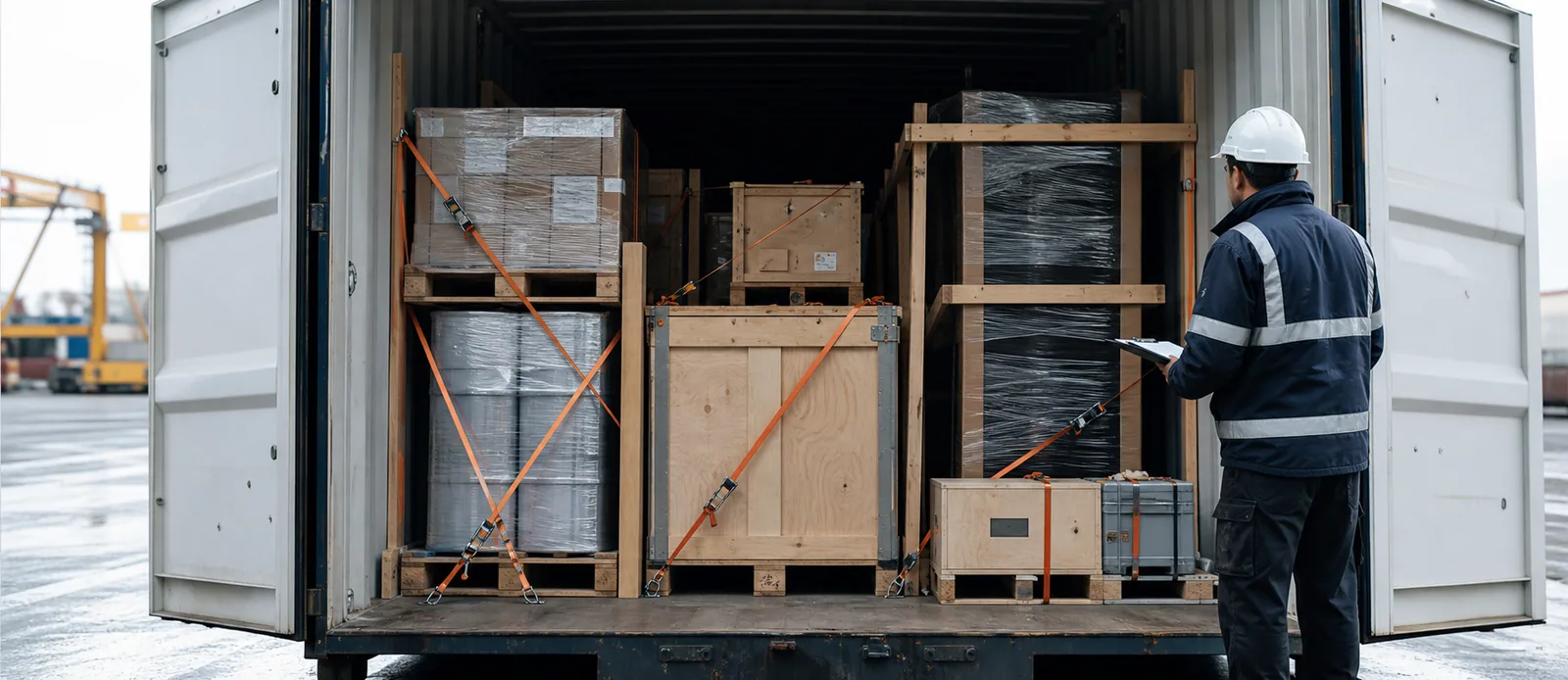
- Prepare Your Cargo for Pickup: Pack your cargo to export standards. Use strong boxes, mark the weight and the port on each box, seal them with tape, and stack them neat on pallets if you have more than one unit. Your cargo must be ready for pickup within 2 to 3 days of booking.
- Schedule Cargo Pickup or Arrange Self-Delivery: Set up pickup with your consolidator, or drop the cargo off yourself at their origin CFS warehouse. Pickup is often within 24 to 48 hours of booking. Give the address, a contact name, and a phone number. If the warehouse is close by, drop it off yourself — this saves you the pickup fee.
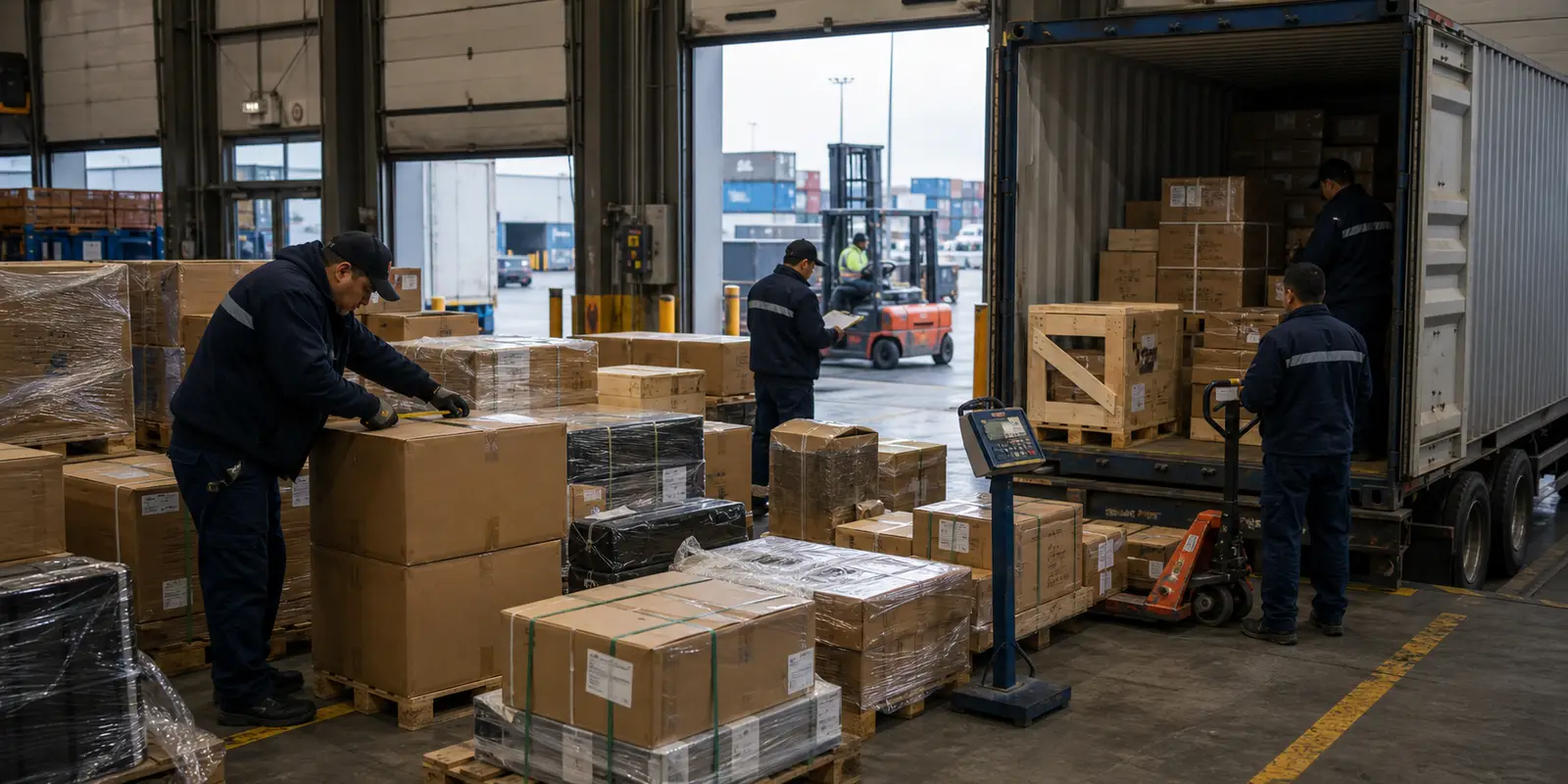
- Cargo Arrives at Origin CFS: Your cargo arrives at the CFS warehouse. Staff check the weight, the size, and how well it's packed. You get a warehouse receipt that shows the date and time it came in. Your shipment is now in the load system for good.
- Consolidation Period (Wait for Departure): Your cargo sits at the CFS and waits to be packed with other loads. This takes 2 to 7 days, based on the load schedule. Most consolidators pack on a fixed weekly day, say every Friday. Miss that day, and you wait for the next one. The consolidator sends daily updates on where things stand.
- Receive Shipping Documents (B/L): Once your cargo is packed and loaded, your consolidator sends you a House Bill of Lading, or House B/L. This is your proof of contract and proof you shipped the cargo. The B/L shows all the key facts: who gets it, the port, the weight, the CBM, and the freight cost. You need this to clear customs at the other end.
Documents required for LCL booking and shipping
Have the right papers ready before you book — this alone stops most delays. Here are the key documents you need for an LCL shipment.
Note: the exact papers you need depend on the destination country, the type of goods, and the incoterms. Ask your consolidator or customs broker which papers apply to your shipment.
Export documentation
- Commercial Invoice: a full invoice from shipper to consignee that shows the item, the amount, the unit price, the total price, and the payment terms. Customs needs this to set the value.
- Packing List: an item-by-item list of what's in each box, the weight of each one, and the total weight. Customs uses this to check the box contents match the invoice.
- Export License: needed for controlled goods, such as electronics, chemicals, or machinery, in some destinations. Check your own country's export rules.
- HS Code Certificate: for some goods, like minerals or farm products, customs may ask for an HS code certificate too.
- Certificate of Origin: issued by your chamber of commerce. It proves where the goods were made, which sets the tariff class and any trade deal terms.
Import documentation (destination)
- House Bill of Lading (House B/L): sent by the consolidator to the consignee. You need this to clear customs and release the cargo at the other end.
- Invoice and Packing List: sent to the consignee so they can clear customs on their end.
- Customs Entry Form, or importer declaration: filled out by the consignee or a customs broker at the other end. The form itself is set by each country, such as US Entry Form 3461 or an EU customs form.
- Proof of Payment: shows the freight has been paid, through an invoice and a payment receipt.
Cutoff times and consolidation schedules
The load schedule is the single biggest swing factor in LCL timing. Know your cutoff times well, and you dodge most needless delays.
Most consolidators run on a fixed weekly load day. Here is one example: the cutoff is every Thursday at 5 PM, no cargo comes in after that. The load happens Friday morning, and the container leaves Friday night or Saturday. Ship on a Friday, and your cargo waits until the next Thursday to load — a 6-day wait.
On big routes, like China to USA or Europe to USA, some consolidators load twice a week, or even more, which cuts the wait time. On thin routes, like Africa to USA or far-off spots, loads may only happen once a month.
Always check the load schedule before you book. Ask: 'What is the cutoff time?' and 'When does the next container leave?' If you need a fast delivery, ask about rush loads, or whether your cargo can join a load already in motion. A rush fee may apply.
How to choose an LCL consolidator or forwarder
Not all consolidators offer the same value. The partner you pick shapes your cost, transit time, and risk of damage. Here's how to weigh your options.
Consolidator selection criteria
- Reputation and track record: how long have they run this business? Do they know your route well? Check trade reviews, such as FreightCenter, Shipping.com, or forwarder groups.
- Rate honesty: do they give you a full quote with a clear breakdown? Or do CFS fees show up only on the final bill? Open consolidators tend to be more reliable.
- Load frequency: how often do they load cargo to your port? Daily loads beat weekly ones — you wait less. On low-volume routes, weekly may be the only choice you get.
- Tracking and visibility: can you book online and track your cargo live? Can you see when it lands at the CFS, when it gets loaded, when it leaves, and when it lands at the other end?
- Network reach: do they have their own CFS partners at your port? If they hand off unpacking to an unknown third party, you lose control. Big consolidators own CFS sites around the world.
- Insurance options: do they sell cargo insurance? What does it cost? Cargo claims do happen — pick a consolidator who handles them well.
- Customer support: can you reach a real person during work hours? Do they reply to your questions within 4 hours? Loading cargo has many moving parts, so fast support matters a lot.
- Minimum shipment size: some consolidators set a floor, such as 1 CBM or 2 CBM. Check they will take your cargo size.
- Special services: do they offer pickup? Can they load cargo to less common ports? Do they offer cold storage or careful handling for goods that break easy?
Booking tips to save money and avoid delays
- Combine loads when you can: say you have 5 CBM headed to Los Angeles and 3 CBM to Long Beach. Load them together as 8 CBM and you save money. Ask your consolidator if multi-port loads are an option.
- Plan your timing: line up your shipments with the load schedule. If the weekly cutoff falls on Thursday, get cargo ready by Wednesday, so you skip a 7-day wait.
- Skip tiny shipments: cargo under 1 CBM can rack up handling fees that eat any savings. Combine small items into one booking instead.
- Pick the right incoterms: choose CIF or CIP, and the consolidator sets up insurance for you, which is easy. Choose FOB, and you buy your own insurance, which can cost less.
- Ask for multi-leg loads: say your route runs Shanghai to Singapore to Los Angeles. You can often load Shanghai to Singapore at the same rate as a direct Shanghai to Los Angeles run, at no extra cost.
- Ask about rate locks: when market rates swing, ask to lock your rate for 2 to 4 weeks. This shields you if rates go up.
- Team up with partners: if you have more than one supplier or office, plan shipments to load together and cut your cost per CBM.
- Dodge peak season: from August to October, wait times run long and rates run high. Ship in the slow months, January to March, for a faster, cheaper load.
- Use a contract rate: if you ship often, say 5 or more loads a month, work out a set rate with your consolidator. Volume discounts are common.
What to expect after booking: Timeline and tracking
Know what comes next after you book, and you can set the right expectations and plan the rest of your operations.
Day 1-2: your booking is confirmed. You get a booking number, a rate confirmation, and a pickup time.
Day 3-5: cargo pickup. Your cargo lands at the origin CFS, and you get a warehouse receipt.
Day 5-11: the wait to load. Your cargo sits at the CFS until load day. You do nothing here — the consolidator handles it all.
Day 11-12: load day. Your cargo goes into the container with other loads. The container is sealed, and the B/L is issued.
Day 12-13: port and ship loading. The container moves to the port and goes onto the vessel.
Day 13-38: ocean transit. The container sails to the destination port, often 15 to 30 days, based on the route.
Day 38-42: arrival and customs. The container lands at the destination CFS, and customs clears the entry in 1 to 2 days.
Day 42-44: unpacking. The container is opened, your cargo is split out, and it's set up for pickup or delivery.
Day 44+: final delivery. Your cargo goes to the address on the B/L, or it's released for pickup.
Total time: usually 30 to 45 days from pickup to delivery, based on the load wait and customs speed.