
Sending your personal belongings overseas by shared container
Summary: You do not need a moving company to send your own things across an ocean. Most household goods travel as sea freight inside a shared container, priced by the space they take. This guide shows how that works and what each customs office asks for when the goods are yours. It also covers what really drives the cost, and where we are not the right partner.

How your things actually travel
A personal shipment by sea is not a truck that drives to another country. It is a chain of short legs, and each leg has an owner. Knowing the chain is what lets you read a quote and spot the part that is missing.
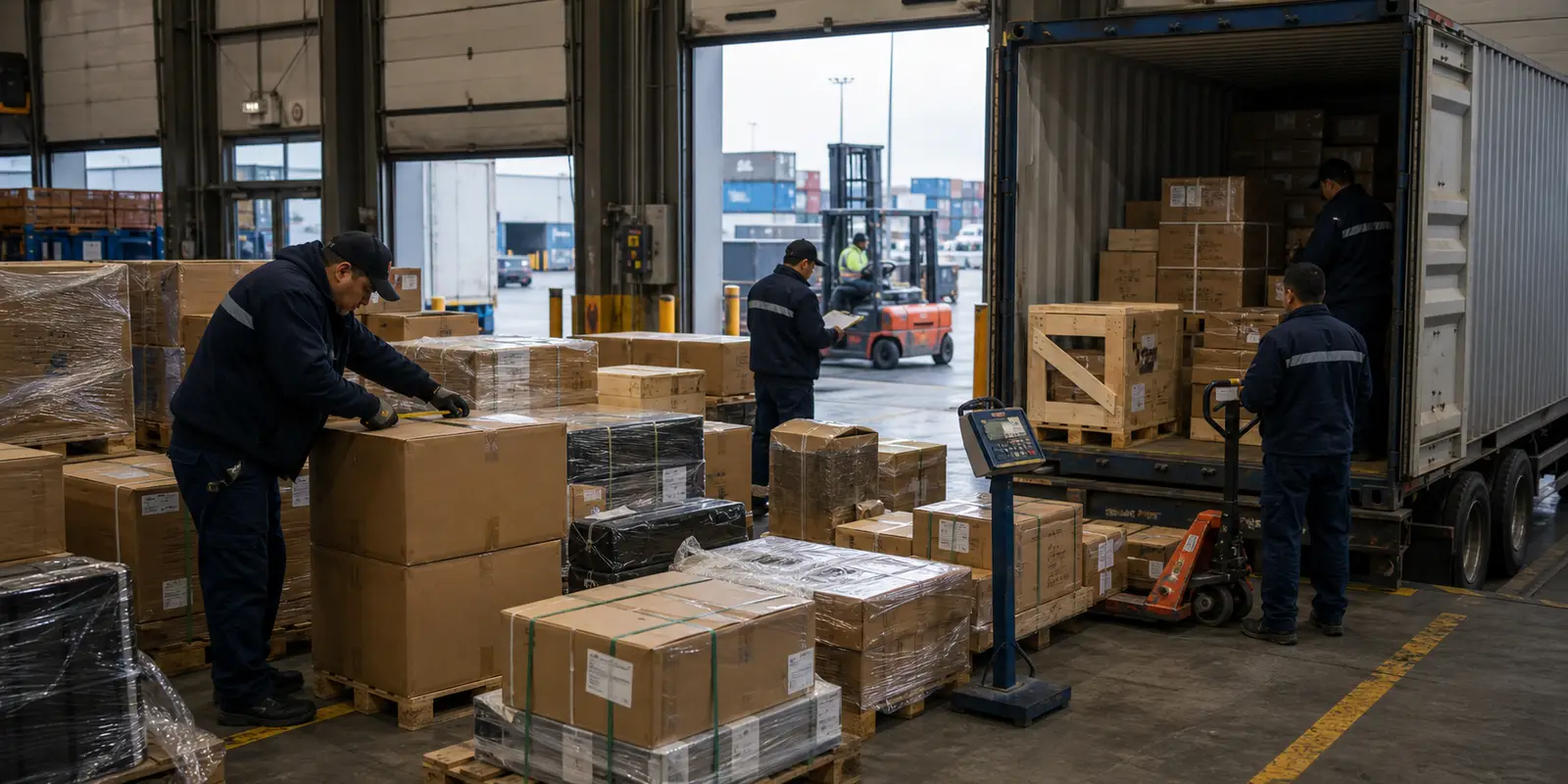
First your boxes reach a consolidation warehouse near the port of departure. A partner truck can collect them at your address, or you can drop them off yourself. That warehouse is run by a partner, not by us. There your load is measured, weighed and recorded. The measurement is the number the whole price is built on, so it is worth getting right before anything moves.
Next your load is packed into a container together with other shipments. You are not renting the box. You are buying a slice of it. That is why a wardrobe you could have sold is expensive to ship. It is also why a tight, well-packed pallet beats the same goods in loose bags.
The container then sails on a service that keeps a published schedule. At the other end the container is opened at a second warehouse and your load is separated from everyone else's. Customs looks at your papers at this point, not before. Once the goods are released, a partner truck runs the last leg to your address.
What you can send, and what you should leave behind
Customs treats a personal move well when it looks like a personal move. Used furniture, clothes, books, kitchen things and tools all fit that picture. Sealed boxes of new goods do not, and they can turn a duty-free move into a taxed import.
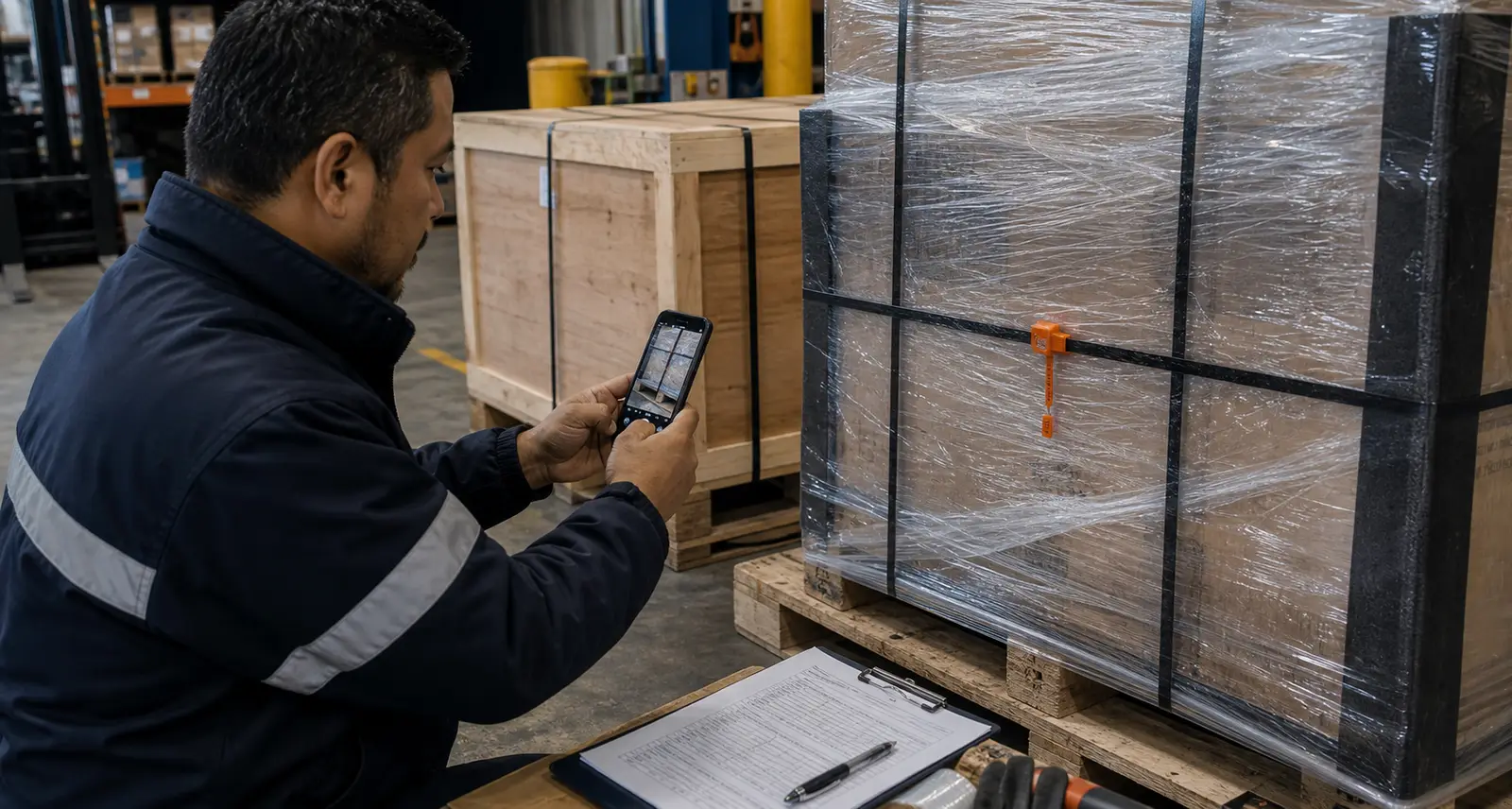
- Used furniture and household goods — The core of almost every personal shipment. Wood, upholstery, rugs, lamps, kitchen equipment and appliances all travel by sea every day. Photograph each piece before it is wrapped, because that photo is the only proof of its condition if something arrives damaged.
- Clothes, books and papers — Cheap to ship and easy to declare. Books are heavy for their volume, so they suit sea freight better than air. Keep personal documents, passports and deeds with you rather than in the container, because you cannot open a box that is at sea.
- Tools and work equipment — Several countries treat the tools of your trade as part of a move rather than as a commercial import. Brazil names them directly in its rule. Photograph serial numbers and keep the receipts you still have, since a customs officer may ask what a machine is worth.
- Anything flammable or under pressure — Paint, solvents, aerosols, gas cylinders, lighters, camping fuel and most cleaning products are dangerous goods at sea. They are not worth the paperwork on a household load. Give them away before packing, and tell us if you think something in your list may qualify.
- Alcohol, food and plants — Each of these has its own rules, its own agency and often its own fee. Alcohol is taxed almost everywhere, even inside a move. Food and plants can be stopped at the border on health grounds. Leave them out unless a sentimental bottle is worth the delay it may cause.
- Batteries and the devices around them — Loose lithium batteries, e-bikes, scooters and power tools with the battery still fitted are restricted cargo. Some can travel with the right declaration and packing, some cannot travel at all. Ask before the box is sealed, not after it reaches the warehouse.
- Weapons, ammunition and anything licensed — Firearms, parts, ammunition and replicas need a licence on both sides and are outside a normal household move. The same goes for medicines in quantity, drones in some countries and radio equipment. If it needed a permit at home, assume it needs one at the border.
- New goods still in their retail boxes — A crate of unopened electronics does not read as personal effects. It reads as a commercial import, and it can be assessed for duty and tax at full value. If you are genuinely carrying new goods, say so in advance so the entry can be prepared honestly.
What customs asks for when the goods are yours
Most countries let people bring their own used household goods in on better terms than a trader gets. Nowhere gives that away for free. The relief is conditional, and the conditions are usually about time. Some rules ask how long you lived abroad. Others ask how long you owned the goods, or how soon you import after the move.
The four rules below are the ones our readers ask about most. Each one comes from the official text linked at the end of this page, not from a moving-industry summary.
| Destination | Who can claim it | What the rule asks for | Where the rule is written |
|---|---|---|---|
| United States | Residents and non-residents bringing household effects | The effects must have been used abroad for not less than 1 year, must not be for sale and must not be for another person. The year of use does not have to be continuous. A declaration on CBP Form 3299 supports the claim. | 19 CFR 148.52 and HTSUS subheading 9804.00.05 |
| European Union | People moving their normal home into the EU | At least 12 months of normal residence outside the EU. Goods owned and used at least 6 months before the move. Cleared within 12 months of the move. Not sold or lent for 12 months after release. | Regulation (EC) No 1186/2009, Article 3 and the articles that follow |
| United Kingdom | People moving their normal home to the UK | At least 12 consecutive months of residence outside the UK. Goods in your possession at least 6 months. Imported within 12 months of moving. Not sold, lent or used as security for 12 months. | Transfer of Residence relief, published by HMRC |
| Brazil | Foreigners moving to live in Brazil, and Brazilians returning after more than 1 year abroad | Unaccompanied baggage has to arrive in a window that opens 3 months before you land and closes 6 months after. Used personal goods, furniture, household items and the tools of your trade are named in the rule. | IN RFB 1.059/2010, as published by Receita Federal |
These four were read against the official texts in September 2026. Rules move, and a customs office can change a form or a deadline without warning anyone. Read the source again before you book, and treat any summary, including this one, as a starting point rather than as advice for your case.
One more thing that surprises people: the relief is about the goods and about you, never about the carrier. Nobody can ship your belongings in a way that makes an unqualified load qualify. If you have been abroad for six months and the rule asks for twelve, the honest answer is that duty will apply.
Our licensed customs broker partners prepare and file the entry and follow it through to release. We are a freight agency, so we do not perform that licensed act ourselves.
What actually forms the price
We do not publish a rate card for personal shipments, and you should be careful with anyone who does. A price for a move depends on the volume, the route, the season and the access at both addresses. A number without a date and a route behind it is decoration.
What we can do is show you the lines a real quote is built from. If a quote you receive is missing one of these, the money did not disappear. It will come back later as a surcharge.
- Collection or drop-off at origin — We can arrange a partner truck to collect at your address, or you can deliver the load to the warehouse yourself. A truck costs more, and stairs, narrow streets and waiting time cost more again. Dropping off is the cheapest option when you have a van and a free afternoon.
- Origin handling and consolidation — The warehouse receives your load, measures it, records it and packs it into the container with other shipments. This is charged per cubic metre in most markets, with a minimum charge that hits small loads hard.
- The ocean leg — The freight itself, quoted per cubic metre or per tonne, whichever gives the higher figure. Fuel and other carrier surcharges ride on top and change several times a year. This line moves with the market, which is why quotes carry a validity date.
- Destination handling and deconsolidation — The container is opened and your load is separated from the rest. Terminal charges, the warehouse fee and any document fee land here. This is the line most often left out of a cheap-looking quote.
- Customs entry, duty and tax — There is a fee for preparing and filing the entry. Duty and tax apply if your load does not meet the relief conditions. An inspection, if one happens, is charged to the shipment. Nobody can promise you will avoid one.
- The last leg to your door — A truck from the destination warehouse to your new address, arranged through a partner. Price depends on distance, access, the floor you live on and whether a lift exists. Tell us about the stairs in advance and the number stops being a surprise.
- Storage, if the goods wait — Free time at the destination warehouse is short. If you have no address yet, or the paperwork is not ready, the load sits and storage starts. This is the most avoidable cost on the whole list, and the one people trip over most.
How long it takes, and what makes it slow
We do not promise a delivery date on a personal shipment, and we will not pretend the sea leg is the whole story. The sailing itself is the only part with a published schedule. Everything around it is a queue, and queues move at their own pace.
Here is where the time actually goes, in order. When a move takes twice as long as quoted, the delay is rarely on the water. It is almost always in one of these five places.
- Waiting for the container to fill: A shared container leaves when it is full or when the cut-off arrives, whichever comes first. If your load reaches the warehouse just after a cut-off, it waits for the next one. Ask what the cut-off day is before you book the truck.
- The sailing: The one predictable leg. The carrier publishes a schedule and mostly keeps it, though a missed connection at a transshipment port can add a week or more. Long routes with a transfer are cheaper and less predictable than direct ones.
- Unpacking the container at destination: The box is opened and dozens of shipments are sorted. This takes days, not hours, and it happens before customs sees your papers. A public holiday at the destination adds to it.
- The customs queue: Your entry joins everyone else's. A clean, complete file moves quickly. A missing signature, a vague packing list or a flag for inspection stops it, and nobody can jump the line.
- The delivery slot: The last truck needs an address, a date and someone to open the door. This is the one part of the chain you control, and the one people leave until the goods have already arrived.
Insurance, and what it will not cover
Carrier liability is not insurance. By law, a sea carrier's liability for cargo is capped. The cap comes from the weight or the number of packages. It has nothing to do with what your things are worth to you. On a household load that cap is usually far below the real value.
Marine cargo insurance is a separate product you buy on purpose. If it matters to you, read what it excludes before you pay, because the exclusions are where the arguments happen. Our guide to cargo insurance covers the mechanics in more depth.
- You need a valued inventory — Cover is written against a list with values, not against a vague total. Build the list while you pack, room by room, with a value for each line. Writing it afterwards from memory is how people end up underinsured.
- Owner-packed cartons carry a catch — If you packed the box yourself, many policies only pay when the carton shows outside damage. A plate that broke inside an intact box is often not covered. Pack as if a stranger will drop it, because one might.
- Pairs and sets are rarely made whole — Lose one chair from a set of six and most policies pay for one chair. They do not replace the set. The same logic applies to crockery and to anything that only has value as a group.
- Wear, rust and slow damage sit outside — Insurance covers sudden events, not the effect of humidity on old wood during a long voyage. Choose packing materials with the climate of the route in mind, and do not expect a policy to pay for time.
- Some things cannot be covered at all — Cash, jewellery, important documents and irreplaceable items are usually excluded or need a special declaration. If you cannot buy it again, carry it with you rather than putting it in a container.
From first message to delivery, step by step
A personal move has fewer steps than importers expect. The order below is what a normal file looks like when nothing goes wrong.
- Send the two cities and a rough list: Origin city and destination city, then what you have in plain words: a one-bedroom flat, ten boxes and a bike, that sort of thing. You do not need cubic metres or port names. We work those out.
- Get a written quote with the lines shown: You should be able to see origin, freight, destination and delivery as separate figures, with a validity date and a note on what is excluded. Ask us to write down anything that is unclear, and keep the document.
- Book the space and agree a cut-off: Once you accept, we reserve the space and give you the date your load has to be at the warehouse. Everything else in your calendar hangs off that one date.
- Pack and label: Number every box, and write the same numbers on your inventory. A load that is numbered gets checked in quickly. A load of unlabelled bags gets remeasured, and a remeasure usually costs money.
- Move the load to the warehouse: A partner truck collects at your address, or you deliver the load yourself. The warehouse measures and confirms the volume. If it differs from your estimate, the price changes now rather than as a surprise later.
- Sign the customs declaration: You confirm in writing that the goods are yours, used and not for sale, and you supply any proof of residence the destination requires. A licensed customs broker partner files it on the other side.
- Clear, deliver, check: After release, a partner truck delivers. Open the boxes while the driver is there if you can, and photograph anything damaged before you move it. A claim made on the day is a claim that gets taken seriously.
The mistakes that cost the most money
None of these are exotic. Each one shows up on ordinary household files, and each one is cheap to avoid if you know about it a week earlier.
- Guessing the volume — People guess low, almost always. The warehouse measures what actually arrives, and the invoice follows the measurement rather than the guess. Overestimate slightly when you ask for a quote and there is no unpleasant surprise.
- Shipping things worth less than the freight — Think of a cheap sofa, a used mattress or a flat-pack wardrobe that will not survive the trip. The space they take often costs more than replacing them. Do the arithmetic per item before you pack it, not after.
- Having no delivery address yet — Goods that arrive before you have somewhere to put them go into storage, and storage compounds. If your housing is not settled, say so early so we can plan the timing rather than react to it.
- A packing list that says boxes — Customs wants to know roughly what is in each numbered box. A list that reads twelve boxes tells them nothing and invites an inspection. Clothes, kitchen, books, tools: that level of detail is enough and it moves files.
- Sneaking in one restricted item — One aerosol can or one bottle of solvent, hidden in a box to avoid a conversation, can hold up an entire container. It is not your box alone once it is loaded, and the delay is shared by everyone in it.
- Missing the relief window — Every rule in the table above has a clock in it. Sailing a few weeks late can be the difference between a duty-free entry and a taxed one. Check your dates against the rule before you set the moving date.
When we are not the right partner for you
We would rather lose a booking than take one we cannot serve well. If your move looks like any of the following, another supplier will do a better job than we would.
You want a full-service move. You may want a crew that comes to your home, wraps the furniture and takes the bed apart. If you also want them to rebuild it at the other end, you need a moving company. That work needs crews and equipment. We are a freight agency and we do not have them, so we do not sell that service.
You need storage as part of the deal. Short waiting time at a partner warehouse is normal. Months of furniture storage is a different business with a different contract, and it is not one we run.
You want to send a few suitcases. Unaccompanied baggage in courier format is its own product, and specialists price it better than sea freight ever will. The same applies to a handful of boxes going a short distance.
You are moving with a pet. Live animals need an agent who handles them all day, with the health paperwork and the airline relationships that go with it. We do not offer it, and a half-hearted attempt would be worse than a clear no.
What is left is the case we do well. It is a consolidated load of personal goods moving door to door by sea. A partner collects it at your address, another partner delivers it at the far end, and a licensed broker partner files the customs entry. If that is your move, tell us the two cities and what you have, and you will get a quote with the lines written out.
Frequently Asked Questions
Sources & references
- 19 CFR 148.52 — Exemption for household effects used abroad (GovInfo, official CFR)
- USITC — Harmonized Tariff Schedule, where subheading 9804.00.05 is published
- German Customs (Zoll) — Transferring residence: conditions under Regulation (EC) No 1186/2009
- GOV.UK — Transfer of Residence relief when moving personal belongings to Great Britain
- Receita Federal — Bagagem desacompanhada e mudança para o Brasil (IN RFB 1.059/2010)