
LCL Packing Requirements & Standards
Summary: Poor packing kills LCL shipments fast. Picture cargo rejected at destination drayage. Picture damaged units landing at your customer's door. Or picture a shipment seized over bad paperwork. These costs dwarf whatever you saved on shipping. This guide walks you through every rule: palletization, heat treatment, labeling, weight limits, and what your consolidator will actually check.

Why Packing Matters More for LCL
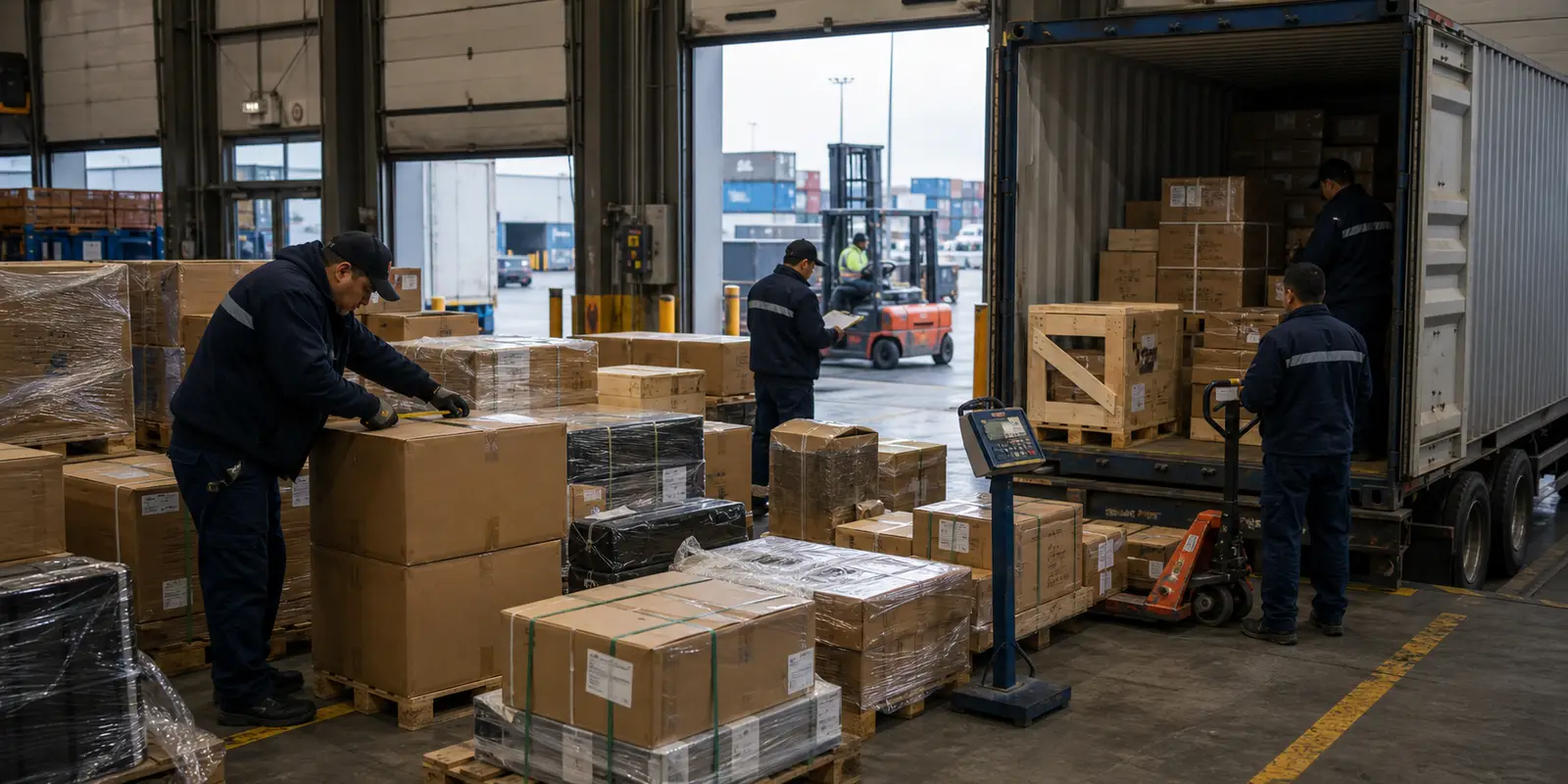
LCL cargo sits inside a shared container. It travels next to goods from 10-30 other shippers. This differs a lot from a dedicated full container. Your cargo gets handled many times along the way. Handlers touch it at consolidation. They touch it again during load-in. They touch it once more during unload. Then they touch it a final time at destination drayage.
Each touch point adds a real damage risk. Poor packing lets goods shift inside the box. It can make pallets collapse too. Or nearby cargo can crush your units flat. Under-packed shipments often arrive with 5-10% damage. Well-packed shipments rarely see this problem at all.
On top of that, port staff check LCL loads more often than full containers. Bad packing or the wrong materials can trigger a full exam. That exam alone can add 3-5 days to your delivery window.
Strong packing cuts handling damage. It speeds up customs clearance too. It also stops costly rejections at the far end. This isn't a luxury step. It's basic business math.
Export Packaging Standards (IEC 60068, ISTA)
The International Safe Transit Association (ISTA) and the IEC (International Electrotechnical Commission) set the rules for how you should pack goods for export. Your consolidator checks your cargo against these exact standards during inspection.
ISTA 1A (Loose cargo) covers goods with no sealed carton or case around them. Shippers use this mostly for machinery, metals, or bulk items. It doesn't suit LCL well, unless the item is naturally tough, like cast iron or steel parts.
ISTA 2A (Single carton) means one package sits in a corrugated box, with no pallet or outer shell. This only works for light items under 10 kg. Most consumer goods land in this class.
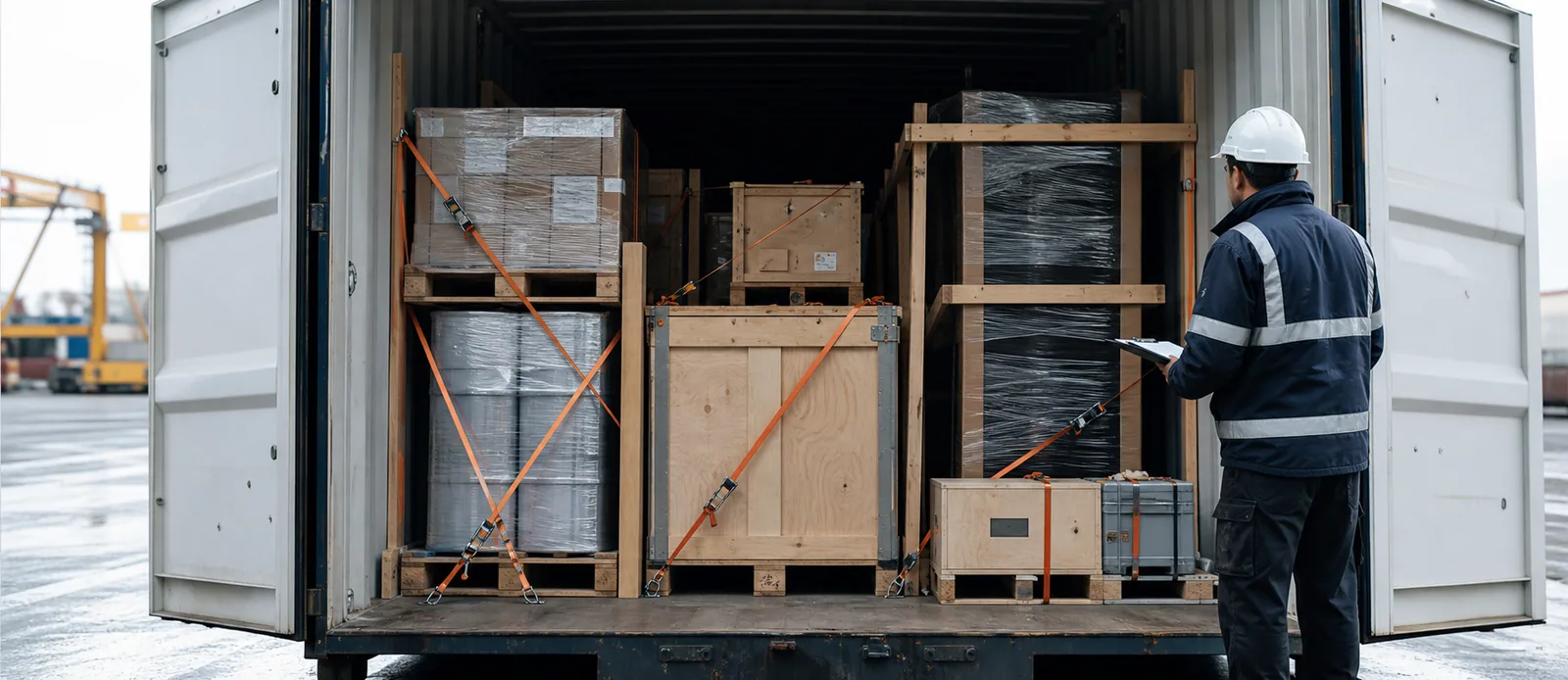
ISTA 3A (Single carton on pallet) stacks corrugated cartons on a pallet, held by corner posts and straps. This is the standard build for LCL. It usually stands 1.5-1.8m tall, sized to fit standard containers.
ISTA 4A (Assembled cartons on pallet) wraps or bands many cartons together on one pallet. You'll see this often for apparel, shoes, and small consumer goods.
For LCL, always pick ISTA 3A or 4A. In short, this means pallet-based cargo only. Loose items or lone cartons need special handling. That special handling always costs more.
Palletization Requirements & Heat Treatment (ISPM-15)
Every pallet used in export LCL must carry certification. It must also get heat-treated, to stop pest infestation. This rule comes from ISPM-15 (International Standards for Phytosanitary Measures).
What is ISPM-15? It's a phytosanitary standard. It requires wooden pallets to be heat-treated (HT) at 56°C for at least 30 minutes. Or the pallet can get chemical treatment (MB – methyl bromide) instead. Untreated wood stays fully banned.
How do you spot a compliant pallet? Look for a stamp on the pallet's side. It might read 'HT USA', 'HT-SUPPLIER', or show '🌲 KD'. This mark shows the wood got heat treatment, or that it's kiln-dried (KD) lumber.
Watch for this red flag: new, untreated pallets from a supplier you don't know well. If your supplier says 'we'll just use any pallet we have lying around', that's a warning sign. It sets you up for rejection at the port. Port staff can pull non-compliant pallets at the destination. Then you pay the full cost to replace them.
Pallet specs for LCL:
Standard size runs 40" × 48" (1.2m × 1.44m) for US-bound cargo. For European destinations, use 1.2m × 1m instead.
Weight limit sits at 500-600 lbs per pallet (226-272 kg) as the safe max. Overweight pallets risk a full collapse. They can also damage equipment during unload.
Height limit stands at 1.65m for the full pallet stack (this counts the pallet plus the goods). This keeps the load inside the container's cubic space. It also stops the stack from toppling over.
Pallet condition matters too. Pallets must show no rot, no cracks, and no broken boards. A broken pallet can shift mid-transit. That shift can damage cargo sitting right next to it.
Labeling Requirements: Marks, Numbers & Handling Symbols
Every pallet and carton needs clear, easy-to-read labels. Each label must show origin, destination, contents, and handling steps. Unclear labels cause real delays at both customs and drayage.
Standard marks to include on each pallet:
Shipper name and address: the origin country, city, and street address.
Consignee name and address: the destination, with the full address and ZIP or postal code.
Marking number, such as 'EXP-001-001' or 'SKU-A1-PAL-1'. This must match your packing list exactly, with no gaps.
Pallet count, like '1 of 5' or 'Pallet 1/5'. This detail matters a lot for reconciliation once the cargo lands.
Net and gross weight, listed in both kg and lbs. Customs and drayage equipment both need this figure.
Handling symbols: Use standard ISO 7000 handling symbols:
⬆ This side up (keep upright).
⨂ Don't stack / maximum stack height limit.
❄ Keep dry / fragile.
☢ Hazardous goods / dangerous cargo marking (if applicable).
Print your labels on tough, weather-resistant stickers. Or paint them straight onto the pallet itself. Handwritten labels never pass inspection.
For label placement, put your main labels on at least two sides of the pallet. Make sure nothing blocks the label, like shrink wrap or straps.
Weight & Dimension Rules for LCL
LCL rates get charged by whichever runs higher: actual weight, or volumetric weight. Knowing this rule up front stops billing surprises later.
Volumetric weight = (Length in cm × Width in cm × Height in cm) ÷ 5000 = Weight in kg.
Here's an example. A pallet measures 1.2m × 1.2m × 1.5m. That works out to 120 × 120 × 150 ÷ 5000, or 432 kg of volumetric weight. If the pallet weighs just 200 kg in real life, you still pay for the full 432 kg.
What does this mean for you? Bulky, light items cost more in LCL. Think pillows, foam, inflatable toys, or packing materials. Dense items cost less. Think machinery, metals, or textiles.
Max dimensions per pallet run 1.2m width × 1.2m depth × 1.65m height, and that includes the pallet itself. Oversized pallets either cost extra, or they can't join the consolidation at all.
Weight limit per pallet sits at 500-600 lbs (~272 kg) max. Go over this, and you risk pallet collapse. You also strain the unload equipment. Split very heavy items across several pallets instead.
For your total shipment dimensions, give the length, width, and height of your full consolidated load when you ask for a quote. Oversized loads eat up more container space, and they often cost more too.
Prohibited & Restricted Items in LCL
LCL runs under stricter rules than full containers. Why? Because items from many shippers mix together. A single hazardous item can shut down the whole consolidation.
Prohibited items (absolute no-go):
Explosives, fireworks, ammunition (Class 1).
Flammable liquids below certain flashpoint (most solvents, some perfumes) (Class 3).
Spontaneously combustible items (white phosphorus, some oils) (Class 4).
Oxidizers and peroxides (bleach, hydrogen peroxide) (Class 5).
Toxins and poisons (pesticides, some chemicals) (Class 6).
Radioactive materials (Class 7).
Corrosive substances like sulfuric acid or sodium hydroxide in large quantities (Class 8).
Restricted items (allowed with DG declaration and special fees):
Lithium batteries, found in phones, laptops, and e-bikes — these need a DG declaration, separate packing, and a DG surcharge.
Some perfumes and cosmetics with high alcohol content, above 24% — these must be declared and kept separate.
Refrigerated goods, like ice packs or dry ice — these need special container prep ahead of time.
Some paints and adhesives — this depends on the flashpoint; low-VOC paints often pass fine.
Electronics with sealed batteries — these must be declared too.
Here's what this means for you. If your cargo holds ANY restricted items, tell your consolidator right away. They'll work out the DG surcharge, usually a 15-30% upcharge. They may also need a separate consolidation, which can delay your shipment.
LCL Packing Checklist
- Pallets are ISPM-15 heat-treated (HT or KD stamp visible).
- Pallet dimensions are 40×48" or 1.2×1m, not oversized.
- Pallet weight is under 600 lbs (~272 kg), total stack is under 1.65m.
- Cartons are sturdy corrugated (minimum 200-lb ECT for stacking).
- All cartons are sealed with packing tape (cloth or plastic, not clear fragile tape).
- Cargo is wrapped in plastic shrink wrap or pallet wrap (at least one layer).
- Corner posts or edge protectors are used on stacked cartons (prevents crush).
- All labels (shipper, consignee, marking number, weight, pallet count) are affixed on at least two sides.
- Handling symbols (⬆, ⨂, ❄) are applied and visible.
- Weight of each pallet is legibly marked (gross and net weight in kg and lbs).
- Packing list matches marking numbers exactly (no discrepancies).
- No loose items, missing lids, or open seams.
- No prohibited items mixed in (verify with consolidator if unsure).
- For hazardous goods: DG declaration, MSDS, and class labeling are prepared.
- Cargo is dry and free of odors that could contaminate adjacent goods.
- Photos of packed pallets are taken for your consolidator's inspection.
Common Packing Mistakes in LCL
Using untreated pallets leads straight to ISPM-15 rejection at the port. Your consolidator then pulls the cargo off. They move it onto a treated pallet, and bill you for the labor. This costs $50-$150 per pallet, plus a 1-2 day delay.
Stacking cartons straight up with no pallet breaks LCL rules completely. All cargo must sit on a pallet. Single cartons should ship by parcel or air freight instead.
Overweight pallets, over 600 lbs, cause real trouble. At destination drayage, equipment operators may just refuse to unload them. Or the pallet collapses mid-handling. Either way, you end up with cargo damage and a liability dispute.
Oversized cartons cause problems too. Standard carton size runs 24×24×24" or smaller. Very large cartons, at 36×36×36", can't get restacked well. They waste space in the consolidation, which raises your per-unit cost.
Poor carton sealing brings its own risk. Unsealed or lightly taped cartons pop open during handling. Goods spill out. Nearby cargo then gets damaged or even contaminated.
Missing or hard-to-read labels cause a different kind of headache. Customs and drayage staff can't match your pallets to your papers. Delays of 3-5 days show up often. In the worst case, your shipment gets mixed in with another shipper's cargo.
Shrink wrap alone, with no corner protectors, isn't enough. When pallets stack up in the consolidation warehouse, heavy goods on top crush the light goods below. Corner protectors cost just $5-$10 per pallet. But they prevent damage worth hundreds more.
Mixing hazardous items with non-hazardous ones causes a bigger problem than you'd think. A single lithium battery or flammable item mixed in triggers DG fees for the whole consolidation, not just your pallet.
Skipping photos before consolidation leaves you exposed. If something arrives damaged, you can't prove it left your hands in good shape. Always record the cargo's condition at the origin, before it ships.