
Shipping Dangerous Goods via LCL: Rules & Costs
Summary: Lithium batteries, paint, perfume, chemicals: does your cargo fall under IMO (International Maritime Organization) rules? If so, shipping via LCL needs special handling. This guide covers what can and can't ship. It also covers the paperwork you need and compliance costs. Plus, it shows how to find a provider certified for DG.

Can You Ship Dangerous Goods via LCL?
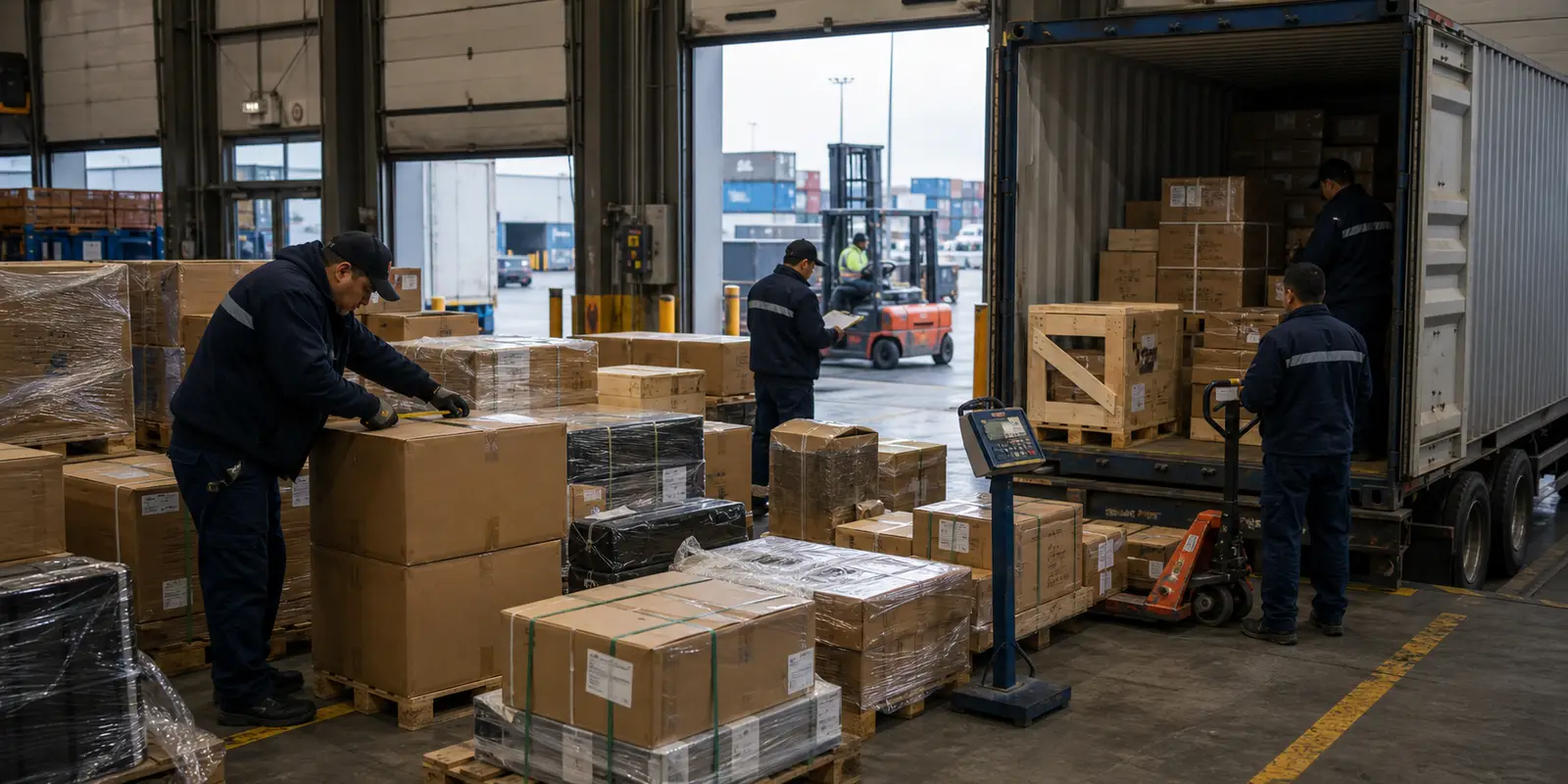
Yes, but with real limits. LCL means your DG cargo sits next to other shippers' goods. A single misclassified item, or a poorly documented one, can delay the whole batch. It can also trigger a port check that holds all freight for days.
The answer to 'can I ship this?' depends on three things. These are the IMO class and packing group. Add whether the item is 'excepted,' meaning below certain limits.
Excepted quantities: some DG items are allowed in LCL if the amount stays below set limits. For example, small quantities of lithium batteries can consolidate with other cargo. This means 1-5 units per carton, marked as 'Lithium battery handling labels' Class 9. Bulk lithium shipments, like pallets of batteries, may need solo container space or air freight.
Key rule: the more hazardous the substance, and the bigger the quantity, the fewer firms will take it. The surcharge climbs too. DG surcharges range from 15% (low-hazard, excepted quantities) to 100%+ (high-hazard) of base LCL cost.
IMO Classes and LCL Acceptance Status
| IMO Class | Substance Type | LCL Acceptance |
|---|---|---|
| Class 1 | Explosives, fireworks, ammunition | Not Accepted — Banned in LCL |
| Class 2 | Gases (compressed, liquefied, dissolved) | Limited — Only certain low-pressure gases; most providers refuse |
| Class 3 | Flammable liquids (solvents, paint, fuel) | Conditional — Accepted if Packing Group III (lower hazard); typical surcharge 20-40% |
| Class 4 | Flammable solids, spontaneously combustible items | Not Accepted — Most providers ban it |
| Class 5 | Oxidizers and organic peroxides (bleach, hydrogen peroxide) | Not Accepted — Segregation and separation from Class 3 required; too restrictive for LCL |
| Class 6 | Toxins and poisons (pesticides, herbicides) | Not Accepted — Banned in LCL |
| Class 7 | Radioactive materials | Not Accepted — Banned in LCL |
| Class 8 | Corrosive substances (acids, alkalis) | Conditional — Accepted in small quantities (Packing Group III); typical surcharge 25-50% |
| Class 9 | Miscellaneous hazardous materials (lithium batteries, dry ice, some electronics) | Accepted — Most commonly consolidated; typical surcharge 15-30% |
Papers Required for DG in LCL
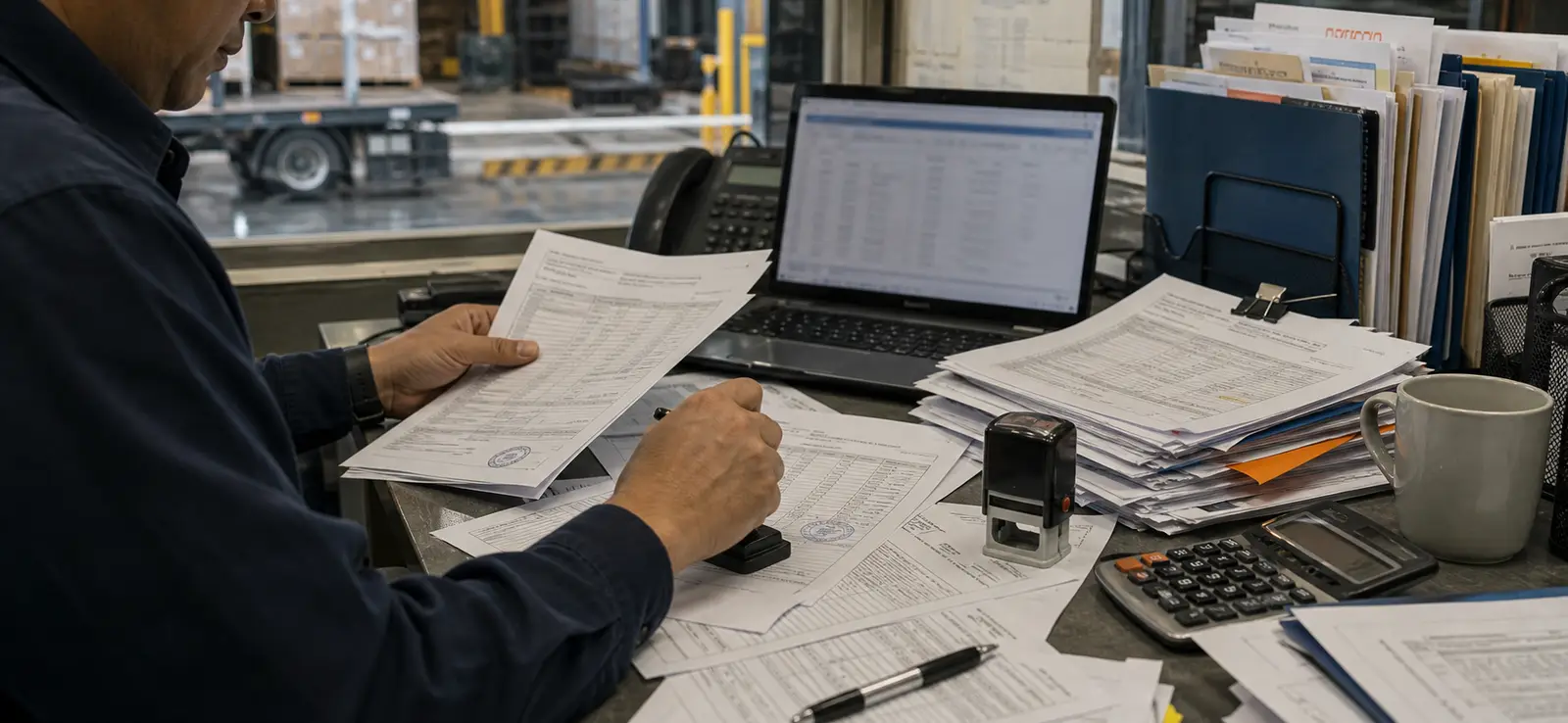
Shipping dangerous goods via LCL needs detailed paperwork. You must file it with your provider at least 5-7 days before departure. Missing or incomplete docs can delay your shipment by weeks.
Required documents:
Shipper's Declaration for Dangerous Goods (Form): a formal document signed by the shipper. It declares the hazard class, UN number, proper shipping name, packing group, and quantity. The template varies by provider. But it follows the IMDG (International Maritime Dangerous Goods) format.
Material Safety Data Sheet (MSDS or SDS): a current product safety data sheet, within 5 years, in English. It lists chemical makeup, hazards, first aid, and handling steps. The maker or seller must provide it.
Packing Certificate: issued by the packing company. It confirms that containers, pallets, and packaging meet IMDG standards for the specific DG item. Not always needed for excepted quantities.
Commercial Invoice: Standard invoice listing product description, quantity, unit price, and total value. Must match shipper's declaration.
Packing List: a detailed breakdown of what's in each carton. This includes part numbers, quantities, and hazard class, if SKUs are mixed.
Bill of Lading: issued by the provider after receiving the DG declaration. Must bear notation 'DANGEROUS GOODS' and reference hazard class.
Certificate of Origin: Standard export certificate (if country requires it).
Insurance Certificate: if you bought cargo insurance, show proof. Many insurers exclude DG or limit coverage, so check before booking.
Packing Requirements for DG in LCL
DG packing is far stricter than standard LCL packing. Providers run tough inspections. They can reject improperly packed DG, which delays your shipment.
General rules:
Segregation: different DG classes must stay physically apart. Flammable items, Class 3, can't share a batch with oxidizers, Class 5, or acids, Class 8. This limits which items can consolidate together, which raises per-unit cost.
Containers: must be UN-certified, marked with UN4GX, UN4G, and so on, depending on contents. Standard commercial cartons don't work. Cost often runs $3-$8 per container, versus $1-$2 for standard cartons.
Inner packaging: absorbent material must sit inside containers for liquids. This is sand, paper, or sawdust. This stops leaks if the inner container breaks. Solid items may not need absorbent material.
Outer packaging: use heavy-duty corrugated or wooden crates. The choice depends on item weight and hazard class. Standard cartons don't cut it.
Pallet type: heat-treated (ISPM-15) pallets are required, same as non-DG. But DG items may need extra reinforcement or dunnage, or spacers, between pallets.
Labeling: the DG label is a diamond-shaped placard with a class number. It must sit on at least 2 sides of the pallet. Orange or red marks Class 3, white marks Class 5, and so on. The provider applies the label, or you must supply pre-printed ones.
Weight limits: overweight DG cartons are risky, since handlers may drop them. Providers often cap DG cartons at 25-30 kg, versus 40+ kg for standard cargo.
Special items: lithium batteries need 'Lithium battery handling labels.' That's a Class 9 label, plus a 'black and white striped' label. Dry ice needs a 'Class 9' label plus a warning that it's subliming. Check your provider's exact rules.
Restrictions and Limitations for DG in LCL
Many providers simply don't accept DG. Some take only Class 9 items, in small amounts. This is a real limit.
Restrictions by provider size:
Small providers, with 1-2 sailings a month: often no DG capability at all. They'll point you to specialized DG carriers.
Mid-size providers run 3-5 sailings a month. They accept Class 9 only, like lithium batteries, some electronics, and dry ice. They may take Class 3 (flammable liquids) in small amounts, if it's Packing Group III.
Large providers, with daily or several weekly sailings: accept Classes 3, 8, and 9 often. They may run segregated DG batches. Or they set aside DG pallets within general ones. They still refuse Classes 1, 2, 4, 5, 6, and 7.
Quantity restrictions:
Class 3, flammable: max 1-2 pallets per batch, often capped at 500-1000 liters total.
Class 9 (lithium batteries, misc.): Up to 5 pallets, depending on provider and destination.
Most firms require written approval from their ops team. This comes before they confirm a DG booking. Standard quote response time is 24-48 hours.
Vessel restrictions: some routes, like Asia to US, carry DG often. Others, like remote island routes, rarely accept DG at all. Confirm with your provider if your route supports DG.
Costs: DG Surcharges for LCL
DG shipping costs 15-100% more than standard LCL, depending on hazard class and quantity.
Breakdown of DG costs:
Consolidation surcharge: 15-50% of base LCL rate. Higher for hazardous items requiring segregation.
Paperwork handling: $100-$300 per shipment. The provider reviews the shipper's declaration. They work with the port authority, and file the DG manifest.
Labeling and inspection: $50-$150 per pallet. The provider checks compliance and applies hazard labels.
Specialized transport: if segregation is needed, the whole consolidation may shift to a dedicated DG sailing. That costs 50-100% more.
Example: a standard 10-pallet LCL from Shanghai to Los Angeles costs $6,000. Now add 2 pallets of Class 3, flammable paint, to those same 10 pallets. That's $6,000 for standard cargo, plus $3,000 in DG surcharge for the 2 DG pallets. That's $9,000 total, a 50% jump.
Cost impact: Class 9, lithium batteries, gets a lower surcharge (15-25%), since providers accept them routinely. Classes 3 and 8 cost more (25-50%). Classes 1-2 and 4-7 are too pricey, or just unavailable. That leaves air freight or a solo container as your only option.
Finding a Provider That Accepts DG
Not all providers handle DG. To find one, ask the right questions:
Question 1: 'What IMO classes do you accept?' Listen for specific class numbers. Don't accept vague answers like 'we accept most DG.' Ask for written confirmation.
Question 2: 'Are you DG certified?' Real DG providers are certified by IATA for air. Or they hold a DG competency certificate from a training provider. Ask for a copy of the certificate.
Question 3: 'How long does DG paperwork take? Can you meet a 5-day lead time before departure?' Many firms need 7-10 days for DG docs. That forces you to book an earlier sailing.
Question 4: 'What's your DG surcharge?' Expect 15-50% on top of the base LCL rate. If they quote 200%+, watch out. They're either very cautious and slow, or they don't handle much DG at all.
Question 5: 'Do you have experience with my specific commodity?' Lithium battery handling is routine for many firms. Hazardous chemicals are not. Specific know-how matters here.
Red flags:
Watch for this line: 'we can try to consolidate DG, but no guarantees.' It means they don't really handle it.
No written DG surcharge quote. This means they may charge random fees after booking.
They can't give references of recent DG shipments. This points to a lack of experience.
They require a personal guarantee or deposit just for DG. This suggests high risk or low volume.
Best practice: use providers on major routes, like China-US or Europe-Asia, with daily or multi-weekly departures. They have scale, DG volume, and steady costs. Avoid small regional providers for DG.
Alternatives When LCL DG Is Refused
If your provider refuses DG, you have options:
Solo full container, or FCL DG: ship a 20ft or 40ft container with only your DG cargo. Cost often runs $3,500-$6,000, depending on weight and destination. Per-unit cost is higher, but you control the shipment and face fewer limits. Lead time matches LCL, at 3-4 weeks.
Air freight DG: Expensive ($6-$12 per kg) but fast (3-5 days). Only viable for emergency stock-outs or very high-value, low-weight items.
Split shipment: send non-DG items via standard LCL. Send DG items via a solo container or air freight, separately. This means splitting your consolidated load and coordinating arrival.
Reclassification: some items below set limits, called 'excepted quantities,' might ship as non-DG if marked correctly. For example, take 1-5 lithium batteries per carton, marked 'excepted quantity.' These may consolidate as Class 9. Check with the IMDG Code or your provider.
Pre-packaged DG service: some retailers, like Amazon and Shopify, partner with logistics providers. These providers pre-consolidate DG shipments from multiple suppliers. If you're a small DG shipper, this might cost less than a solo container.
Scenario: you're shipping 8 pallets of cosmetics, non-DG. You also have 2 pallets of high-alcohol perfume, Class 3, DG. Option 1: pay a 50% DG surcharge for the entire batch, $3,000 extra. Option 2: ship 8 pallets via standard LCL ($6,000), and 2 pallets via a solo 20ft FCL ($4,500). Total: $10,500 versus $9,000. Break-even is usually 2-4 pallets of DG. Beyond that, a solo FCL gets cheaper.