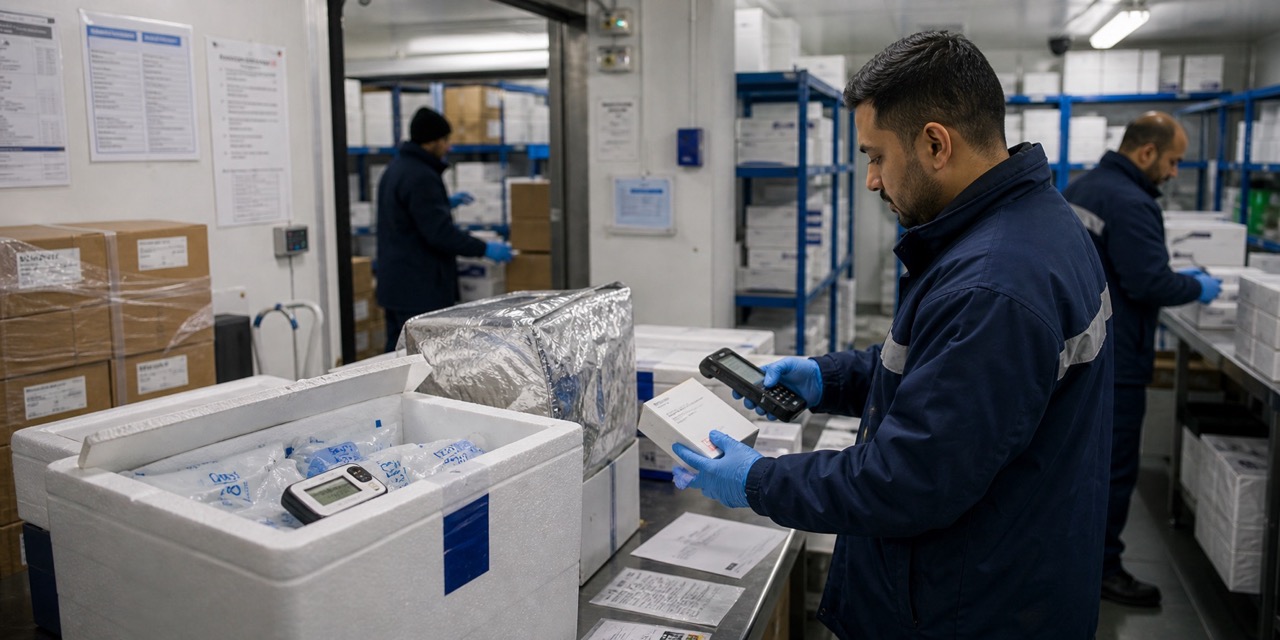

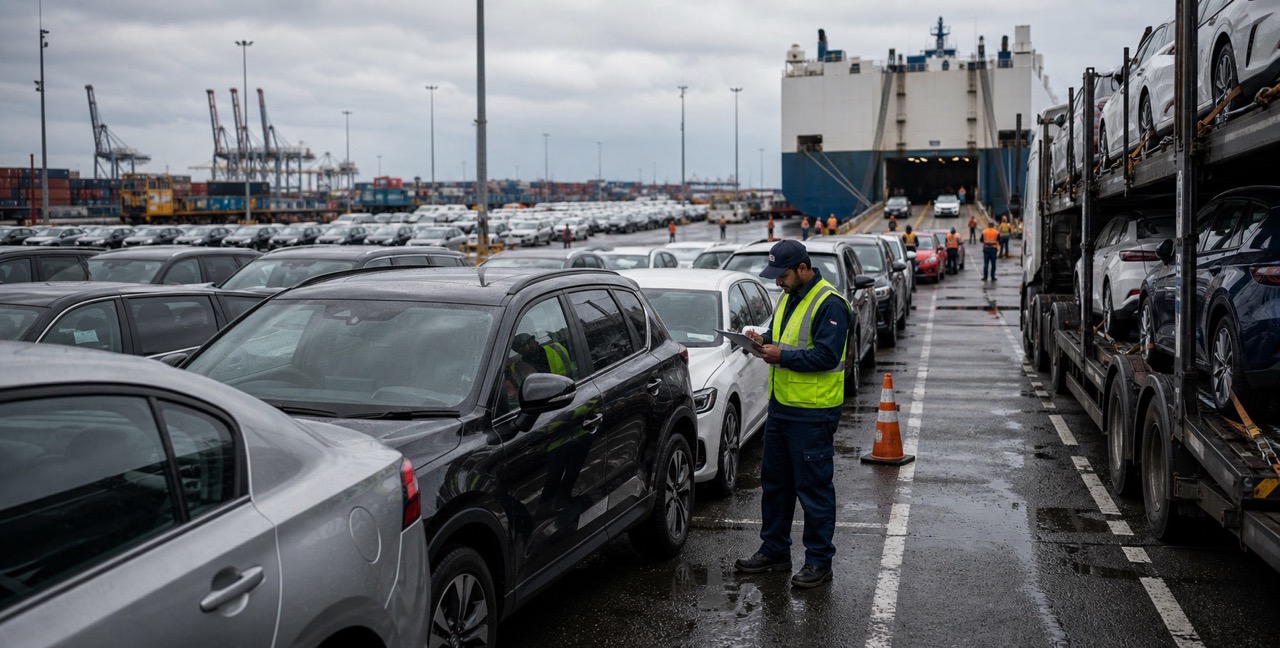
48-Hour JIT Delivery — Morocco to Europe.
How a European automotive OEM established a 48-hour just-in-time supply chain from Tangier Free Zone to its Spanish assembly plant — with zero EU import duties.
The Challenge
A French automotive OEM was buying wiring harnesses and interior components from suppliers in Eastern Europe. Labor costs there kept climbing. The pandemic had also exposed how fragile a long inland supply line can be. So the OEM began evaluating Morocco's Tangier Free Zone as an alternative source. Wiring harnesses are assembled largely by hand, which makes labor rates a big share of the piece price.
The sticking point was speed, not price. Parts had to reach the assembly plant in Zaragoza, Spain, within 48 hours of leaving Tangier. Just-in-time lines hold hours of stock at the station, not weeks of buffer cover. A late truck on a JIT line does not create a backlog to work through later. It stops the line, and everything downstream waits with it.
The OEM's existing logistics partner priced the move as deep-sea container freight. That quote ran seven days on the water from Tanger Med to Barcelona, plus two more days inland. Nine days is a sourcing lead time, not a JIT schedule. Container routing also adds terminal handling and port dwell at both ends. Vessel frequency ends up setting the clock, not the factory.
Duty was the second risk. Components made in Morocco can enter the EU at 0% under the EU-Morocco Association Agreement. That rate is not automatic, and it is not granted once at the company level. It depends on proof of origin traveling with every consignment. Get the paperwork wrong and the parts land with duty attached, which erases the reason to move sourcing at all.
So the OEM needed one partner fluent on both sides of the Strait. Moroccan export procedure and free zone formalities sit on one bank. EU automotive import compliance and preferential origin rules sit on the other. Few providers are genuinely strong at both ends. On the Morocco to Europe lane, the handover between those two skill sets is usually where the days get lost.
Our Solution
Suaid Global designed a hybrid corridor instead of shopping for a faster ocean service. The route splits into two short legs. A short-sea ferry crosses from Tanger Med to Algeciras in under two hours. Dedicated road transport then covers Algeciras to Zaragoza in about eight hours. Door to door, express loads run under 14 hours and standard loads 24 to 36 hours, both inside the 48-hour promise.
The crossing choice drives the whole design. Tanger Med to Algeciras is the shortest sea crossing between Africa and Europe. Short-sea ferry service moves the trailer itself. Cargo is not stuffed into a container at one end and stripped out at the other. That removes two handling steps and the waiting time around them.
The Spanish leg runs by road for the same reason. Ground transport departs when the load is ready, not when a vessel is ready. That matters when the schedule is counted in hours rather than days. It also lets the OEM call off shipments against real assembly demand instead of a sailing calendar. A single road leg to Zaragoza means one handover point instead of several.
Duty was designed out rather than negotiated down. Licensed customs broker partners prepare EUR.1 movement certificates for each consignment. The EUR.1 is the origin document that unlocks the preferential rate under the EU-Morocco Association Agreement. Preference is claimed shipment by shipment, not held once and forgotten. With the certificate the components enter Spain at 0% duty; without it, they do not.
The border itself was the last piece. Pre-clearance was arranged with Spanish customs through those same broker partners, so entries are lodged before the ferry docks. Release can then happen on arrival instead of after it. Partner road carriers run GPS on the trucks, and Suaid Global reports each load against fixed milestones: loaded, sailed, landed, delivered. The plant plans against those milestones.
Services Used
How the Program Went Live
Onboarding started at the origin, not at the border. Suaid Global mapped how goods leave the Tangier Free Zone, which export formalities apply, and how long each one takes. Free zone status changes the export paperwork, so that step could not be assumed. Building the timeline before the first load moved meant the 48-hour clock was measured rather than guessed. An hour spent on an export formality at origin is an hour no longer available on the road.
The document set was fixed before volume started. Each consignment travels with a commercial invoice, a packing list, and the EUR.1 certificate. Part descriptions and values on the invoice have to match what the origin document declares. Mismatched descriptions are a common reason a preferential claim gets questioned. Settling that at the template stage costs far less than settling it at the border.
The program then runs on call-offs from the assembly schedule, not on a fixed sailing calendar. Suaid Global books the ferry slot and the road leg against each call-off, then confirms back to the plant. Customs brokerage starts on the same trigger, so the entry is being prepared while the trailer is still loading. Steps overlap instead of queueing behind each other, because sequential processing is what quietly eats a 48-hour margin.
One tuning lever was built in from the start. Not every part needs the fastest option, and paying for express on all of them would waste the saving. So the corridor runs at two speeds. Urgent line-side parts take the express path at under 14 hours. Replenishment stock takes the standard path at 24 to 36 hours, and the plant picks per load.
Visibility was built around exceptions. The plant does not need to watch every truck. It needs to know early when a load may miss its slot. Milestone reporting surfaces a delay at the crossing or on the road while there is still time to react. Transit measured in hours, inside a 48-hour window, leaves real room to recover.
The Results
The OEM hit the 48-hour JIT window, with on-time performance on the program. That is not a target the corridor strains to reach. Two hours on the water and about eight on the road leave a wide margin inside 48 hours. The margin is what absorbs a missed ferry slot or a slow day at the border. A schedule with no slack looks fast on paper and fails on the first bad day.
Component costs came in 22% below the Eastern European supplier. Two separate things produce that figure. Lower Moroccan labor rates cut the piece price on parts that are assembled by hand. Zero EU duty then protects the cut, because a tariff at import would have eaten it. Sourcing and logistics had to work together for the number to survive.
The 0% duty line is the one that needs maintaining. It holds only while every consignment carries valid proof of origin under the EU-Morocco Association Agreement. That is an ongoing documentation discipline, not a one-time approval. The broker partners re-run the check shipment by shipment, rather than assuming last month's file still applies. One unsupported claim would put the duty straight back on that consignment.
The program has since grown. The OEM now ships three more component families out of Tangier, with Suaid Global coordinating the cross-Mediterranean legs. Adding a part family to a proven corridor is a much smaller job than qualifying a new one. The route, the customs process, and the milestone reporting are already running. That is where a repeatable automotive logistics design pays back.
Building a Morocco-Europe Supply Chain?
We specialize in cross-Mediterranean logistics with EU-Morocco FTA compliance. Get a free route assessment.