
Nearshoring to Mexico: The Complete Logistics Guide
Summary: China-plus-one is no longer just a theory, not anymore. It's happening right now, all across the region. Mexico has become the #1 US trade partner, passing both China and Canada. A major shift in world trade. This guide covers everything logistics pros need to know about nearshoring to Mexico. Start here. You'll learn where to manufacture, how to ship cross-border, USMCA rules of origin, and the infrastructure that links Mexican factories to US shoppers. All in one place.

What Is Nearshoring and Why Mexico?
Nearshoring stopped being just talk about two years ago, and things moved fast. It's real now, and growing fast. We see a steady flow of clients restructuring China-heavy supply chains toward Mexico. Our partner network has grown right along with them — IMMEX-registered customs brokers, cross-border trucking lanes, warehouse partners near Laredo and El Paso. The guide below is what we tell every client who asks, 'should we move our production to Mexico?' before they commit to a lane.
Nearshoring means moving manufacturing and sourcing work to countries that sit close to the end buyer. For US firms, Mexico is the clear nearshoring pick, again and again. It shares a 1,954-mile border, and links up by road, rail, and air. Right next door, really, in every practical sense. It also falls under the USMCA trade deal, which gives duty-free access for goods that qualify. A real edge, and a lasting one.
The shift toward Mexico sped up fast after 2020. COVID-19 showed just how fragile long supply chains stretching to Asia really were. Section 301 tariffs on Chinese goods added 7.5% to 25% to landed costs, too. Shipping times from Shanghai to Los Angeles — once just 14 days — ballooned to 30-45 days during port jam crises. A huge swing, and a costly one. Meanwhile, Mexico offered 2-5 day ground transit to major US markets, tariff-free entry under USMCA, and a factory workforce of over 5 million people. A clear choice. The math works out.
By 2025, Mexico passed China as the largest US trade partner, with bilateral goods trade reaching $872.8 billion. Foreign direct investment into Mexico's factory sector hit record highs. Firms like Tesla, BMW, Samsung, and dozens of mid-market manufacturers set up shop, or grew what they already had. Big names, real money, and real commitment. The nearshoring wave isn't just a passing trend. It's a real, structural shift in how North American supply chains work now. Not a passing fad.
US-Mexico Trade by the Numbers (2025-2026)
You need to understand the scale of US-Mexico trade, before you consider nearshoring at all. Numbers tell the story. Look closely. Here are the key numbers that define this trade tie.
| Metric | Value |
|---|---|
| Bilateral Goods Trade (2025) | $872.8 billion — #1 US trade partner |
| US Imports from Mexico | $534.9 billion annually |
| US Exports to Mexico | $338 billion annually |
| Cross-Border Truck Crossings | 12.5+ million per year |
| Rail Cars Crossing Border | 800,000+ annually |
| Top US Import from Mexico | Vehicles & auto parts ($128B) |
| Second Largest Import | Electronics & electrical equipment ($82B) |
| FDI into Mexico (2025) | $36+ billion — 60% from US companies |
| Manufacturing Workers in Mexico | 5.2 million in formal manufacturing |
| Average Manufacturing Wage (Mexico) | $4.50-$7.00/hour vs. $6-$10 in China coastal |
Key Manufacturing Regions in Mexico
Mexico's factory base sits mostly in five major regions. Five distinct hubs. Each one has its own industry focus, labor market, and logistics edge. Pick the right fit.
- Monterrey (Nuevo León): Mexico's industrial capital, and the closest major factory city to the US border. It's home to automotive (KIA, Ternium), steel, appliances, and heavy industry. A broad mix, built over decades. Just 150 miles from the Laredo-Nuevo Laredo border crossing — the busiest commercial land port in the Western Hemisphere. Hard to beat that spot. Average manufacturing wage: $5.50-$7.50/hour.
- Guadalajara (Jalisco): Known as Mexico's Silicon Valley. It's a hub for electronics manufacturing (Intel, HP, Flex, Jabil), medical devices, aerospace, and software. Diverse and deep, with real depth to it. It has easy access to Manzanillo — Mexico's largest Pacific port — for Asian component imports. Its food and beverage processing sector keeps growing, too. A newer strength.
- Querétaro: The fastest-growing factory region in all of Mexico. It's an aerospace hub (Bombardier, Safran, GE Aviation), with 90+ aerospace firms on the ground. A dense cluster, and it keeps growing. It's also strong in automotive (Toyota, Honda), food processing, and plastics. Its central spot gives it great highway and rail links to Mexico City, Monterrey, and Guadalajara. Well placed, all around, for a growing firm.
- Tijuana (Baja California): Sits right next to San Diego, which makes it ideal for just-in-time factory work that serves the US West Coast. It's strong in medical devices (Medtronic, Becton Dickinson), electronics, and aerospace. A varied base, spread across several sectors. Over 900 maquiladoras employ 200,000+ workers here. A huge local workforce. You can get same-day truck delivery to Los Angeles.
- Ciudad Juárez (Chihuahua): Sits right next to El Paso, Texas. It's one of Mexico's biggest factory hubs, with 330+ maquiladoras. It leads in automotive (Bosch, Delphi, Foxconn), electronics, and medical devices. Three strong sectors, all thriving here. It also connects to Union Pacific and BNSF rail networks, for smooth northbound freight moves. Rail matters here.
Logistics Infrastructure: Ports, Borders, and Intermodal Connections
Mexico's logistics network has gone through real upgrades, though a few gaps still remain. You need to know the key nodes in this network, to plan your nearshoring supply chain well.
- Laredo-Nuevo Laredo (Texas/Tamaulipas): The #1 US-Mexico land port by value, with over $300 billion in trade each year. More than 15,000 trucks cross here every day. A steady stream. It connects to Mexican Highway 85 (to Monterrey) and IH-35 (to Dallas, Kansas City, Chicago). Well connected north and south. The World Trade Bridge handles most of the commercial traffic. The main artery, really, for the whole region.
- El Paso-Ciudad Juárez (Texas/Chihuahua): The #2 land port. A key gateway for maquiladora trade. Heavy commercial use. The Bridge of the Americas and the Zaragoza-Ysleta bridges handle the commercial crossings here. Two bridges, one flow. It has strong rail links via BNSF and Union Pacific, too. Solid backup options.
- Manzanillo (Colima): Mexico's largest container port, handling 3.4+ million TEU a year. It's the main gateway for Asian imports — components from China, Japan, South Korea — headed to Mexican factories. A key inbound link. It connects by rail to Guadalajara, Monterrey, and Mexico City. All linked up.
- Lázaro Cárdenas (Michoacán): Mexico's second-largest Pacific port. Run by Hutchison Ports and APM Terminals. Two big names. It offers direct services straight from China. No transshipment needed. It links by intermodal rail to the US, via Kansas City Southern de Mexico, now known as CPKC. One more rail tie.
- Veracruz (Veracruz): Mexico's oldest, and busiest, Gulf and Atlantic port. It's a key stop for trade with Europe, South America, and the US East Coast. A truly global port. Its automotive RoRo terminal handles vehicle exports to Brazil and Europe. A niche but busy role.
- CPKC (Canadian Pacific Kansas City): The only single-line railroad linking Mexico, the US, and Canada together. It was built by the 2023 merger of CP and KCS. It offers smooth intermodal service from Lázaro Cárdenas and Monterrey to Kansas City, Chicago, and beyond. This is a real game-changer for nearshoring logistics. Simple as that.
USMCA Benefits for Nearshoring
The United States-Mexico-Canada Agreement (USMCA), which replaced NAFTA back in 2020, gives you the legal base that makes Mexico nearshoring pay off financially. You need to understand its rules of origin well, to dodge duties. Worth the study time, up front.
USMCA drops tariffs entirely on goods that meet rules of origin. That's the core deal. Simple, but powerful. This just means enough of the product's value or parts must come from North America. Simple math, in theory. Trickier in practice. For automotive, 75% of the vehicle's content must come from the US, Mexico, or Canada — that's up from 62.5% under NAFTA. For most manufactured goods, the bar sits at 50-60% Regional Value Content (RVC). Know your number. Miss it and you lose the benefit.
A few key USMCA rules matter most for nearshoring. There's the de minimis threshold, which allows up to 10% non-originating materials by value. A small buffer zone. There are accumulation rules, which let you combine US, Mexican, and Canadian content to meet origin needs. Flexible, within limits. And there's the automotive labor value content (LVC) rule, which requires 40-45% of vehicle content to come from workers earning at least $16/hour.
One important caveat, though: USMCA has a joint review set for 2026. The deal itself is unlikely to end. Most experts agree on that. But specific rules of origin, and market access terms, could still get renegotiated. Details can shift. Firms building nearshoring plans should watch these developments closely. Stay ahead of it, and don't get caught off guard.
Cross-Border Shipping: How It Works
Shipping goods from a Mexican factory to a US buyer follows a well-set process. Here's the step-by-step flow, for a typical northbound cross-border shipment.
- Manufacturing and quality control: Goods get made at the Mexican factory, start to finish. Every step tracked. Quality checks get done, and products get packed to fit US market rules — labeling, UPC codes, compliance marks, all of it.
- Mexican export documentation: The Mexican freight forwarder puts together the pedimento de exportación (customs export declaration), commercial invoice, packing list, and USMCA certificate of origin, if it applies. A full paper trail. Goods then get loaded onto a Mexican carrier's truck. Ready to roll.
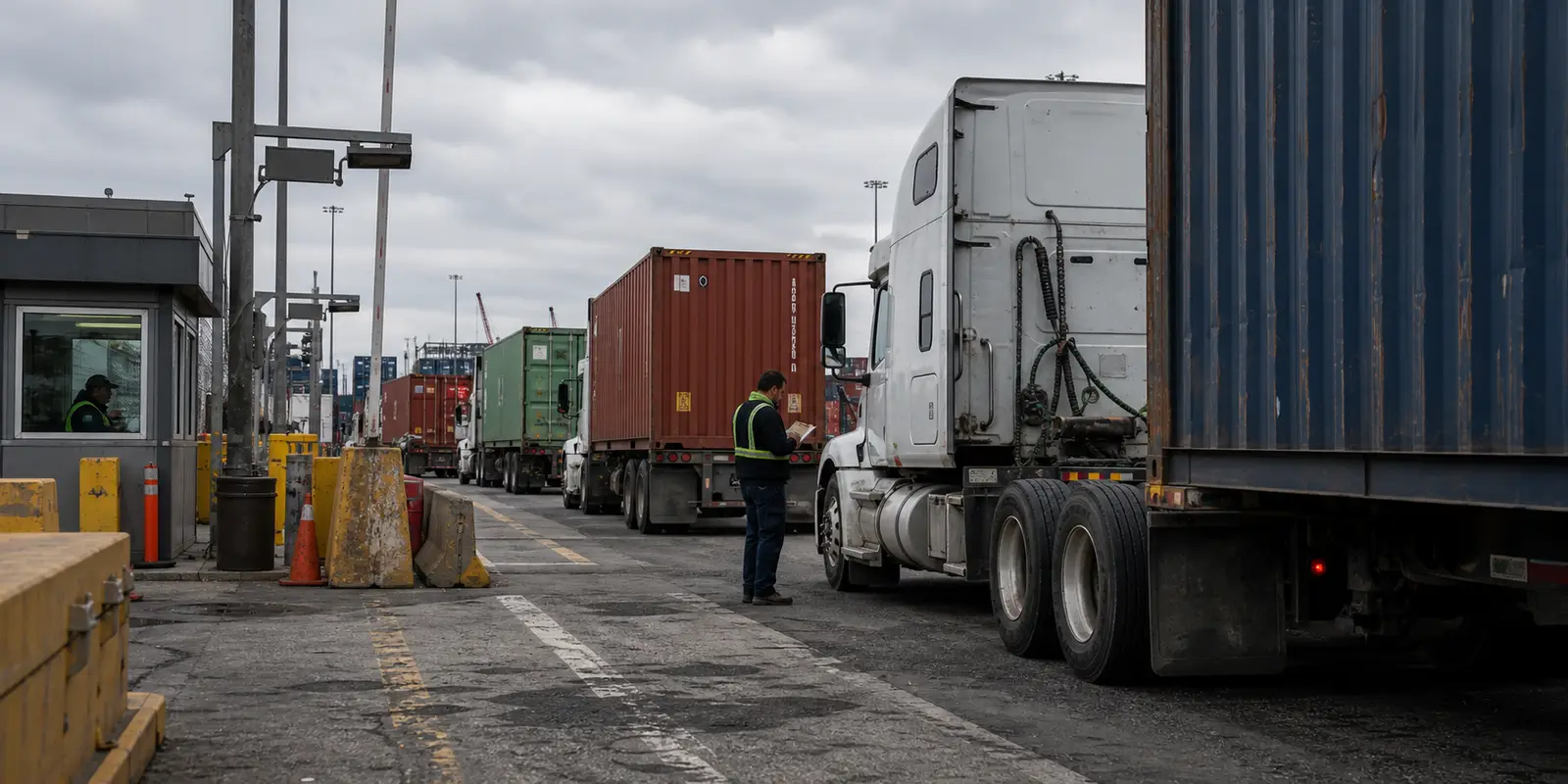
- Transit to the border: The Mexican truck carries the goods to the border crossing point — Nuevo Laredo, Ciudad Juárez, Tijuana, and so on. Transit from Monterrey to Nuevo Laredo takes about 2.5 hours. From Guadalajara to Laredo, it's about 10 hours. A long haul, but doable.
- Cross-border transfer: At the border, cargo typically shifts from a Mexican truck to a US carrier. This step is called transloading. A key handoff point. Or, it crosses via a drayage carrier that can work in both countries. Under USMCA, Mexican carriers only get limited cabotage rights in the US border zone. Rules still apply. Know the limits.
- US customs clearance: The US customs broker files the entry (CBP Form 3461), pays any duties owed, and submits the entry summary (CBP Form 7501). If you're claiming USMCA preferential treatment, you present the certificate of origin. CBP may still pick the shipment for a closer look. It happens sometimes.
- US inland transportation: Once customs releases the goods, an FTL or LTL truck carries them onward. The last leg begins. The final stop might be a distribution center, a retail spot, or the end customer. From Laredo, typical transit times run 1 day to Houston or San Antonio, 2 days to Dallas, and 3-4 days to Chicago or the East Coast.
- Delivery and proof of receipt: Goods arrive at their final stop. The bill of lading gets signed, and proof of delivery goes back through the supply chain. Paper trail complete. For just-in-time automotive shipments, delivery windows often get measured in hours, not days. Precision matters. Every minute counts.
Comparing Nearshoring Options: Mexico vs. Vietnam vs. India
Mexico isn't the only nearshoring option out there for US firms. Vietnam and India have also pulled in real factory investment. Here's how all three stack up, across key logistics factors. Side by side.
| Factor | Mexico | Vietnam | India |
|---|---|---|---|
| Transit to US (Ocean) | N/A — ground 2-5 days | 28-35 days to West Coast | 30-40 days to East Coast |
| Transit to US (Air) | Same day — 2-5 hours | 2-3 days with connection | 2-3 days with connection |
| Trade Agreement | USMCA — 0% duty on qualifying goods | No FTA with US | No FTA with US |
| Avg. Manufacturing Wage | $4.50-$7.00/hour | $2.50-$4.00/hour | $1.50-$3.00/hour |
| Infrastructure Quality | Good — modern highways, rail, ports | Developing — port congestion common | Variable — improving but gaps remain |
| IP Protection | Strong — USMCA Chapter 20 enforcement | Moderate — improving | Moderate — enforcement inconsistent |
| Time Zone Alignment | Same as US Central/Mountain | 12-13 hours ahead of US East | 10.5-13.5 hours ahead of US East |
| Key Industries | Auto, electronics, aerospace, medical | Electronics, textiles, footwear | Pharma, textiles, IT, auto parts |
| Supply Chain Resilience | Low risk — ground transport, no ocean dependency | Moderate risk — ocean route via congested Asian ports | Moderate risk — Suez Canal dependency for East Coast |
| Tariff Exposure to US | 0% under USMCA for qualifying goods | Exposed to potential future tariffs | Exposed to potential future tariffs |
How Suaid Global Supports Your Nearshoring Strategy
Suaid Global is a US-based freight orchestrator, focused on cross-border moves for firms nearshoring to Mexico. We coordinate FTL, LTL, customs, ocean-to-Mexico legs, and US distribution. All of this runs through a vetted partner network, at every major US-Mexico land port — Laredo, El Paso, Ciudad Juárez, Tijuana, Nogales, and Otay Mesa. That way, you deal with one point of contact, instead of six. Simpler for you.
Our cross-border services cover a lot of ground. We coordinate FTL and LTL trucking through carrier partners, from any Mexican factory region to any US spot. Customs brokerage at all major US-Mexico crossings runs through partner brokers, too. USMCA compliance and duty savings get managed by our licensed partner brokers. We coordinate ocean freight from Asian ports to Manzanillo and Lázaro Cárdenas, for component imports. One less thing to manage. We coordinate warehousing and distribution through partner sites in key US logistics zones. All under one point of contact. And we offer supply chain consulting, too, to help you check if nearshoring fits, pick factory regions, and design your North American logistics network.
Say you're moving your first container from Monterrey to Houston. Or maybe you're running a multi-plant supply chain across Mexico. Either way, we can help you coordinate it. We keep your cargo moving, without any carrier bias. No hidden agenda. Our incentives line up with your landed cost, not with filling a specific vessel or truck.
Nearshoring Readiness Checklist: Before You Move Production
Most nearshoring projects stall for one simple reason. It's not that Mexico was the wrong choice. Far from it. It's that logistics decisions get made only after the factory contract is signed. By then, the supply chain gets built backward, around a factory footprint that just assumed transport would "figure itself out." It rarely does. Plan ahead instead.
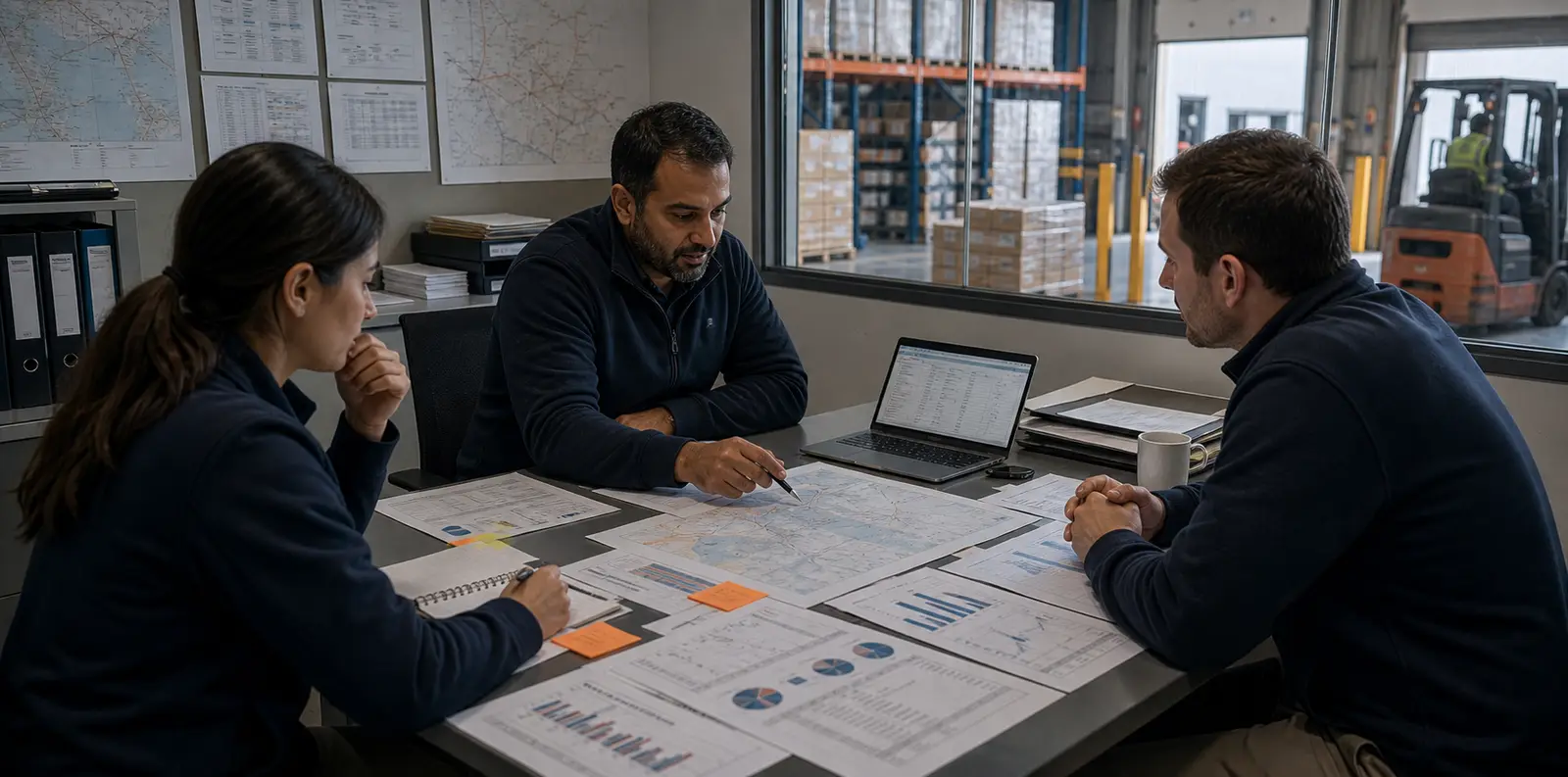
Use this checklist before you commit to a region, a border crossing, or a cross-border carrier. Each item stands for a choice that, if you skip it early, usually costs more later than it ever saves. Read closely.
- Map your destination mix, not just your factory — A plant in Monterrey is a 1-day truck to Houston, but a 3-4 day truck to Chicago, and a 5-6 day truck to the East Coast. Say 70% of your customers sit in the Northeast. Just an example. A Saltillo or Querétaro plant with CPKC intermodal rail access may then give you a lower landed cost, versus a spot closer to the border. Worth the extra miles.
- Model the border crossing — not just the country — Laredo handles the most commercial volume, but wait times spike hard during peak weeks. Plan around this. El Paso, Otay Mesa, and Nogales offer less traffic, but bring different carrier coverage and different customs broker strengths. Trade-offs everywhere. Map your SKU mix to the crossing that best fits your commodity type and volume pace. Not every crossing fits every load. Choose with care.
- Confirm USMCA qualification BEFORE tooling — Rules of origin change by type. Automotive needs 75% Regional Value Content. Most other manufactured goods need 50-60%. If your bill of materials leans heavily on Chinese or Asian parts, you may miss the RVC threshold. And just like that, the USMCA duty benefit disappears. Model this out with a customs broker, before you place production tooling orders. Cheap insurance, really. A small step now.
- Lock in your inbound component lane — Many Mexico factories lean on Asian components that arrive via Manzanillo or Lázaro Cárdenas. A key inbound leg. Schedule reliability on these lanes varies a lot. Build in slack. Intermodal rail capacity to Monterrey or Bajío is often the real bottleneck, not ocean freight. Lock in inbound lanes early, and build in a buffer. Give yourself room. Buffers help a lot.
- Choose a single customs broker strategy — You need real coordination between the Mexican agente aduanal on the export side, and the US customs broker on the import side. Two teams, one goal. Keep them in sync. Running two separate broker firms often causes filing mismatches, pedimento-versus-entry errors, and post-entry fixes you could have avoided. One single cross-border broker relationship cuts down on these exceptions. Fewer cooks, fewer errors. Keep it simple.
- Budget for transloading and drayage — Most cross-border moves use a Mexican carrier to the border, a short-haul drayage across, and a US carrier onward from there. Three legs, one shipment. Track each one. That's three touchpoints, three rate structures, and three sets of service standards. Build the real, all-in cost into your landed-cost model, not just the Mexican tractor rate alone. Count every leg. Nothing hidden.
- Insure the full intermodal journey — Standard Mexican trucker cargo insurance often doesn't follow the cargo across the border, or onto a US carrier. Check that your cargo insurance policy covers the full journey. Gaps cost money. Check the fine print. This runs from the Mexican factory to the US destination, including dwell time at the border during transloading.
- Plan for the USMCA 2026 review — The agreement has a joint review set for 2026, which could adjust rules of origin, labor value content, or automotive terms. Big changes are possible. Build your sourcing strategy with enough spread that one rule tweak won't blow up your whole duty picture. Spread the risk. Run a scenario model for a 5-10 point shift in the RVC threshold, just in case. Better safe than sorry.