
What Is LCL Shipping? The Complete Guide
Summary: LCL (Less Than Container Load) is often the cheapest way to ship goods by ocean, when you don't have enough cargo to fill a full container. Think of it as sharing a ride, instead of booking the whole vehicle — you pay only for the space you use.

LCL Shipping Defined: What Does LCL Mean?
LCL stands for Less Than Container Load. It's an ocean freight method where your cargo shares container space with goods from other importers and exporters. Instead of paying for a whole 20ft or 40ft container, you pay per cubic meter (CBM) — only for the space your goods actually fill.
Here's the simplest way to picture it. FCL (Full Container Load) is like renting a private car — you pay for the whole car, whether you fill it or not. LCL is like taking a bus. You buy a seat (your cargo space), share the ride with others, and the total cost splits among all riders.
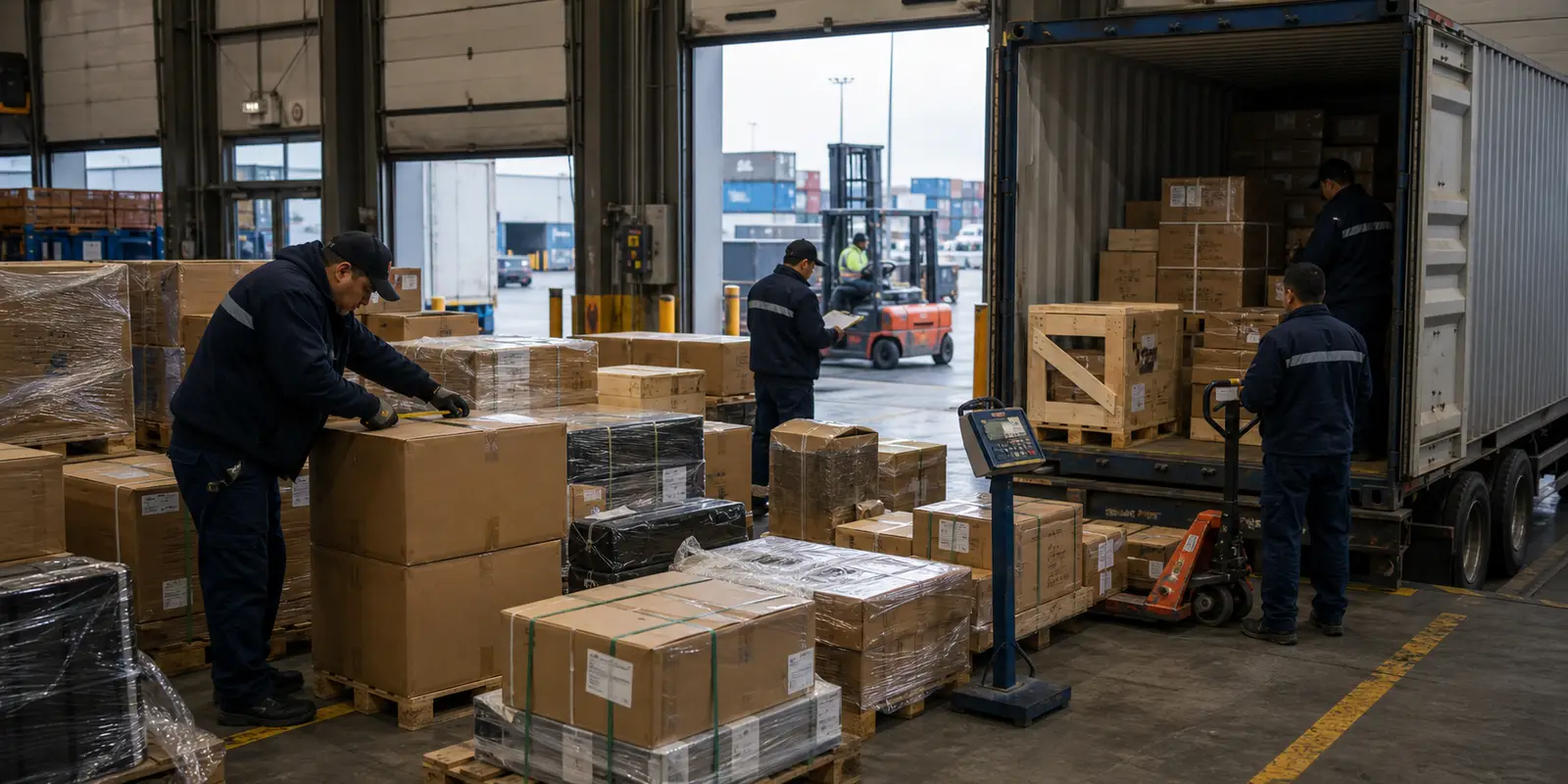
A consolidator or freight forwarder manages LCL. They gather cargo from many shippers, group it at a Container Freight Station (CFS), load it into shared containers, and ship it across the ocean. At the destination, the process runs in reverse. Containers get unpacked (deconsolidated) at the destination CFS, and each shipper's cargo gets split out for individual delivery.
LCL is ideal when your shipment volume is between 1 and 14 CBM. Below 1 CBM, courier or air freight may be cheaper. Above 14-15 CBM, a full container (FCL) usually becomes the cheaper choice.
LCL services run on almost every major trade lane worldwide. Unlike full container load (FCL) shipping, where you book a whole container, LCL lets you load smaller amounts — from a single pallet to a few cubic meters — and share the container with other shippers. This makes LCL a strong fit for small and medium businesses, e-commerce sellers, and firms testing new markets.
How LCL Shipping Works: The 7-Step Process
LCL involves more handling steps than FCL, because of the grouping and un-grouping stages. Knowing the process helps you plan timelines and dodge surprises.
- Booking & documentation: You give your freight forwarder your cargo details (size, weight, goods type, origin, destination). They confirm the rate per CBM, and book your shipment on the next open slot.
- Cargo pickup or drop-off at origin CFS: Your cargo gets picked up from your supplier or warehouse, or dropped off at the origin Container Freight Station (CFS). This is where grouping happens.
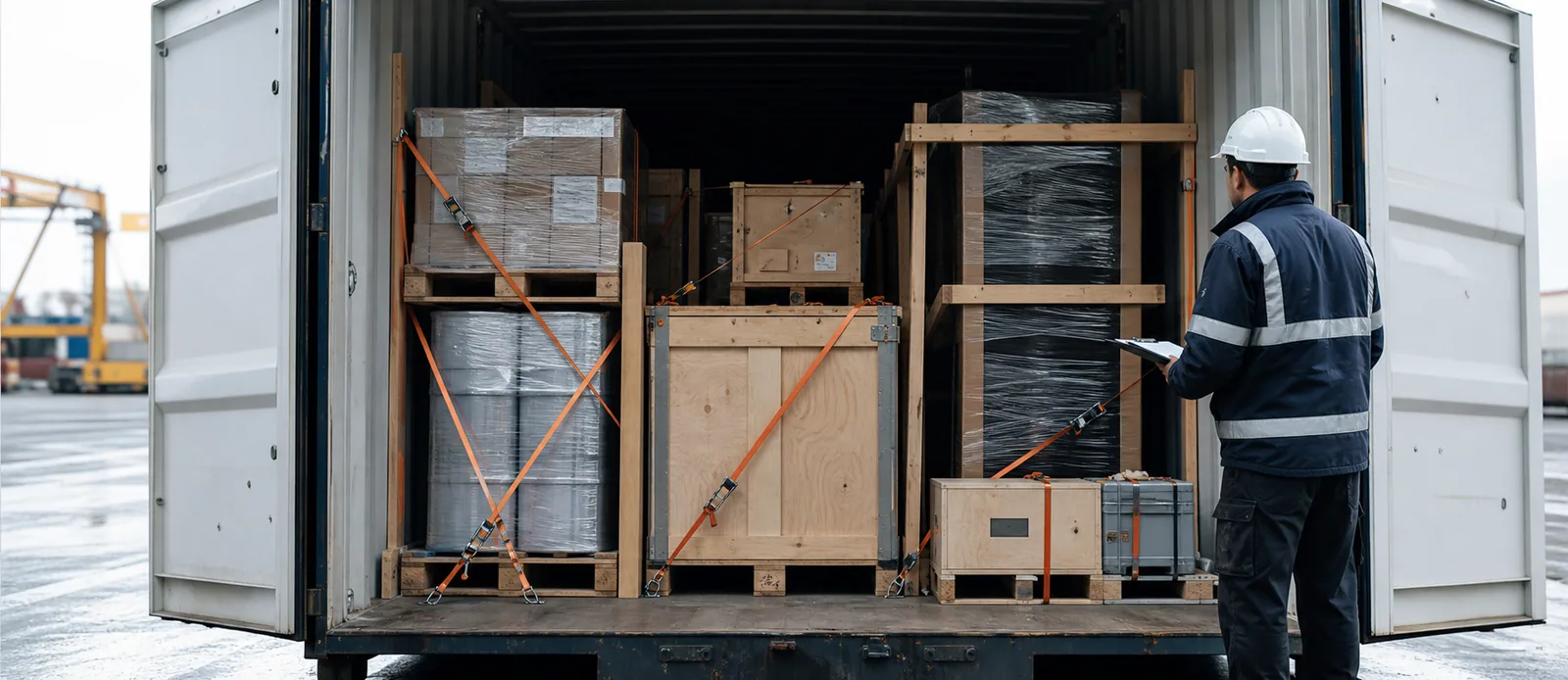
- Consolidation at origin CFS: The CFS operator groups your cargo with loads from other shippers headed to the same destination port. Workers load the goods with care into a shared container, with proper blocking and bracing.
- Ocean transit: The sealed container travels by ocean vessel from the origin port to the destination port. This leg takes the same time as FCL — there's no difference in ocean transit time.
- Deconsolidation at destination CFS: At the destination port, the container is moved to a CFS where it's unpacked. Each shipper's cargo is separated, inspected, and stored until cleared by customs.
- Customs clearance: Your customs broker files the entry, pays duties and taxes, and gets release from customs. This can take 1-5 days, depending on the country and whether officials pick your shipment for a check.
- Last-mile delivery: Once cleared, your cargo is delivered to your warehouse, distribution center, or Amazon FBA facility via ground transport (truck or drayage).
LCL vs FCL: Quick Comparison
Your choice between LCL and FCL depends mostly on your shipment volume. Cost limits, transit time needs, and cargo fragility matter too. Here's a side-by-side look:
| Factor | LCL (Shared Container) | FCL (Full Container) |
|---|---|---|
| Volume | 1–14 CBM (typical) | 15+ CBM or fill a 20ft/40ft |
| Pricing | Per CBM ($50–$180 depending on route) | Per container ($1,500–$5,000+) |
| Transit time | 5–15 days longer due to CFS handling | Faster — no CFS processing |
| Handling | Multiple touches at CFS (higher damage risk) | Sealed door-to-door (minimal handling) |
| Flexibility | Ship small quantities frequently | Must fill or pay for entire container |
| Cost breakeven | Cheaper under ~12–15 CBM | Cheaper above ~12–15 CBM |
| Best for | Small/medium shippers, market testing, varied SKUs | Large volumes, fragile goods, regular shipments |
| Minimum | Typically 1 CBM minimum billing | 1 container (20ft = 28 CBM, 40ft = 58 CBM) |
When Should You Choose LCL Shipping?
LCL is the right choice in a few common cases. Knowing these helps you make smarter shipping choices, and avoid paying for container space you don't need.
- Your shipment is under 15 CBM — The most straightforward reason. If your cargo doesn't fill even half a 20ft container, LCL saves you from paying for empty space. Even at 10 CBM, LCL is often cheaper than booking a full container.
- You're testing a new market — Launching in a new country? LCL lets you send sample quantities or initial inventory without committing to a full container. Ship 2-5 CBM to test demand before scaling up.
- You ship often in small volumes — If your business ships regular small loads (weekly or every other week), LCL with a trusted consolidator gives you freedom, without the commitment of full containers.
- You sell many product lines — A wide product range often means order sizes vary. LCL lets you ship exactly what's been ordered, without waiting to build up enough for a full container.
- Your inventory plan is just-in-time — Firms that keep warehouse stock low gain from LCL's smaller, more frequent shipments, instead of large FCL batches that tie up cash.
- You're an e-commerce seller on Amazon FBA — Many Amazon sellers use LCL from China to US for restocking FBA inventory. It balances cost with the speed needed to maintain stock levels.
- Your budget can't cover a full container — For smaller firms or startups, LCL removes the money barrier of global shipping. You can start trading worldwide with just a few CBM.
How Much Does LCL Shipping Cost?
LCL costs get worked out per CBM or per revenue ton (1,000 kg), whichever is more — this is the W/M (Weight/Measure) rule. Your total LCL cost has several parts beyond just the ocean freight rate.
| Cost Component | Typical Range | Notes |
|---|---|---|
| Ocean freight (per CBM) | $50 – $180 | Varies by route, season, and carrier |
| Origin CFS charges | $15 – $40 per CBM | Container stuffing, handling at origin warehouse |
| Destination CFS charges | $15 – $40 per CBM | Deconsolidation, handling at destination |
| Documentation fee | $50 – $100 | Bill of lading, certificates, manifests |
| Customs clearance | $150 – $350 | Broker fee at destination (varies by country) |
| Delivery (last mile) | $100 – $500+ | Ground transport from CFS to your warehouse |
| Surcharges | Variable | BAF (fuel), CAF (currency), PSS (peak season) |
| Insurance (optional) | 0.3% – 0.5% of cargo value | Recommended — carrier liability is limited |
LCL Transit Times by Major Route
LCL transit time equals ocean transit, plus origin CFS handling (3-5 days), plus destination CFS handling (2-5 days), plus customs clearance. The total door-to-door trip usually runs 5-15 days longer than FCL on the same route.
| Route | LCL Door-to-Door | Ocean Leg Only |
|---|---|---|
| China → US West CoastQuote this route | 28 – 40 days | 14 – 20 days |
| China → US East CoastQuote this route | 35 – 48 days | 22 – 30 days |
| China → Europe | 32 – 45 days | 24 – 32 days |
| India → US East CoastQuote this route | 32 – 48 days | 22 – 30 days |
| India → Europe (Hamburg) | 28 – 40 days | 18 – 25 days |
| Southeast Asia → US | 30 – 45 days | 20 – 28 days |
| Europe → US East Coast | 18 – 28 days | 10 – 16 days |
| Brazil → US (Miami)Quote this route | 15 – 22 days | 8 – 12 days |
| Intra-Asia | 12 – 22 days | 5 – 12 days |
Documents Required for LCL Shipping
LCL shipments need the same core papers as FCL. Your freight forwarder handles most of the logistics paperwork, but as the shipper, you need to give or set up the following:
- Commercial Invoice — Describes the goods, value, buyer, and seller. Required for customs clearance at destination. Must match what's physically in the shipment.
- Packing List — A full list of each carton/pallet with size, weight, and contents. This matters a lot for LCL, since your cargo shares space with others.
- Bill of Lading (B/L) — The transport contract between shipper and carrier. For LCL, you receive a House Bill of Lading (HBL) from your forwarder, while the consolidator issues a Master Bill of Lading (MBL) for the full container.
- Certificate of Origin — Needed for lower duty rates under trade deals (USMCA, RCEP, EU-GSP). Not always required, but it can save real money on duty.
- ISF/AMS Filing (for US imports) — Importer Security Filing must be submitted 24 hours before vessel loading. Your customs broker handles this, but you must provide accurate data.
- Cargo Insurance Certificate — Not required, but strongly urged for LCL, due to the extra handling at CFS sites.
- Special Certificates — Depending on your product: phytosanitary certificates (food/plants), MSDS/SDS (chemicals), FDA prior notice (food/supplements for US), CE marking (EU).
Common LCL Mistakes That Cost You Money
After running thousands of LCL shipments, we keep seeing the same costly mistakes. Here are the top five, and how to steer clear of them:
- Wrong cargo sizes — Even small measuring errors add up across many cartons. Over-measuring by 5 cm per box on a 50-box shipment can add 1+ CBM to your bill. Always measure the actual packed carton size, not just the product size.
- Using LCL when FCL costs less — Many shippers miss the breakeven point. At 12-15 CBM (depending on the route), a full 20ft container often costs less than LCL. Always ask for quotes on both options.
- Weak packing for shared containers — LCL cargo gets handled more than FCL. Thin cartons, too little padding, and no pallets lead to damage claims. Spend on export-grade packing — it pays for itself.
- Skipping order grouping — Shipping three 2 CBM loads costs far more than one 6 CBM load, due to per-shipment paperwork fees and minimum charges. Batch your orders when you can.
- Ignoring the full cost — The per-CBM ocean rate is just one piece. Origin fees, destination fees, CFS charges, and last-mile delivery can double the ocean freight cost. Always compare the full landed cost, not just the ocean rate.
LCL Shipping Terminology Glossary
Understanding LCL terminology helps you communicate with your freight forwarder and interpret quotes accurately.
| Term | Definition |
|---|---|
| CBM | Cubic Meter — the standard unit for measuring LCL cargo volume. Calculated as Length × Width × Height (in meters). |
| W/M | Weight or Measure — LCL is charged per CBM or per revenue ton (1,000 kg), whichever yields the higher freight charge. |
| CFS | Container Freight Station — the warehouse where LCL cargo is consolidated (origin) or deconsolidated (destination). |
| Consolidator | The company that combines multiple shippers' cargo into shared containers. Can be a forwarder or a specialized NVOCC. |
| NVOCC | Non-Vessel Operating Common Carrier — a shipping intermediary that issues bills of lading and consolidates LCL cargo without owning vessels. |
| HBL / MBL | House Bill of Lading (your forwarder issues to you) vs Master Bill of Lading (the consolidator issues for the full container). |
| BAF | Bunker Adjustment Factor — a fuel surcharge that fluctuates with oil prices. Applied per CBM on LCL. |
| THC | Terminal Handling Charge — port charges for loading/unloading containers. Included in most LCL quotes. |
| Demurrage | Charges for keeping a container at the port beyond the free time. Less common for LCL since the consolidator manages the container. |
| Free time | The number of days your cargo can stay at the CFS after arrival before storage charges apply. Typically 3-7 days. |
LCL Shipping FAQ
Sources & references
- Federal Maritime Commission (FMC) — Ocean Transportation Intermediaries (NVOCC/consolidator licensing)
- Drewry — World Container Index (ocean container freight rates) — Reporting unit stated by the index: USD per 40ft container. It publishes no LCL rate per cubic metre. Checked 17 September 2026.
- International Trade Administration (trade.gov) — Common Export Documents