
Amazon Freight Forwarding: Beyond FBA Shipping
Summary: Amazon sellers face their own set of logistics challenges. Strict FBA prep rules, tight warehouse receiving windows, and the constant push to stay in stock without overstocking, all add real pressure. This guide explains how freight forwarding works for Amazon sellers. It shows you how to pick a forwarder who gets e-commerce. And it shows you how to cut shipping costs while you stay Amazon-compliant.

Why Amazon Sellers Need Specialized Freight Forwarding
Shipping inventory to Amazon differs a lot from shipping to your own warehouse or to retail partners. Amazon's Fulfillment by Amazon (FBA) program runs on strict rules. A general freight forwarder may not fully grasp these rules:
FBA prep rules cover specific labeling, with FNSKU barcodes needed on every unit. They also cover packaging standards, like polybag suffocation warnings and no expiration dates within 6 months. Carton content info must match your Amazon shipment plan exactly, with no gaps. A single error here can get your whole shipment rejected. It might get returned at your cost, or your inventory might get misclassified.
Amazon receiving windows stay strict, with no bend. If your shipment shows up outside its scheduled window, staff may turn it away, and you'll pay for redelivery. A normal warehouse can flex around delays. Amazon's fulfillment centers can't. They run on tight appointment systems instead.
Getting this wrong costs you dearly. Rejected shipments cost $300-$1,000+ in rework and redelivery. Late inventory means lost sales, and it hurts your search ranking too. Repeat compliance failures can even trigger FBA account restrictions.
A freight forwarder who focuses on Amazon logistics builds these rules right into their normal workflow. This wipes out the errors that cost sellers thousands of dollars each year.
How Freight Forwarding Works for Amazon Sellers
Here's the typical flow for shipping inventory from overseas to Amazon FBA through a freight forwarder:
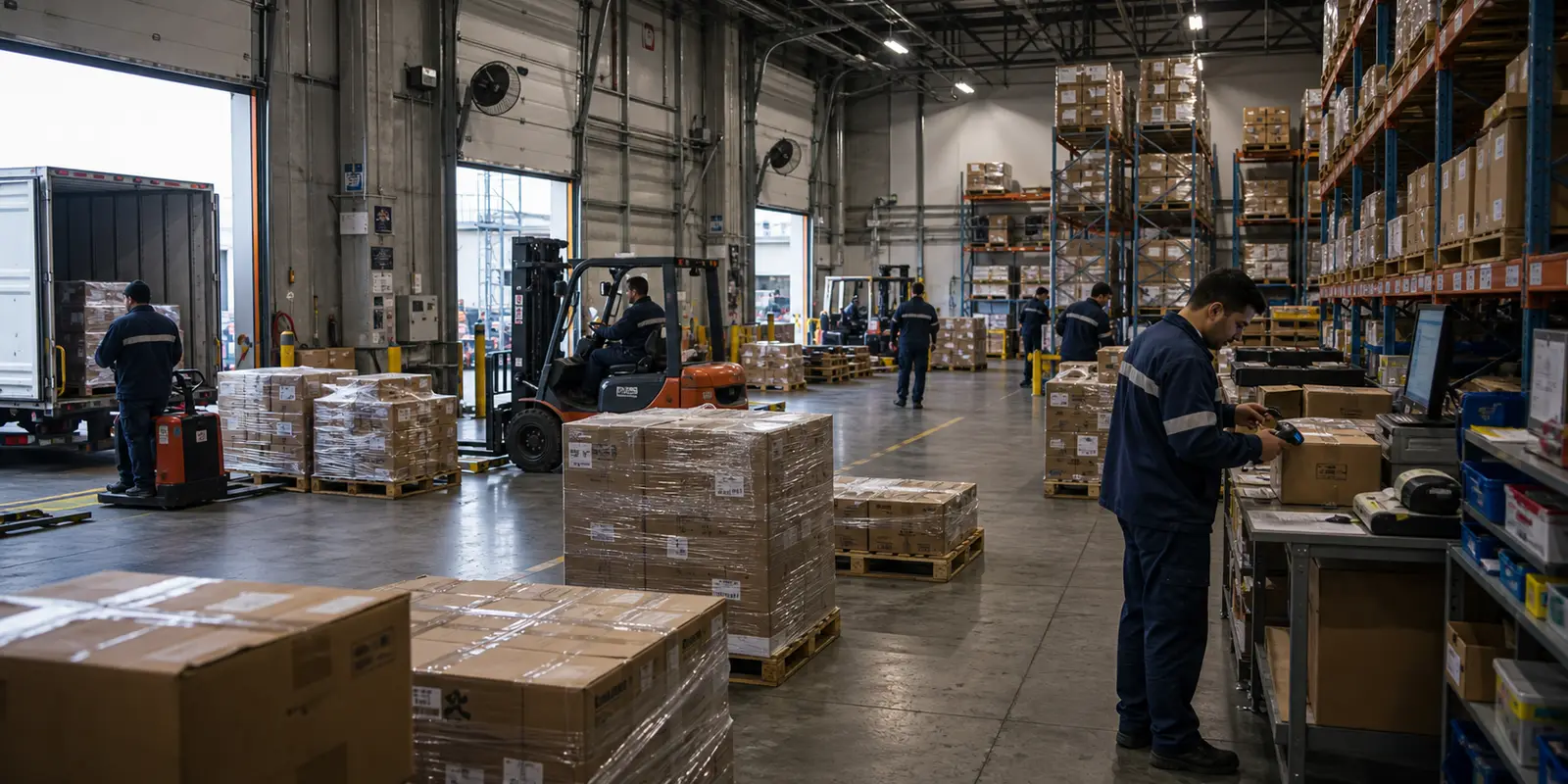
- 1. Supplier Ships to Forwarder's Origin Warehouse — Your maker in China, Vietnam, or India ships finished goods to the freight forwarder's consolidation warehouse, near the origin port. The forwarder checks quality, confirms quantities, and makes sure packaging meets Amazon standards.
- 2. FBA Prep & Labeling (Optional at Origin) — Many forwarders offer FBA prep at the origin, and it costs much less than doing it in the US. Services here include FNSKU labeling ($0.10-$0.30/unit), polybag packaging ($0.15-$0.40/unit), bubble wrapping ($0.20-$0.50/unit), and set or bundle creation. Prep in China, versus prep in the US, usually saves you 40-60% per unit.
- 3. Ocean or Air Freight — The forwarder books the shipment to fit your timeline and budget. Ocean freight (LCL or FCL) takes 20-35 days, but it costs 5-8x less per unit than air. Air freight delivers in 5-7 days, which suits urgent restocks well. See our shipping rates comparison to work out the best mode for your products.
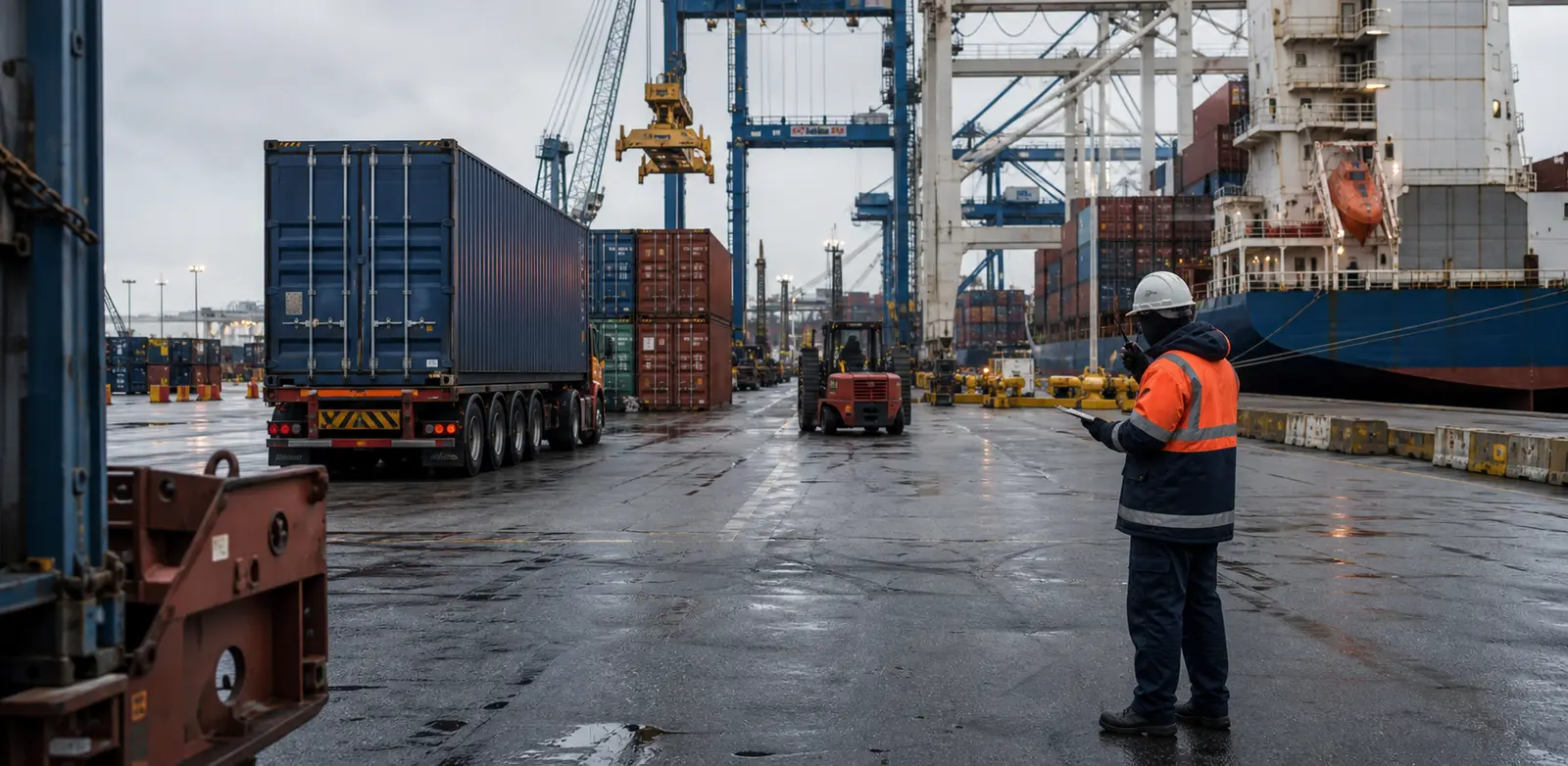
- 4. US Customs Clearance — The forwarder's customs broker files the import entry. They sort your products under the correct HS codes and work out duties. They also check you meet FDA, CPSC, or FCC rules, where they apply. Amazon products often trigger FDA rules (supplements, cosmetics), CPSC rules (kids' products), and FCC rules (electronics).
- 5. Domestic Transport to FBA Warehouse — After customs clears the goods, the forwarder sets up trucking to the Amazon fulfillment center or centers named in your shipment plan. Amazon often splits your inventory across several FCs. When that happens, the forwarder runs the deconsolidation and the multi-stop delivery.
- 6. Amazon Receiving Confirmation — Once Amazon receives and checks in your inventory, it goes live for sale. The forwarder tracks the receiving progress. They flag any gap between what you shipped and what Amazon actually received.
Shipping Costs for Amazon FBA: Real Numbers by Route
Amazon seller shipping costs shift based on your product's size, weight, and value. Here's what typical Amazon sellers pay in 2026 for ocean freight to the US:
These numbers cover freight only. Add customs duties (0-25%), customs brokerage ($125-$250), and Amazon FBA fees to reach your total landed cost. For a full breakdown, see our international shipping costs guide.
| Route | LCL (per CBM) | 20ft FCL | 40ft FCL | Air (per kg) |
|---|---|---|---|---|
| China → US (West Coast)Quote this route | $80 – $160 | $1,100 – $2,200 | $2,000 – $3,800 | $3.50 – $5.50 |
| China → US (East Coast)Quote this route | $100 – $180 | $1,800 – $3,200 | $2,800 – $5,000 | $4.00 – $6.00 |
| Vietnam → USQuote this route | $90 – $170 | $1,300 – $2,500 | $2,200 – $4,200 | $3.50 – $5.50 |
| India → USQuote this route | $85 – $160 | $2,000 – $3,500 | $3,000 – $5,500 | $3.00 – $5.00 |
| FBA Prep at Origin | $0.10 – $0.50/unit | |||
| US Customs + Brokerage | $125 – $350 flat | |||
| Drayage to FBA | $350 – $800/container |
LCL vs FCL for Amazon Sellers: When to Upgrade
Most new Amazon sellers start out with LCL (Less than Container Load). They move up to FCL (Full Container Load) as their business grows. Here's when you should make that switch:
There is no universal crossover point between LCL and FCL; as a rule of thumb, compare both quotes from about 10–15 CBM. Well below that, LCL usually costs less per unit. Well above it, FCL usually gives you better per-unit economics. It also runs faster (no CFS consolidation or deconsolidation step) and gives you your own dedicated container space. For a full comparison, read our FCL vs LCL guide.
For Amazon sellers, though, one more factor matters beyond pure cost: inventory velocity. If you're launching a new product with unclear demand, starting small with LCL shipments cuts your financial risk. Once a product proves itself, and you have solid demand data, scaling up to FCL boosts your margin the most.
| Factor | LCL | FCL | Winner for Amazon Sellers |
|---|---|---|---|
| Minimum Shipment | 1 CBM (~10-15 cartons) | Full container | LCL (lower risk) |
| Cost per CBM | $30 – $180 | $25 – $50 (effective) | FCL (above 12 CBM) |
| Transit Time | +3-5 days (CFS handling) | Direct, no CFS delays | FCL (faster receiving) |
| Damage Risk | Higher (multiple handling) | Lower (sealed container) | FCL |
| Cash Required | $200 – $1,500 | $2,000 – $7,000+ | LCL (lower upfront) |
| Ideal For | New products, testing, small orders | Proven products, restock orders | Depends on stage |
| Shipment Frequency | Weekly/biweekly | Monthly | LCL (more frequent restocks) |
Common Mistakes Amazon Sellers Make with Freight Forwarding
We've worked with hundreds of Amazon sellers. Here are the priciest, most common mistakes we see them make:
- Choosing a Forwarder Based Only on Price — The cheapest quote often comes from a forwarder who doesn't get Amazon's rules. One rejected FBA shipment can cost more than what you'd save across 10 shipments of cheaper freight. Look for a forwarder with real, proven Amazon experience, and ask for seller references.
- Not Factoring in All Costs — Many sellers work out profit margins using just the freight rate. They forget customs duties, brokerage, drayage, FBA prep, insurance, and Amazon's inbound placement fees. Work out your total landed cost per unit, with every line item counted, before you pick a product or supplier.
- Skipping Cargo Insurance — Ocean carrier liability caps at about $500 per package. If your container, worth $40,000 in inventory, sinks, gets water damage, or goes missing, standard carrier liability won't cover your loss. Cargo insurance costs just 0.3-0.8% of value ($120-$320 for a $40K shipment). For Amazon sellers, this is an easy call.
- Creating Shipment Plans Before Cargo Arrives — Amazon shipment plans carry expiration windows. If you set up a plan and your ocean shipment gets delayed, from port congestion, customs holds, or weather, the plan can expire. You'd then need to build a new one, which might send you to different fulfillment centers than before.
- Ignoring Customs Compliance — Products that need FDA registration (cosmetics, supplements, food contact materials), CPSC testing (kids' products), or FCC certification (electronics) can get held. Customs holds them without the right paperwork. These holds can drag on for weeks, and kill your inventory availability. Check your compliance rules before you send that first shipment.
- Not Using Amazon's Partnered Carrier Program — For the domestic leg, from port or warehouse to FBA, Amazon's partnered carrier rates often run 30-50% cheaper than independent LTL trucking. Your forwarder should give you the option to use Amazon's partnered carriers for that last mile.
- Single-Shipment Thinking — Successful Amazon sellers ship inventory in a steady stream, not in one big batch. Plan out your shipping pipeline instead. While one shipment sits on the water, another gets prepared at the factory, and a third sells straight from FBA. A good forwarder helps you run this rolling pipeline smoothly.
How to Choose a Freight Forwarder for Amazon
Not every freight forwarder measures up when it comes to Amazon logistics. Here's what to look for:
- Amazon FBA Experience — Ask this exact question: how many Amazon seller shipments do you handle each month? Also ask for references from other Amazon sellers. A forwarder who runs 50+ Amazon shipments a month will have smooth, set processes for FBA prep, labeling, and compliance. A general forwarder won't.
- Origin FBA Prep Services — The skill to do FNSKU labeling, polybag packaging, and inspection right at the origin saves you real money, compared to doing it in the US. Ask about their prep facility, their quality control steps, and their per-unit pricing.
- Multi-FC Delivery Capability — Amazon often splits shipments across 3-5 fulfillment centers. Your forwarder needs to run deconsolidation and multi-stop LTL delivery well. Ask how they handle split shipments, and whether they offer Amazon Partnered Carrier booking.
- Customs Expertise for Consumer Products — Amazon products often run into FDA, CPSC, FCC, EPA, or USDA rules. Your forwarder should spot compliance needs early, based on your product type and HS code. Read more in our customs documents checklist.
- Transparent All-In Pricing — Ask for a full per-unit cost breakdown: origin pickup, FBA prep, ocean or air freight, customs brokerage, duties, drayage, and delivery to FBA. This gives you the real landed cost per unit, so you can work out your margin right. See our freight forwarding cost guide for benchmarks.
- Communication & Tracking — For Amazon sellers, knowing exactly when inventory goes live matters a lot. It shapes how you run PPC campaigns, promotions, and stock levels. Your forwarder should send you updates at every milestone on their own, not just answer when you ask.
Amazon FBA Shipping Strategies: Optimize Your Supply Chain
Beyond plain freight forwarding, here are advanced moves that successful Amazon sellers use to sharpen their logistics:
- Dual-Channel Fulfillment — Don't put all your inventory into FBA. Keep a share in your own 3PL warehouse for Seller Fulfilled Prime (SFP), wholesale orders, and DTC sales. This spread protects you against FBA storage limit cuts, lost inventory, and overstock fees.
- Strategic Inventory Placement — Amazon's inventory placement service lets you send all your inventory to one FC, for a fee. For heavy or bulky items, this fee ($0.27-$1.58/unit) can cost less than the freight bill of shipping LTL to 3-5 FCs. Run the math for your own products before you decide.
- Mixed-Mode Shipping — Ship your baseline inventory, about 60-70% of forecast, by ocean, for the lowest cost. Ship the rest, 30-40%, by air, 2-3 weeks before you project a stockout. This ocean + air strategy keeps shipping costs low, while it stops stockouts that would hurt your BSR.
- Supplier Consolidation — If you source from several factories in the same region, have your forwarder combine them at the origin. Merging 5 suppliers' output into one FCL, instead of 5 separate LCL shipments, can cut your per-unit shipping cost by 40-50%. Read our LCL consolidation guide.
- Seasonal Pre-Positioning — Ship your Q4 holiday inventory by ocean in August-September. Rates run cheaper then, and your goods arrive with buffer time to spare. Don't panic-ship by air in October-November, when rates peak and delays run more likely. The savings on one 40ft container, shipped in September instead of November, can top $2,000-$3,000.
Amazon Freight Forwarding Costs: A Real Example
Let's walk through a real example to show the full cost breakdown. Here's the scenario: an Amazon seller imports 2,000 units of a consumer electronics product from Shenzhen, China, to FBA warehouses in the US. Product specs run like this: 0.8 kg each, with 50 units per carton, or 0.15 CBM per carton. That's 40 cartons total, or 6 CBM, at 1,600 kg. Product cost sits at $8.50/unit, or $17,000 total. Amazon's selling price is $29.99.
This example shows the real economics at play. At $2.98 shipping cost per unit on a $29.99 product, the seller's logistics cost runs about 10% of revenue. If they'd shipped by air instead ($5,600 in freight alone), the per-unit cost would jump to $4.81. That would eat into an already tight margin.
Here's the key number for this seller. They need to sell at least 200 units before the next ocean shipment arrives, to avoid a stockout. At 7 units a day, that's 29 days of sales. That fits well inside the 28-35 day ocean transit window, for a smooth rolling restock cycle.
| Cost Component | Total Cost | Per Unit | Notes |
|---|---|---|---|
| Product Cost (FOB) | $17,000 | $8.50 | 2,000 units at $8.50 each |
| FBA Prep at Origin | $500 | $0.25 | FNSKU labeling + polybag |
| Ocean Freight (LCL) | $420 | $0.21 | 6 CBM x $70/CBM (Shenzhen → LA) |
| US Customs Duty | $680 | $0.34 | 4% duty on $17,000 value |
| Customs Brokerage | $175 | $0.09 | Standard HTS filing |
| Cargo Insurance | $68 | $0.03 | 0.4% of $17,000 |
| Drayage (Port → 3PL) | $450 | $0.23 | LA port to 3PL warehouse |
| Amazon Partnered Carrier | $320 | $0.16 | 3PL to 2 FBA warehouses |
| Documentation Fees | $110 | $0.06 | BL, AMS, ISF filing |
| Total Logistics Cost | $2,723 | $1.36 | Excludes product cost |
| Total Landed Cost | $19,723 | $9.86 | Including product cost |
| Amazon FBA Fee | $5.30/unit | $5.30 | FBA fulfillment fee |
| Amazon Referral Fee | $4.50/unit | $4.50 | 15% referral fee |
| Net Profit per Unit | $10.33 | $29.99 - $9.86 - $5.30 - $4.50 |
Frequently Asked Questions
Sources & references
- Amazon — Fulfillment by Amazon (FBA), official seller guide
- Freightos Baltic Index (FBX) — global container freight pricing — The index measures 40ft container prices; it publishes no LCL rate per cubic metre. Checked 17 September 2026.
- Federal Maritime Commission (FMC) — Ocean Transportation Intermediaries (licensed forwarders and NVOCCs)