
How Ocean Freight Works: The Process from Quote to Delivery
Summary: Ocean freight moves your cargo by ship, in a container you fill alone (FCL) or share with other shippers (LCL). The process runs in eight steps: quote and booking, pickup, export clearance, port handling, ocean transit, import clearance, destination handling, and delivery. This guide walks you through each step, the people involved, and the documents you will need.

What Is Ocean Freight, and When Does It Make Sense?
Ocean freight is the transport of goods by cargo ship between ports. Your goods travel inside a steel container, either alone or alongside other shippers' cargo. Most of the world's traded goods move this way. It is the backbone mode for anything heavy, bulky, or not urgent.
Ocean freight makes sense when weight or volume is high and the deadline is flexible. Furniture, machinery, retail stock, and raw materials are classic ocean cargo. If your shipment is light, urgent, or high-value, air freight may fit better. Many importers use both modes across the year: ocean for regular stock, air for launches and emergencies.
This guide is written for a first shipment. Every term gets a plain-English explanation the first time it appears. By the end, you will know what happens to your cargo at every stage, who handles it, and where the costs come from. Bookmark it, and come back as your shipment moves through each stage.
The Players: Who Does What in an Ocean Shipment
An ocean shipment works like a relay race. Each player carries the cargo for one leg, then hands it off to the next. Knowing who does what helps you ask the right questions when something stalls. On smaller shipments, one company may play two or three of these roles at once.
- Shipper and consignee — The shipper sends the goods and the consignee receives them. If you are importing, your supplier is usually the shipper and you are the consignee. These two names appear on every document in the process.
- Freight forwarder — Your planner and single point of contact. A forwarder books vessel space, arranges pickup and paperwork, and coordinates every handoff. Most modern forwarders, Suaid Global included, are asset-light: they orchestrate the move through vetted partner networks rather than owning ships. Our guide on choosing a freight forwarder shows how to vet one.
- Ocean carrier — The shipping line that owns and operates the vessel. Carriers sell container space, publish sailing schedules, and issue the master bill of lading for the voyage.
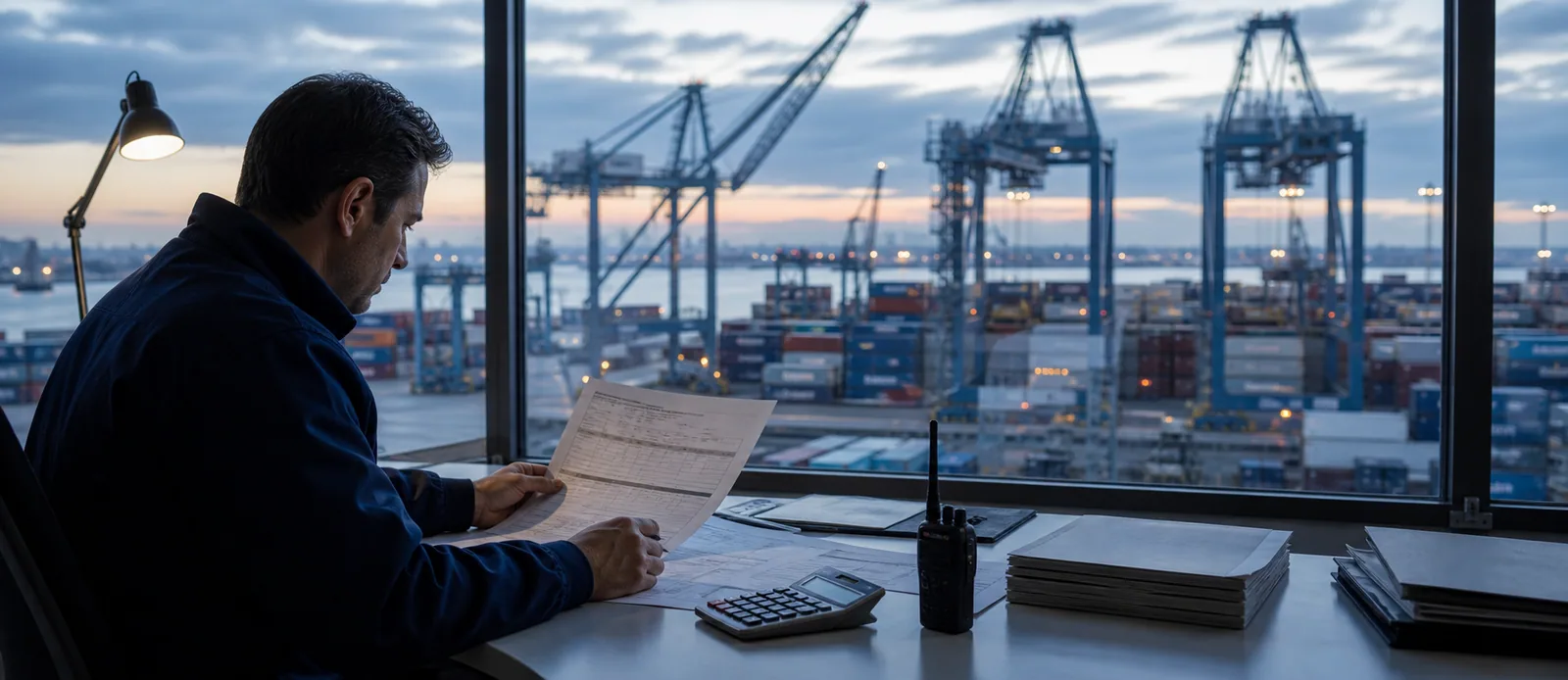
- Customs broker — A licensed specialist who files your import entry and clears the goods with customs. Forwarders usually arrange clearance through licensed customs broker partners at the destination.
- Terminals and CFS warehouses — Port terminals load and unload the vessel. For shared containers, a Container Freight Station (CFS) packs cargo in at origin and unpacks it at destination.
- Drayage trucker — The local truck that moves the container between your door, the warehouse, and the port. The distances are short, but the scheduling impact is big.
The Ocean Freight Process, Step by Step
Here is the full journey for a typical door-to-door ocean shipment. A port-to-port shipment skips the first and last legs. The middle steps happen on almost every ocean move, in this order. Save this list. It doubles as a status checklist while your cargo is moving.
- Quote and booking: You share the route, cargo details, and volume, and your forwarder returns a quote. Once you accept, the forwarder books space on a vessel with the carrier. You receive a booking confirmation with a cutoff date — the deadline for your cargo to reach the port.
- Cargo ready and pickup: Your supplier packs, labels, and palletizes the goods. A truck collects the cargo, or an empty container is dropped at the factory for loading. A full container is sealed at this point and stays sealed until it reaches the destination.
- Export customs clearance: The origin country checks the shipment out. Your supplier or the forwarder's local partner files the export declaration. Missing paperwork at this step is a top cause of missed vessels.
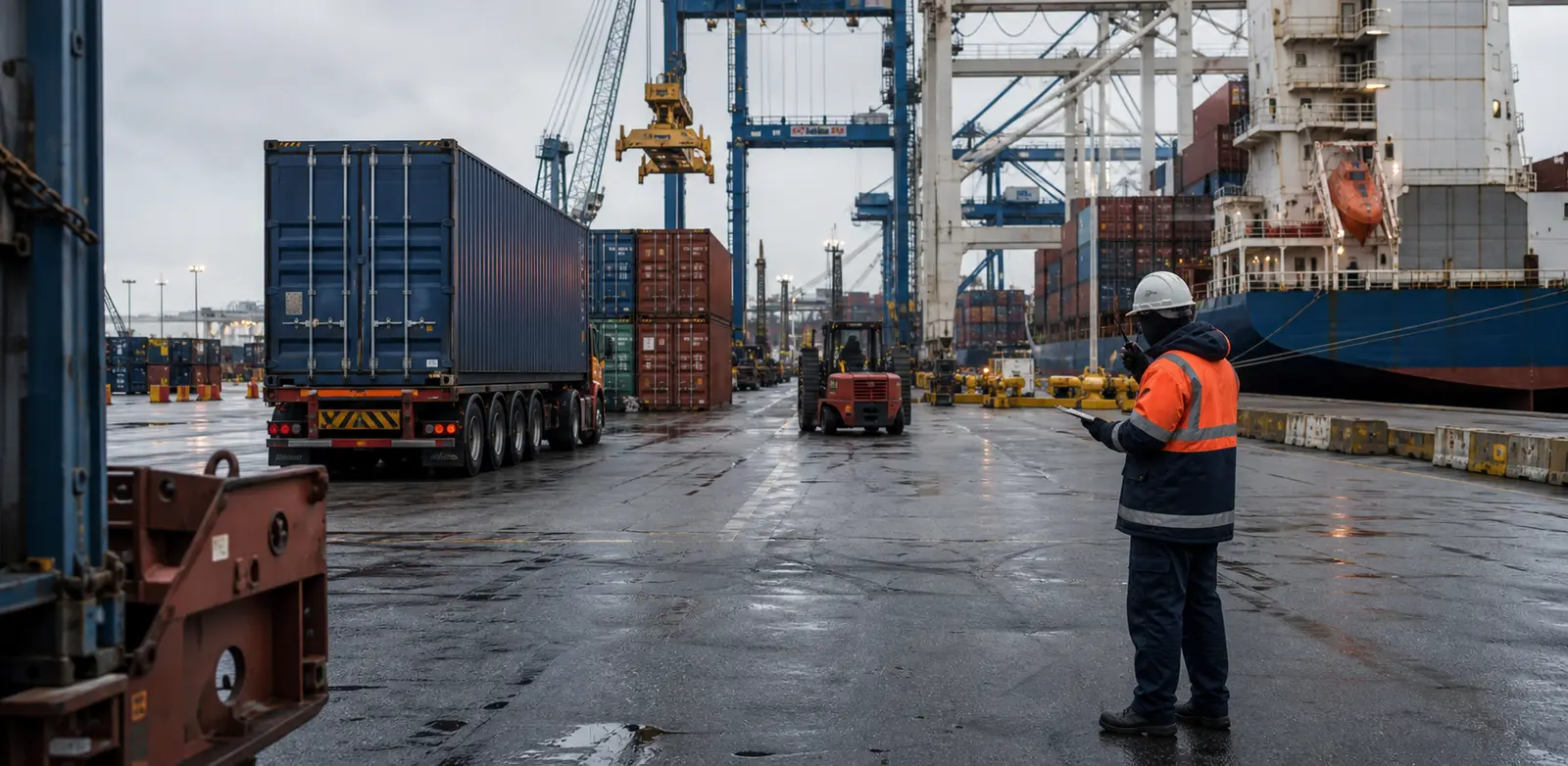
- Port and terminal handling at origin: A full container goes straight to the terminal and waits for loading. Shared (LCL) cargo goes to a CFS first, where it is packed into a container with other shipments. Cranes then lift the container onto the vessel.
- Ocean transit: The vessel sails, often calling at several ports along the way. Your forwarder tracks the vessel and flags any delay. As a reference, a full container from China to the US West Coast typically spends 25-35 days port to port.
- Import customs clearance: Before or on arrival, a licensed customs broker files your import entry. Customs reviews the documents, assesses duties, and may inspect the cargo. Our customs clearance guide covers this step in detail.
- Destination handling: The container comes off the vessel. A full container waits at the terminal for pickup. LCL cargo moves to a destination CFS, where it is unpacked and sorted by consignee.
- Final delivery: A drayage truck brings the container, or your unpacked cargo, to your door or warehouse. The empty container then returns to the carrier's depot. You check the goods against the packing list, and the move is complete.
The Documents That Move Your Shipment
Ocean freight runs on paperwork. Three documents matter on almost every shipment, and a few more appear depending on the cargo and the route. Get these right, and most of the process takes care of itself.
- Bill of lading (BL) — The core ocean freight document. It is the carrier's receipt for the cargo, the contract of carriage, and often the title to the goods. Our bill of lading guide explains every field.
- Commercial invoice — The seller's bill for the goods. Customs uses it to value the shipment and assess duties. See our commercial invoice guide for the required fields.
- Packing list — An itemized list of what is inside each carton or pallet: counts, weights, and dimensions. Terminals, brokers, and your own warehouse all rely on it. Details in our packing list guide.
- Certificate of origin — Proves where the goods were made. You need it when a trade agreement or the destination country requires proof of origin. See the certificate of origin guide.
Who prepares which document depends on your Incoterms — the standard trade terms that split tasks, costs, and risk between buyer and seller. Agree the term with your supplier before you request quotes. It decides who books the freight and who pays each charge.
FCL or LCL: The One Choice You Make Early
Ocean freight comes in two service types. FCL (full container load) gives you the entire container, sealed from origin to destination. LCL (less than container load) shares a container with other shippers, and you pay only for the space you use. Many importers start with LCL and move to FCL as their volume grows.
There is no universal cost breakeven: as a rule of thumb, compare an LCL and an FCL quote from about 10-15 CBM. LCL also adds handling time at both ends. Our FCL vs LCL guide covers the decision in depth, and the container types guide lists sizes and capacities. Not sure of your volume? Convert your cartons with the free CBM calculator.
What Ocean Freight Costs: Three Layers, Not One Number
Think of ocean freight pricing as three layers. The base rate covers the vessel move between ports. Surcharges cover fuel, terminals, security, and risk. Local charges and duties cover everything at each end: trucking, handling, brokerage, and import taxes.
The base rate moves with the lane, the season, and the market. Our ocean freight rates guide tracks current ranges by trade lane. Surcharges typically add 30 to 60 percent on top of the base rate, depending on lane and season. The surcharges guide decodes each line item on the invoice.
The practical rule for a first shipment: never compare quotes on the base rate alone. Ask for an all-in quote to your door, with every line shown. For a quick planning range on your lane, browse our free logistics tools or try the freight calculator.
How Long Ocean Freight Takes
Transit time depends on the lane, the routing, and the service type. Port-to-port time is what carriers publish in their schedules. Door-to-door time adds pickup, customs, handling, and delivery at both ends on top of the sailing. Always plan against the door-to-door number, not the sailing time alone.
A full container from China to the US West Coast typically runs 25-35 days port to port. Routings to the US East Coast, via the Panama Canal, take longer than West Coast calls. LCL adds roughly 5-10 days to door-to-door time on the same route. Shared cargo waits for consolidation at both ends — see our LCL transit times by route.
Disruptions change these numbers. Since late 2023, most carriers have routed Asia-Europe vessels around Africa instead of through the Suez Canal, adding 10-14 days on those lanes. Check the live picture in our supply chain disruptions tracker, and plan lane times with the transit time calculator.
Common First-Shipment Mistakes (and How to Avoid Them)
Every experienced importer made at least one of these on an early shipment. Read the list once and you can skip the expensive lessons. None of them takes expertise to avoid — just a check at the right moment.
- Comparing base rates instead of all-in quotes — the cheapest base rate often hides the biggest destination charges. Compare the total landed cost, line by line.
- Guessing the volume — carton estimates flip the FCL-or-LCL math. Measure packed cartons and convert them with the CBM calculator before you request quotes.
- Leaving Incoterms unclear — if you and your supplier assume different terms, tasks and charges fall through the gap. Agree the term in writing before anyone books freight.
- Booking late in peak season — vessel space tightens from August through October. Book well before your cargo ready date, or plan to pay peak rates.
- Skipping cargo insurance — carrier liability is limited and slow to claim. Cover is cheap next to a loss; see our cargo insurance guide.
- Ignoring free time at the terminal — containers get a few free days at the port before storage and detention charges start. Plan the pickup before the vessel arrives, not after.
How Suaid Global Fits Into the Process
Suaid Global is a US-based, asset-light freight forwarder. We do not operate ships, terminals, or warehouses. We plan, book, and manage your shipment through a vetted partner network of carriers, licensed customs brokers, and CFS operators across five continents.
For a first-time importer, that means one point of contact through all eight steps. You get one quote, one coordinator, and plain answers at every stage. Send your route and cargo through our quote form, and we will map the process for your exact shipment.