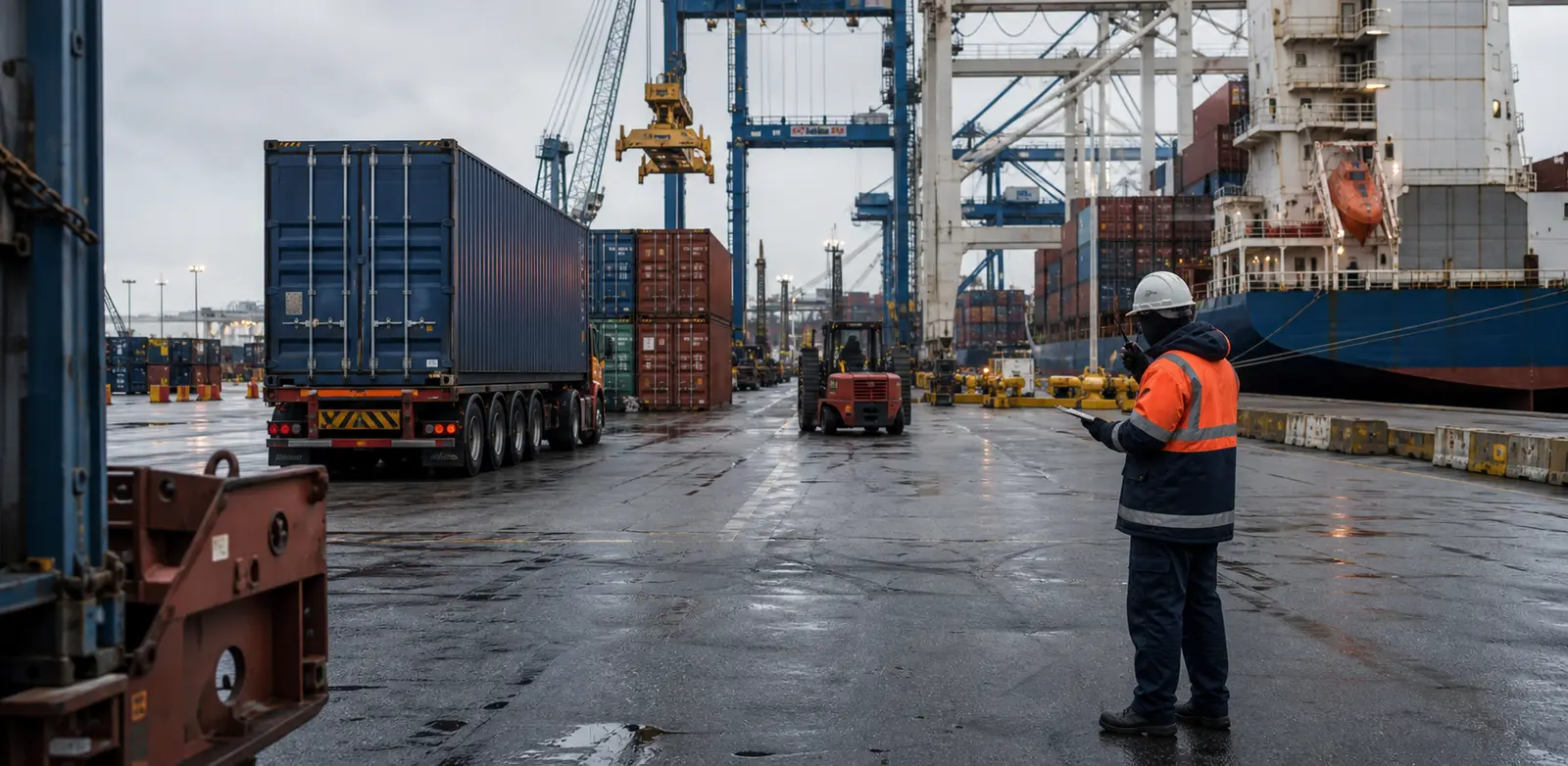

Dangerous Goods Shipping IMDG, IATA & HAZMAT Guide
Summary: Lithium batteries, chemicals, perfume, paint, and aerosols — many everyday items count as dangerous goods. Ship them the wrong way and you face fines up to $500,000, lost cargo, and even criminal charges. Ship them the right way and they move as fast as any other freight.

What Are Dangerous Goods (DG)?
Dangerous goods, also called hazardous materials or HAZMAT, are items that put health, safety, property, or the environment at risk while in transit. Global rule sets cover them: the IMDG Code for ocean freight, IATA DGR for air freight, and ADR/DOT for ground transport.
The rule book splits dangerous goods into 9 classes, based on the main hazard. Some items fall into more than one class. Even items that seem safe — perfume (Class 3, a flammable liquid), nail polish remover, or the lithium batteries in your laptop (Class 9) — count as DG.
In the US, the Department of Transportation (DOT) sets the rules for hazardous materials shipments. These rules, called the Hazardous Materials Regulations (HMR), live in Title 49 of the Code of Federal Regulations (49 CFR). If you ship hazardous goods by air, ocean, road, or rail, you must follow these rules. They cover how you classify, pack, label, and document a shipment, plus what to do in an emergency.
The 9 Classes of Dangerous Goods
| Class | Hazard Type | Common Examples |
|---|---|---|
| Class 1 | Explosives | Fireworks, ammunition, flares, airbag inflators |
| Class 2 | Gases | Propane, aerosols, fire extinguishers, CO₂ cylinders |
| Class 3 | Flammable Liquids | Perfume, paint, alcohol, adhesives, gasoline |
| Class 4 | Flammable Solids | Matches, magnesium, sodium batteries, metal powders |
| Class 5 | Oxidizers & Organic Peroxides | Bleach, pool chemicals, hydrogen peroxide, fertilizers |
| Class 6 | Toxic & Infectious Substances | Pesticides, medical waste, biological samples, cyanide |
| Class 7 | Radioactive Material | Medical isotopes, smoke detectors, industrial gauges |
| Class 8 | Corrosives | Battery acid, sulfuric acid, mercury, cleaning compounds |
| Class 9 | Miscellaneous DG | Lithium batteries, dry ice, magnetized materials, engines |
How to Ship Dangerous Goods — Step by Step
- Classify your product: Find the UN number, the proper shipping name, the class, the pack group, and any special rules that apply. Use the IMDG Code for ocean or IATA DGR for air to look up your item. Not sure? A DG expert or your freight forwarder can help you sort it out.
- Choose compliant packaging: DG must go in UN-certified packing that fits the pack group: I, II, or III. This packing must pass drop tests, pressure tests, and stack tests. Inner boxes need soak-up material inside, and the outer box must show the right DG marks and labels.
- Mark and label the packages: Add the right hazard class diamond labels, the UN number mark, the proper shipping name, and up arrows if it's a liquid. Air freight adds more rules — some loads also need a 'Cargo Aircraft Only' label.
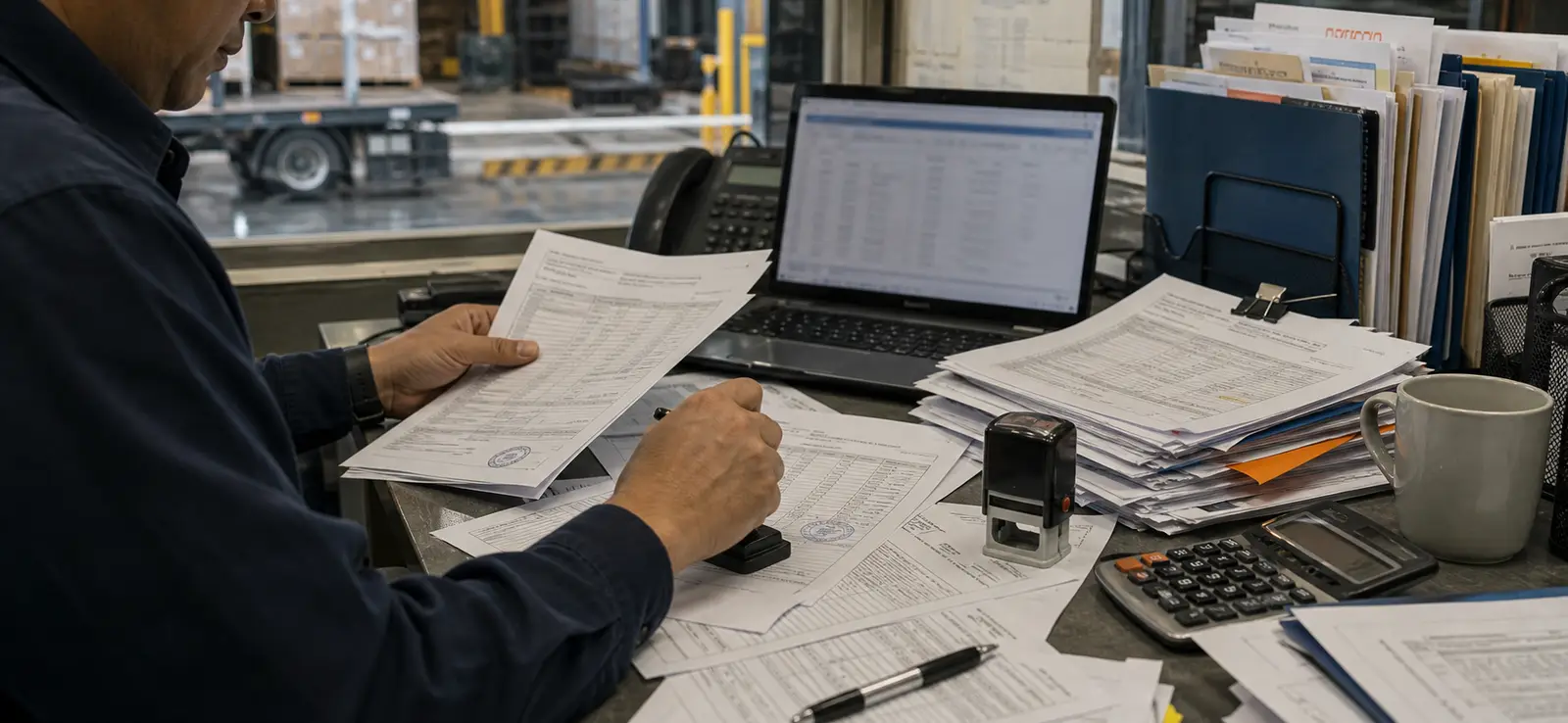
- Prepare the DG declaration: Fill out the Dangerous Goods Declaration (DGD), also known as the Shipper's Declaration for Dangerous Goods. This legal form states the cargo is classed, packed, marked, and labeled the right way, and is fit to ship. You, the shipper, are on the hook if it's wrong.
- Select a DG-certified carrier: Not every carrier will take dangerous goods, and some that do still block certain classes. Check that your carrier, your freight forwarder, and any stop-over points can handle your exact DG class. Air carriers tend to set the tightest limits.
- Book and provide documentation: Send the DG declaration, the SDS (Safety Data Sheet), your invoice, your packing list, and any permits to your freight forwarder. Do this at least 48 to 72 hours before your cargo is ready. Late or missing papers lead to an automatic reject.
- Track compliance through delivery: DG loads may face extra checks at the start, mid-route, and at the end. Keep copies of all DG papers for at least 2 years. If a leak, damage, or heat problem happens, report it right away to the carrier and the right authority.
DG Shipping by Mode — Key Differences
| Factor | Ocean (IMDG) | Air (IATA DGR) | Ground (DOT/ADR) |
|---|---|---|---|
| Governing body | IMO | ICAO / IATA | DOT (US) / ADR (EU) |
| Quantity limits | Higher — full containers allowed | Very strict — per-package limits | Moderate — varies by class |
| Packaging standards | UN-certified required | Strictest — additional air pressure testing | UN-certified required |
| Documentation | DG Declaration + SDS | Shipper's Declaration + SDS | Shipping paper + SDS |
| Cost premium | 10-30% above standard rates | 50-200%+ above standard rates | 10-25% above standard rates |
| Acceptance lead time | 24-48 hours advance notice | 48-72 hours advance notice | Same day possible |
| Restrictions | Some classes deck-only | Many classes prohibited on passenger aircraft | Route restrictions near cities |
What depends on mode and route
| Transport leg | Rules to check | Questions for the review partner |
|---|---|---|
| Air | ICAO Technical Instructions 2025–2026 and IATA DGR 67th edition (2026). Check updates that apply and State/operator variations. | Which entry and packing instruction apply? Are there aircraft, quantity, charge or marking conditions for this setup? What document or approval terms apply? |
| Sea, packaged dangerous goods | IMO IMDG Code, 2024 edition with Amendment 42-24. It is mandatory from 1 January 2026. | Which packaging, segregation, stowage and document rules apply to these goods and this route? What are the carrier and port acceptance terms? |
| Road/rail and connecting legs | Rules of the jurisdictions and modes involved. Confirm them for the actual route. | Can pickup, transfers and delivery meet the local rules that apply? Include any permits and handling conditions in that check. |
Check current amendments before you prepare a shipment. See ICAO Doc 9284 updates, IATA 2026 guidance and the IMO IMDG edition notice. A change in mode or route means checking the planned operation again.
Common DG Shipping Mistakes
- Undeclared dangerous goods — this is the #1 rule break. Shippers who don't know their item is DG (think lithium batteries in gadgets, perfume samples, or cleaning chemicals) can face US civil penalties of more than $100,000 per violation, and criminal fines of up to $500,000.
- Wrong UN number or wrong shipping name — a vague label in place of the exact legal name voids the whole declaration.
- Non-UN-certified packing — plain boxes in place of tested DG packing. Even if the item still arrives safe, the shipper broke the rule.
- An incomplete Dangerous Goods Declaration — a missing emergency contact, the wrong pack group, or no signature — leads to an automatic reject.
- Going over the quantity limit for air transport — air freight sets strict per-box limits, and going past them can bring criminal charges.
- Missing or wrong hazard labels — each box must show the right diamond hazard label for its class, plus any extra risk labels it needs.
Lithium Battery Shipping Rules
Lithium batteries are the DG item shipped most, and the one that breaks the rules most. They sit in Class 9, under four codes: UN3480 for lithium-ion cells alone, UN3481 for lithium-ion cells packed with or in gear, UN3090 for lithium metal cells alone, and UN3091 for lithium metal cells packed with or in gear.
For air freight, standalone lithium-ion cells can only fly on cargo planes, and each box must stay under 35 kg. Cells packed with gear get higher limits, but still need Section II or Section I packing. Every box needs the lithium battery handling label, and standalone cells that fly must stay at 30% charge or less.
For ocean freight, lithium batteries face fewer limits, but you still need a DG declaration, the right packing, and correct marks. Big batteries, like EV batteries, may need a special spot on the ship.
Battery details that affect the review
- State the chemistry: lithium-ion, lithium metal, sodium-ion or another type. Say if it is a cell, a battery or a complete product.
- Give the maker and model of both the battery and equipment. Use supplier data for the next values. For rechargeable lithium-ion batteries, give the rated watt-hours (Wh). For lithium metal, give the lithium content in grams.
- Say if batteries ship alone, packed with equipment or installed in it. Give the number of cells/batteries in each package and the whole shipment.
- Give the known state of charge (SoC) and how it was checked. This is key when you plan air freight. Mark it as unknown if it has not been confirmed.
- Where it applies, ask the maker or distributor for the matching UN 38.3 test summary or its access link. Flag any mismatch between the model in the record and the product offered.
- Flag damage, defects and safety recalls from the start. Also flag prototypes and requests for recycling or disposal. These cases need their own review before any dispatch.
The common lithium battery entries offer a starting point for review. UN 3480 covers lithium-ion batteries alone; UN 3481 covers them with or in equipment. UN 3090 covers lithium metal batteries alone; UN 3091 covers them with or in equipment. This is not a full classification list: vehicles and other battery chemistries may have other entries. IATA 2026 battery guidance, classification.
Battery ratings, setup and condition help show which rules to check. They do not prove that a shipment is eligible. The US PHMSA battery resources also explain test records. They cover the risks of damaged, defective or recalled batteries.
DG Shipping Costs
Dangerous goods shipments cost more — often 10% to 200% more than standard cargo, based on the mode and the class. Ocean DG fees run $100 to $500 per container for lower-risk classes, and can top $1,000 or more for high-risk cargo that needs a special spot.
Air freight DG fees run much higher — $0.50 to $3.00 per kg on top of the base air rate, plus a flat DG handling fee of $50 to $200 per shipment. Some carriers charge extra for radioactive material (Class 7) and some Class 1 explosives.
Past the carrier fees, plan for DG-certified packing costs ($20 to $200 or more per UN-spec box), fees to prep the DG declaration ($50 to $150 per shipment if you outsource it), and any inspection delay, which adds storage costs.
What to send with your enquiry
| Topic | Details that help the review |
|---|---|
| Product | Give the trade description, intended use, maker and exact model. Add the technical sheet and any photos of the product and its markings. |
| DG details you already have | Give the UN number, proper shipping name, hazard class and subsidiary hazards supplied by the supplier. Include the packing group only where it applies. Name the source and flag uncertain facts for review. |
| Route and service | Give the pickup and delivery countries, cities or addresses. List known ports, airports or transit points and preferred modes. State if you need pickup, customs or final delivery. |
| Quantity and packages | Give units, package count and quantity per package. List net and gross weights and dimensions with units. Describe the current packaging and any other goods packed together. |
| Condition and purpose | State if the goods are new or used. Flag any damage, defect, safety recall, leak or past overheating. Say if the request is for a prototype, return, repair, recycling or disposal. |
| Timing and business scope | Give the cargo-ready date, target arrival date and room for date changes. Add the Incoterm if agreed. State who is responsible for each part of the shipment. |
| Documents and contacts | List the documents you have and any requests still open. Add a contact who can check product details with the supplier and coordinate the quote. |
You can add missing facts during the review. Do not guess a classification, battery rating or test result to complete the enquiry.
Questions before you request a review
Official sources for planning
- IATA — DG classification, documents and operator variations
- IATA — Battery Guidance Document, 2026
- ICAO — Technical Instructions, Doc 9284 and updates
- IMO — IMDG Code, Amendment 42-24
- US PHMSA — Lithium battery transport and safety
- US PHMSA — Lithium battery test summaries
- WFS Holland — Amsterdam AMS terminal charges, 2026