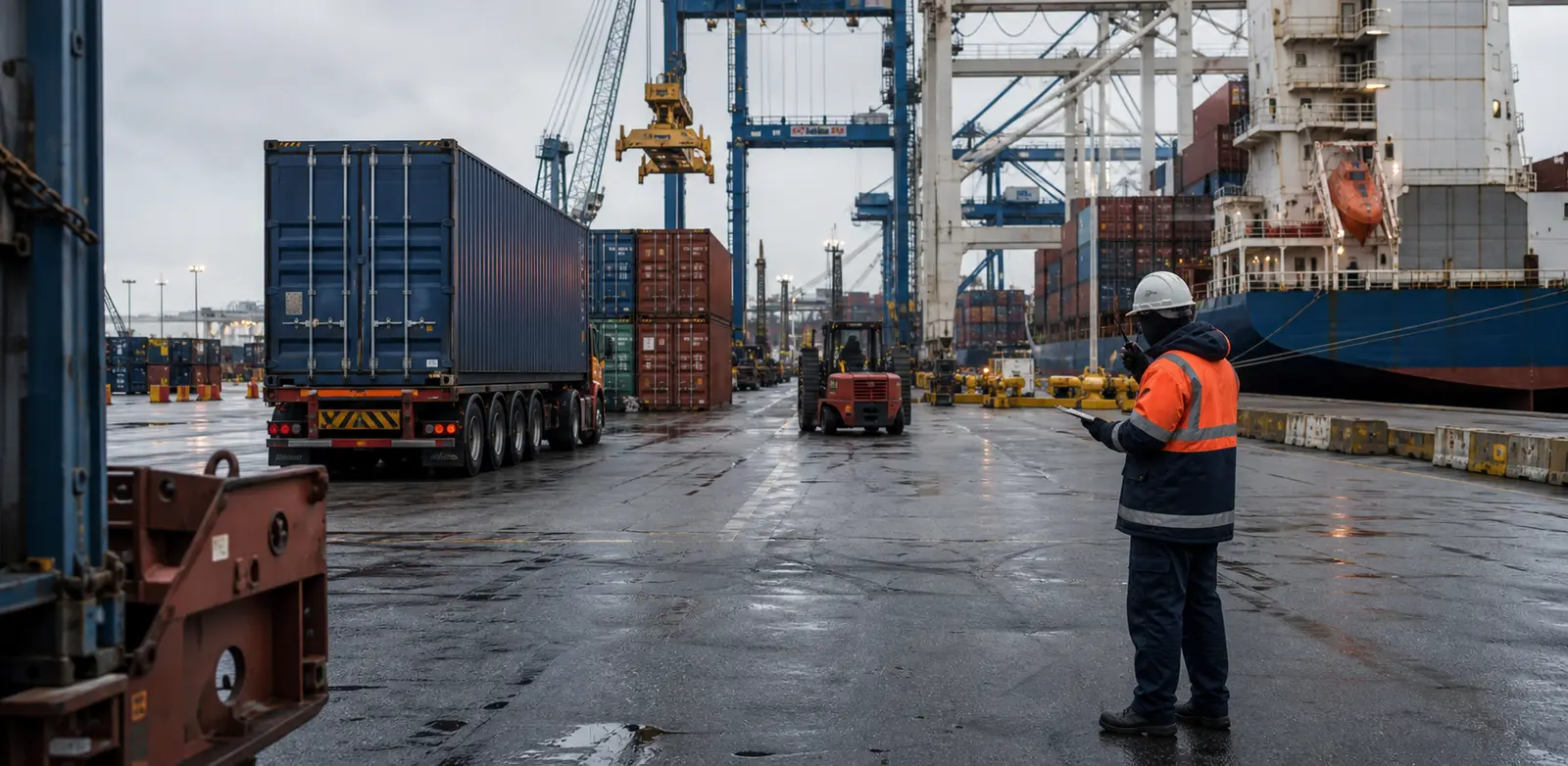

How to Import from Brazil to USA in 2026
Summary: Brazil is a major trading partner of the United States. It exports everything from coffee and steel to aircraft parts and fashion textiles. Maybe you're importing Brazilian goods for the first time. Or you're scaling a supply chain you already run. Either way, this guide covers the full process. It goes from finding suppliers to clearing customs at U.S. ports.

Brazil–USA Trade Overview: Why Import from Brazil?
Brazil is the largest economy in South America. It ranks among the top 15 trading partners of the United States. In 2025, trade between the two countries topped $80 billion. The U.S. bought over $36 billion worth of Brazilian goods that year. Key product groups include crude oil, iron and steel, aircraft parts, coffee, wood pulp, ethanol, and footwear.
For U.S. importers, Brazil offers real perks. It sits much closer than Asia, so transit times run shorter. Ocean freight from Santos (Brazil's largest port) to Miami takes just 10–14 days. Shanghai takes 25–35 days. Brazil also has a broad factory base, low labor costs, and rich natural resources. That makes it a smart sourcing choice, especially as firms move away from China under the China Plus One strategy.
The Brazilian real (BRL) has long favored U.S. dollar buyers. This cuts costs on labor-heavy goods like leather, footwear, granite, and processed foods. Brazil's farm exports also shine. Coffee, soybeans, orange juice, and cocoa rank world-class in both quality and volume.
Step-by-Step Process to Import from Brazil to the USA
- Research your product and classify it: Find the Harmonized System (HS) code for your product. Use the HS Code Lookup Tool to do this fast. The HS code sets your tariff rate. It also flags any anti-dumping duties and shows if you need special permits (FDA, USDA, EPA, etc.).
- Find and vet Brazilian suppliers: Use trade directories like Apex-Brasil (the Brazilian Trade and Investment Promotion Agency) or Alibaba. Or attend trade shows like FENAVIST and APAS Show. Always ask for samples. Check export licenses too. Run a factory audit, or hire a third-party inspector, before you place a big order.
- Negotiate Incoterms and payment terms: Pick the right Incoterm for your shipment. FOB Santos is the top choice for Brazil–USA trade. Here, the supplier gets goods to the port, and you book the ocean freight. DDP (Delivered Duty Paid) puts all logistics on the seller instead. If this is your first import, try CIF (Cost, Insurance, and Freight). It gives you a simpler cost setup.
- Arrange international shipping: Choose between ocean freight (FCL or LCL) and air freight. Ocean freight from Santos to Miami runs $1,400–$2,200 for a 20ft box and $2,800–$4,200 for a 40ft box (see the table below). Air freight costs $2.50–$4.50 per kg. A freight forwarder can run this whole chain for you.
- Prepare shipping documents: You'll need a Bill of Lading (ocean) or Air Waybill. Add a Commercial Invoice, Packing List, and a Certificate of Origin (for lower tariffs). You may also need product-specific papers, like a phytosanitary certificate for farm goods or FDA prior notice for food. See the full customs documents checklist.
- Clear U.S. Customs (CBP): File an ISF (Importer Security Filing) at least 24 hours before your cargo loads onto the ship. A licensed customs broker files the entry with CBP. They pay the duties and taxes and set up any needed checks. The customs clearance process takes 1–5 business days for most goods.
- Pay duties, taxes, and fees: Work out your landed cost. This means the tariff rate (based on HS code), plus the Merchandise Processing Fee (MPF) of 0.3464% (min $31.67, max $614.35). Add the Harbor Maintenance Fee (HMF) of 0.125% for ocean shipments. Check for any anti-dumping or countervailing duties too. Use the Tariff Simulator to get a total fast.
- Receive and inspect your goods: Once customs clears the goods, set up last-mile delivery from the port to your warehouse. Check the goods against the invoice and packing list. If you find damage, file a claim with your cargo insurance provider fast, within the policy's report window (usually 3–5 business days).
Shipping Costs: Brazil to USA in 2026
Shipping costs from Brazil to the United States depend on a few things. These are the start port, end port, cargo type, box size, and whether you ship FCL (Full Container Load) or LCL (Less than Container Load). Here are the current market rates as of Q2 2026:
| Route | 20ft Container (FCL) | 40ft Container (FCL) | LCL (per CBM) |
|---|---|---|---|
| Santos → MiamiQuote this route | $1,400 – $2,200 | $2,800 – $4,200 | $55 – $85 |
| Santos → New YorkQuote this route | $2,000 – $3,200 | $3,200 – $5,000 | $60 – $95 |
| Santos → Los AngelesQuote this route | $2,400 – $3,800 | $3,800 – $5,800 | $70 – $110 |
| Santos → HoustonQuote this route | $2,000 – $3,000 | $3,000 – $4,800 | $60 – $90 |
| Paranaguá → MiamiQuote this route | $1,900 – $2,900 | $2,900 – $4,300 | $55 – $90 |
| Itajaí → MiamiQuote this route | $2,000 – $3,000 | $3,000 – $4,500 | $60 – $90 |
| Rio de Janeiro → New YorkQuote this route | $2,100 – $3,200 | $3,200 – $5,000 | $65 – $95 |
Transit Times: Brazil to USA by Ocean Freight
Ocean freight transit times from Brazil to the United States vary a lot by port pair. The Santos–Miami route is the shortest and most popular lane. Big carriers like MSC, Maersk, Hapag-Lloyd, and CMA CGM all run direct services on it.
| Route | Direct Service | With Transshipment |
|---|---|---|
| Santos → MiamiQuote this route | 10 – 14 days | 14 – 18 days |
| Santos → New York/Newark | 12 – 16 days | 16 – 22 days |
| Santos → Los AngelesQuote this route | 18 – 24 days | 22 – 30 days |
| Santos → Houston/Galveston | 14 – 18 days | 18 – 24 days |
| Paranaguá → MiamiQuote this route | 12 – 15 days | 16 – 20 days |
| Itajaí → MiamiQuote this route | 12 – 16 days | 16 – 22 days |
| Manaus → Miami | 8 – 12 days | 12 – 16 days |
U.S. Import Duties and Tariffs on Brazilian Goods (2026)
Import duties on Brazilian goods vary a lot. It depends on the product's HS class. Brazil has no free trade deal with the United States. So most goods pay the standard Most Favored Nation (MFN) tariff rates. Some goods may still qualify for the Generalized System of Preferences (GSP). But note: the U.S. GSP program often expires and gets renewed.
In 2026, tariffs have grown more complex. Since July 24, 2026, the Section 301 forced-labor duty adds 12.5% on most imports, on top of the normal MFN rate. Steel and aluminum are exempt from that duty but pay 50% under Section 232, on the full customs value. A few products, like hot-rolled steel and orange juice, carry anti-dumping duties too. This duty applies only to covered HTS provisions; product exemptions must be checked.
Here are typical duty rates for popular Brazilian imports:
| Product Category | Typical Duty Rate | Notes |
|---|---|---|
| Coffee (green, unroasted) | 0% | Duty-free under MFN |
| Coffee (roasted) | 0% | Duty-free under MFN |
| Cocoa beans | 0% | Duty-free under MFN |
| Orange juice (frozen concentrate) | 7.85¢/liter | Plus potential ADD of 15.84% |
| Iron/steel products | 50% | Section 232 tariff (50%) on the full customs value; exempt from the forced-labor duty |
| Aluminum products | 0 – 10% | Section 232 tariff applies (10%) |
| Footwear (leather) | 8.5 – 20% | Varies by material and construction |
| Leather handbags | 8 – 20% | Varies by material |
| Granite (raw/cut) | 3.7 – 6.5% | Dimension stone rates |
| Aircraft parts (Embraer) | 0 – 2.5% | Many parts duty-free under civil aircraft agreement |
| Wood/lumber | 0 – 8% | Species and processing dependent |
| Ethanol (fuel grade) | 2.5% | Plus 12.5% forced-labor duty |
| Fashion textiles | 7.5 – 32% | Complex rate structure by fabric type |
| Soybeans | 0% | Duty-free under MFN |
Required Documents for Brazil-to-USA Imports
- Commercial Invoice: This must list seller and buyer details, a product description, HS code, quantity, unit price, total value, Incoterm, and currency. Brazilian exporters must write the Invoice in English, or add an English translation.
- Packing List: A full breakdown of each box — size, weight (gross and net), what's inside, and marks. Customs and cargo handlers both need this.
- Bill of Lading (B/L): The ocean carrier gives you this as proof they have your cargo and as the shipping contract. For LCL shipments, your freight forwarder issues a House B/L instead. See our Bill of Lading guide for more.
- Certificate of Origin: You need this to claim lower tariffs. For Brazil–USA trade, a plain Certificate of Origin works fine. Some goods may gain more from bilateral deals.
- ISF (Importer Security Filing): Also called '10+2', you must file this with CBP at least 24 hours before your cargo loads at the Brazilian port. File late, and you pay a $5,000 fine per violation.
- Customs Bond: You need one for all commercial imports over $2,500. A single-entry bond covers just one shipment. A continuous bond ($50,000 minimum) covers unlimited entries for 12 months. Most regular importers pick the continuous bond.
- FDA Prior Notice: You need this for all food, drinks, and dietary supplements. Submit it to the FDA before your product lands in the United States. It applies to Brazilian coffee, juice, chocolate, açaí, and other food items.
- USDA Phytosanitary Certificate: You need this for plant-based goods, wood packing, and farm products. The Brazilian Ministry of Agriculture (MAPA) issues it.
- APHIS Permit: You need this for some animal products, live plants, and wood goods. Apply for it through the USDA Animal and Plant Health Inspection Service.
- Lacey Act Declaration: You need this for wood and plant goods. Importers must state the species, country of harvest, quantity, and value. This applies to Brazilian hardwoods and timber exports.
What Does the U.S. Import from Brazil? Top Products
So what does the U.S. import from Brazil? Crude oil and petroleum lead at approx. $8.5B+ per year, followed by iron and steel ($4.2B+), Embraer aircraft and parts ($3.1B+), and green coffee ($1.8B+). Wood pulp, gold, granite, orange juice, and footwear also rank high. The table below shows the rules for each.
| Product | Annual Value (approx.) | Key Considerations |
|---|---|---|
| Crude oil & petroleum | $8.5B+ | Petrobrás is major supplier; subject to energy regulations |
| Iron & steel semi-finished | $4.2B+ | Section 232 tariff (50%); anti-dumping duties on some products |
| Aircraft & parts (Embraer) | $3.1B+ | Civil aircraft agreement may apply; complex regulatory chain |
| Coffee (green beans) | $1.8B+ | Duty-free; FDA Prior Notice required; Brazil is world's #1 producer |
| Wood pulp | $1.5B+ | Used in paper/packaging; Lacey Act compliance required |
| Gold (unwrought) | $1.2B+ | Subject to OFAC compliance and conflict minerals reporting |
| Granite & stone | $800M+ | Popular for U.S. construction; tariff 3.7–6.5% |
| Orange juice (concentrate) | $700M+ | Anti-dumping duties may apply; FDA regulated |
| Footwear | $500M+ | Complex tariff structure (8.5–20%); labeling requirements |
| Soybeans & meal | $400M+ | Duty-free; USDA inspection; used as animal feed |
Choosing Between FCL and LCL for Brazil Imports
Your choice between Full Container Load (FCL) and Less than Container Load (LCL) hinges on your shipment size, budget, and timeline. Here's how the two options stack up for the Brazil–USA trade lane:
For most first-time importers shipping under 10 CBM, LCL from Brazil costs the least. You share box space with other shippers and pay just for the room you use. Once your volume tops 14–15 CBM, switch to FCL. It saves more, since you get your own box at a flat rate.
The Santos to Miami corridor has strong FCL and LCL coverage, with weekly sailings from all major carriers. LCL cargo is consolidated at Santos through our partner CFS, with competitive rates for the Brazil–USA trade lane.
Regulatory Agencies and Compliance
Importing from Brazil to the United States may need sign-off from more than one U.S. agency, beyond CBP (Customs and Border Protection). Which agencies you need depends on your product type:
- FDA (Food and Drug Administration): Oversees food, drinks, drugs, cosmetics, and medical devices. Brazilian coffee, açaí, orange juice, and cocoa all need FDA sign-off, plus Prior Notice and plant registration.
- USDA/APHIS: Oversees animal and plant goods. Brazilian farm exports need phytosanitary certificates from MAPA (Brazil's Ministry of Agriculture). Wood packing must meet ISPM-15 treatment rules.
- EPA (Environmental Protection Agency): Oversees chemicals, pesticides, and engines or vehicles. Brazilian ethanol imports must meet EPA fuel rules.
- TTB (Alcohol and Tobacco Tax and Trade Bureau): Oversees alcoholic drinks. Brazilian cachaça and wine need a Certificate of Label Approval (COLA) and an importer's permit.
- CPSC (Consumer Product Safety Commission): Sets safety rules for consumer goods. Brazilian textiles, furniture, and kids' products must meet CPSC rules.
- FCC (Federal Communications Commission): Oversees electronics that emit radio signals. Brazilian electronics need FCC certification.
Common Mistakes When Importing from Brazil
- Underestimating total landed cost: Many buyers look only at the product price and ocean freight. They forget customs duties, MPF, HMF, drayage, warehouse fees, and broker fees. Always work out the full landed cost before you sign a purchase order.
- Ignoring Section 232 steel/aluminum tariffs: The 50% tariff on steel and aluminum pushes up the landed cost of metal goods from Brazil a lot. It applies on the full customs value, on top of the MFN rate; steel and aluminum are exempt from the 12.5% forced-labor duty. This duty applies only to covered HTS provisions; product exemptions must be checked.
- Late ISF filing: File the Importer Security Filing after the 24-hour cutoff, and you risk a $5,000 fine per violation. Work with your freight forwarder to file ISF as soon as your booking is set.
- Wrong HS code classification: The wrong HS code can make you overpay duties. Or you might underpay, which triggers CBP fines and audits. You could also miss a needed permit. Use the HS Code Lookup Tool and ask a customs broker about tricky products.
- Skipping cargo insurance: Brazil–USA ocean routes stay fairly safe. But damage, loss, and dropped containers still happen. Carrier liability caps out at about $500 per package. A full cargo insurance policy costs 0.3–0.8% of the cargo value and covers the full sale value instead.
- Not understanding Brazilian export regulations: Brazil runs its own export controls, taxes (ICMS, IPI, PIS/COFINS), and paperwork rules. Your Brazilian supplier must get the export side right, or you'll face delays at the start port.
- Forgetting FDA/USDA requirements for food products: Brazilian food exports, like coffee, juice, cocoa, açaí, and nuts, need FDA Prior Notice and a registered plant. They also often need a USDA phytosanitary certificate. Skip any of these, and CBP holds your cargo at the U.S. port.
Why Use a Freight Forwarder for Brazil-USA Imports?
A freight forwarder acts as your logistics partner. They run the full supply chain, from the supplier's door in Brazil to your warehouse in the United States. For the Brazil–USA trade lane, a freight forwarder gives you:
Suaid Global routes Brazil–USA shipments through the Miami gateway, the main hub for South American trade. We work through partners who serve all major Brazilian ports. We work in Portuguese and English. We know Brazilian export papers well. We set up customs clearance with CBP through our licensed broker partners. Maybe you're shipping one LCL pallet of coffee samples. Or maybe it's full container loads of granite. Either way, we arrange door-to-door service through our partner network, at clear, honest prices.
- Rate negotiation: Freight forwarders hold volume deals with ocean carriers. This gets you rates 15–30% lower than booking direct.
- Documentation management: Your forwarder writes or checks all shipping papers. This keeps you in line with both Brazilian and U.S. rules.
- Customs brokerage: Licensed customs brokers file entries with CBP, work out duties, and set up any checks. This saves you time and dodges costly slip-ups.
- Cargo tracking: You get live sight of your shipment, from Santos to your door. We send alerts fast if a delay or issue pops up.
- Insurance coordination: Your forwarder sets up cargo insurance. If damage happens, they help you file the claim.