
How to Import from India to USA in 2026
Summary: India ranks among the largest sources of US imports. It ships everything from generic drugs and diamonds to cotton apparel and machine parts. Maybe you're planning your first purchase order from an Indian supplier. Or you're moving part of your sourcing out of China. Either way, this guide covers the full process — costs, transit times, tariffs, documents, and customs clearance.

India–USA Trade Overview: Why Import from India?
India has grown into one of America's largest trading partners. US goods imports from India reached $103.8 billion in 2025. That was up 18.9% from the year before. Total goods trade passed $149 billion in 2025. Add services, and two-way trade topped $212 billion in 2024.
For US importers, India offers three big draws. First, scale: deep factory bases in pharma, textiles, chemicals, machinery, and, more and more, electronics. Second, cost: labor rates for many product types run 30–50% below China. Third, a large English-speaking business base, which makes supplier communication much easier. Many firms now add Indian suppliers as part of a China Plus One strategy.
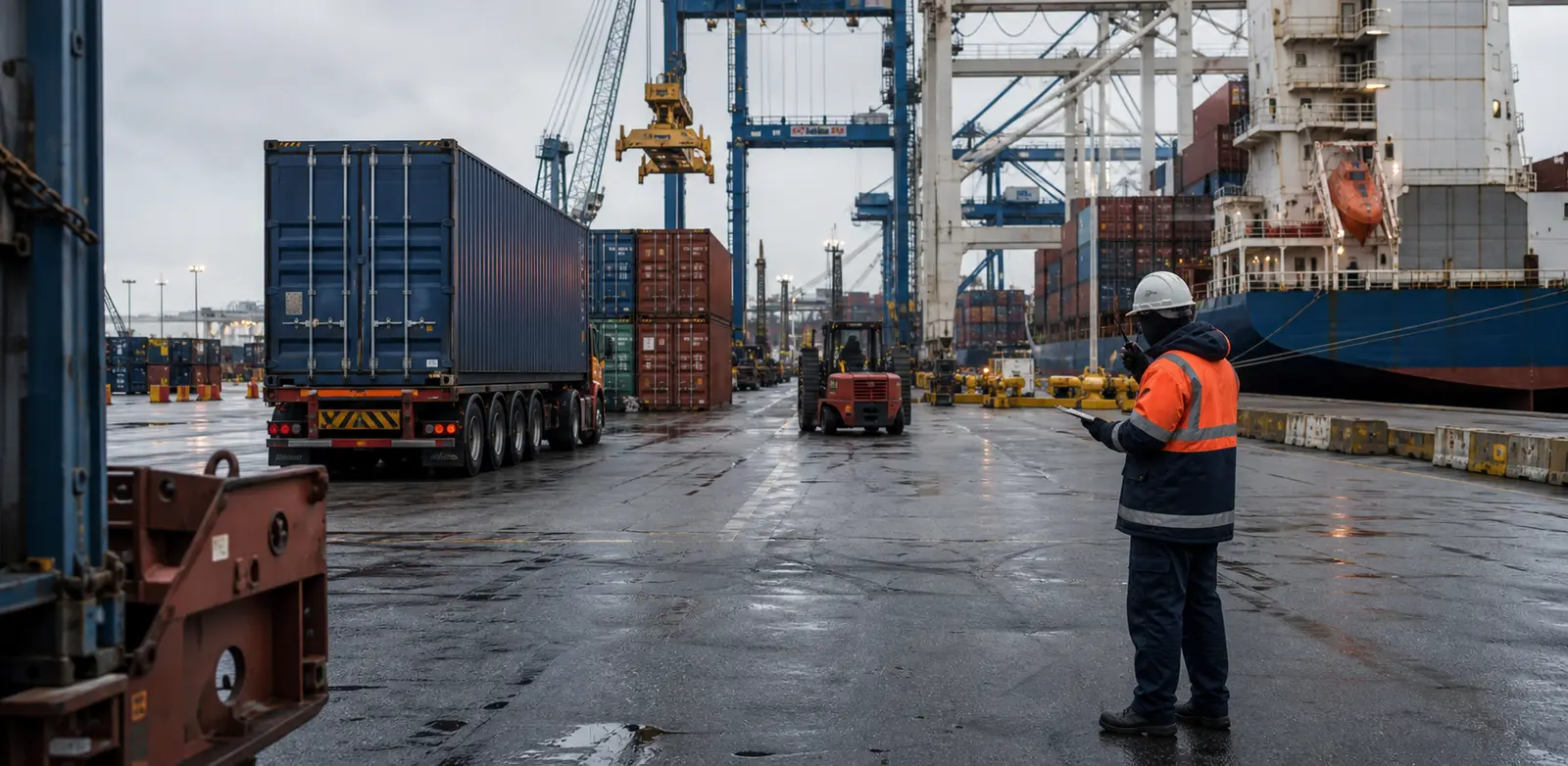
The trade lane itself is mature. India's main container ports — Nhava Sheva (JNPT) near Mumbai, Mundra, Chennai, and Kolkata — run direct services to both US coasts. JNPT alone handles over 5 million TEU each year. Our India to USA shipping corridor page covers the lane in full detail.
Step-by-Step Process to Import from India to the USA
- Research your product and classify it: Find the Harmonized System (HS) code for your product. Use the HS Code Lookup Tool to do this fast. The HS code sets your tariff rate. It also flags any anti-dumping duties and shows if you need special permits (FDA, USDA, EPA, etc.).
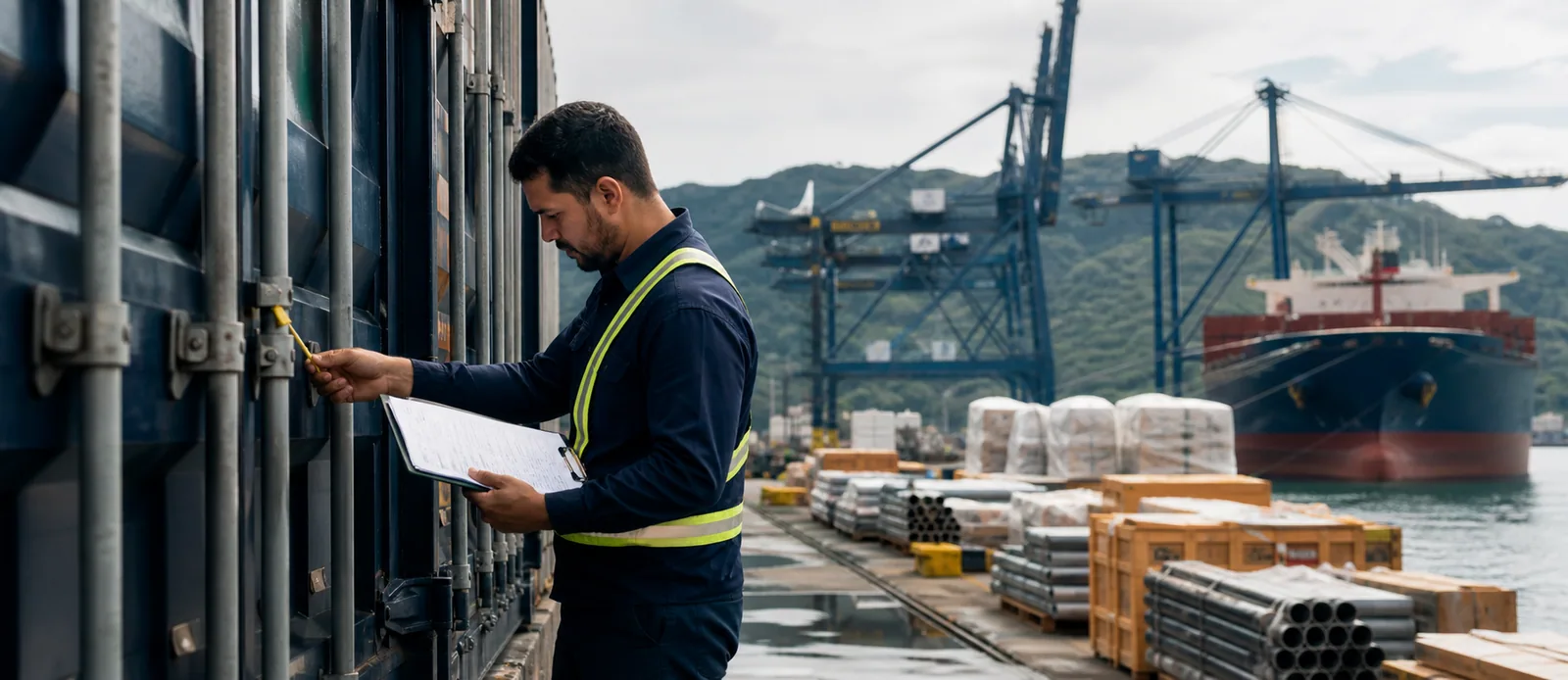
- Find and vet Indian suppliers: Use trade directories like IndiaMART, or work through the Federation of Indian Export Organisations (FIEO). Trade fairs help too. Always ask for samples. Confirm the supplier holds a valid IEC (Import Export Code). Run a factory audit, or hire a third-party inspector, before you place a big order.
- Negotiate Incoterms and payment terms: Pick the right Incoterm for your shipment. FOB from Nhava Sheva, Mundra, or Chennai is a common choice. The supplier gets goods to the port, and you book the ocean freight. DDP (Delivered Duty Paid) puts all logistics on the seller instead. If this is your first import, CIF keeps the cost setup simpler.
- Arrange international shipping: Choose between ocean freight (FCL or LCL) and air freight. Ocean freight from India to the USA runs $2,000–$3,500 for a 20ft box and $3,000–$5,500 for a 40ft box. Air freight runs $3.00–$5.00 per kg. A freight forwarder can run this whole chain for you.
- Prepare shipping documents: You'll need a Bill of Lading (ocean) or Air Waybill. Add a Commercial Invoice, Packing List, and a Certificate of Origin. Some goods need extra papers: FDA registration for pharma, Prior Notice for food, or textile documentation for apparel. See the full customs documents checklist.
- Clear U.S. Customs (CBP): File an ISF (Importer Security Filing) at least 24 hours before your cargo loads onto the ship. A licensed customs broker files the entry with CBP. They pay the duties and taxes and set up any needed checks. The customs clearance process takes 1–5 business days for most goods.
- Pay duties, taxes, and fees: Work out your landed cost. Start with the tariff rate for your HS code. Add the Merchandise Processing Fee (MPF) of 0.3464% (min $31.67, max $614.35). Add the Harbor Maintenance Fee (HMF) of 0.125% for ocean shipments. Then check for any extra duty programs on Indian goods. Use the Tariff Simulator to get a total fast.
- Receive and inspect your goods: Once customs clears the goods, set up last-mile delivery from the port to your warehouse. Check the goods against the invoice and packing list. If you find damage, file a claim with your cargo insurance provider fast, within the policy's report window (usually 3–5 business days).
Shipping Costs: India to USA in 2026
Shipping costs from India to the United States depend on the origin port, the US gateway, and your cargo. The mode you pick matters most: FCL, LCL, or air. Here are the benchmark ranges our partner network sees on this lane:
| Mode | Typical Rate | Best For |
|---|---|---|
| Ocean FCL — 20ft container | $2,000 – $3,500 | Full loads of textiles, chemicals, machinery |
| Ocean FCL — 40ft container | $3,000 – $5,500 | High-volume orders and bulk goods |
| Ocean LCL (per CBM) | $85 – $160 | Smaller commercial loads and trial shipments |
| Air freight (per kg) | $3.00 – $5.00 | Pharmaceuticals, IT hardware, urgent cargo |
Express air service runs $5.50–$8.00 per kg. Keep in mind these are base freight benchmarks. Your all-in landed cost adds duties, port fees, drayage, and insurance. Use the freight calculator to price a route in seconds. For per-CBM detail on ocean groupage, see the LCL shipping rates guide.
Transit Times: India to USA by Ocean and Air
Ocean freight from India to the USA takes 22–35 days, based on the port pair and routing. LCL takes longer, since cargo waits for consolidation at both ends. Air freight takes 4–7 days door-to-door.
One routing note matters here. Most sailings from India to the US East Coast pass through the Suez Canal. When the Red Sea gets disrupted, carriers reroute around the Cape of Good Hope, and transit stretches. Check the supply chain disruptions tracker before you promise a delivery date.
| Mode | Typical Transit | Notes |
|---|---|---|
| Ocean FCL | 22 – 35 days | JNPT and Mundra run the most frequent direct services |
| Ocean LCL | 32 – 45 days | Adds consolidation time at origin and destination CFS |
| Air freight | 4 – 7 days | Door-to-door from major Indian airports |
U.S. Import Duties and Tariffs on Indian Goods
India and the United States have no free trade agreement. So Indian goods pay MFN (Most Favored Nation) tariff rates under WTO schedules. Rates vary widely by product. Finished pharmaceuticals mostly enter duty-free, at 0%. Textiles and apparel pay some of the highest MFN rates, at about 10% to 32%.
The US once ran a GSP (Generalized System of Preferences) program. It gave duty-free treatment to about $5.6 billion worth of Indian goods each year. That benefit was suspended in June 2019, and it has not come back since. Products that once entered at 0% now pay full MFN rates.
One more warning. US trade policy toward India shifted several times through 2025 and 2026, and extra duty programs have applied to some Indian goods. The rules changed fast. So do not budget from an old screenshot or a blog post. Check the current rate for your exact HTS code, plus any additional duties, before you commit to a purchase order. A licensed broker can confirm both — our customs broker fees guide shows what that help costs.
- Finished pharmaceuticals: Mostly duty-free at 0% under MFN rates.
- Textiles and apparel: About 10–32% MFN, based on fabric type and construction.
- Gems and jewelry: Rates vary by item. Some pieces need GIA certificates and import permits.
- Other goods: MFN rates vary by HTS code. Anti-dumping and countervailing duties can apply to specific products.
- Always verify first: Tariff treatment of Indian goods changed several times in 2025–26. Run your HS code through the Tariff Simulator for a fast estimate, then confirm with a broker.
Required Documents for India-to-USA Imports
- Commercial Invoice: This must list seller and buyer details, a product description, HS code, quantity, unit price, total value, Incoterm, and currency. Indian exporters usually issue it in English already.
- Packing List: A full breakdown of each box — size, weight (gross and net), what's inside, and marks. Customs and cargo handlers both need this.
- Bill of Lading (B/L): The ocean carrier issues this as proof they hold your cargo and as the shipping contract. For LCL shipments, your freight forwarder issues a House B/L instead. See our Bill of Lading guide for more.
- Certificate of Origin: Confirms the goods are of Indian origin. Chambers of commerce in India issue it. Customs may ask for it, and some buyers require it.
- ISF (Importer Security Filing): Also called '10+2', you must file this with CBP at least 24 hours before your cargo loads at the Indian port. File late, and you risk a $5,000 penalty per shipment.
- Customs Bond: You need one for all commercial imports over $2,500. A single-entry bond covers just one shipment. A continuous bond (from $50,000 face value) covers unlimited entries for 12 months. Most regular importers pick the continuous bond.
- FDA paperwork for pharmaceuticals: Indian pharma shipments often need FDA drug registration and prior approval. Temperature-sensitive drugs also need GDP-compliant handling records.
- FDA Prior Notice for food: You need this for all food items before they land in the United States. It applies to rice, spices, tea, and other Indian food exports.
- Textile documentation: Apparel and home textiles may face quota rules or need textile paperwork tied to the fiber content and HTS class.
- GIA certificates and ISPM-15: Jewelry and gems may need GIA certificates and import permits. Wooden packaging must meet ISPM 15 treatment rules.
What Does the US Import from India? Top Products
So what does the US import from India? Pharmaceuticals and generic drugs lead the mix. Gems and jewelry, textiles and apparel, IT hardware and electronics, machinery, and chemicals follow close behind. In total, US goods imports from India reached $103.8 billion in 2025. The table below shows how each category usually moves, and what US rules to watch.
| Product Category | Typical Freight Mode | Key US Requirements |
|---|---|---|
| Pharmaceuticals & generics | Air, temperature-controlled | FDA drug registration, Prior Notice, GDP handling |
| Textiles & apparel | Ocean FCL or LCL | MFN duties of about 10–32%; textile paperwork |
| Gems & jewelry | Air, high-value handling | GIA certificates and import permits may apply |
| IT hardware & electronics | Air for launches, ocean for stock | FCC certification for radio-emitting devices |
| Machinery & auto parts | Ocean FCL | HTS classification drives the duty rate |
| Chemicals | Ocean FCL | EPA and TSCA rules for chemical imports |
| Agricultural products | Ocean, FDA-monitored | FDA Prior Notice; USDA rules for plant products |
The freight patterns above come from the India–USA corridor we serve through our partner network. For official dollar values by product category, check the U.S. Census Bureau and USTR sources listed at the end of this guide.
Choosing Between FCL and LCL for India Imports
Your choice between Full Container Load (FCL) and Less than Container Load (LCL) comes down to volume, budget, and timing. The rule of thumb: below 10 CBM, LCL wins clearly. Between 10–15 CBM, work out both options. Above 15 CBM, FCL is almost always cheaper and faster.
On the India → US lane, LCL runs $85–$160 per CBM, with 32–45 day transit. A 20ft container runs $2,000–$3,500. A good trigger point: switch to FCL when your LCL total reaches 60–70% of the 20ft container price.
LCL cargo from India gets grouped at an origin CFS (Container Freight Station) and ungrouped at the US end. That is where the extra transit days come from. See our India to USA LCL page for lane detail, or compare routes in the LCL shipping rates guide.
Regulatory Agencies and Compliance
Importing from India to the United States may need sign-off from more than one U.S. agency, beyond CBP (Customs and Border Protection). Which agencies you deal with depends on your product type:
- FDA (Food and Drug Administration): Oversees drugs, food, cosmetics, and medical devices. Indian pharma needs FDA drug registration and often prior approval. Food items need Prior Notice before arrival.
- USDA/APHIS: Oversees plant and animal goods. Indian agricultural products may need phytosanitary certificates. Wood packing must meet ISPM-15 treatment rules.
- EPA (Environmental Protection Agency): Oversees chemicals and pesticides. Indian chemical imports must meet EPA and TSCA rules.
- FCC (Federal Communications Commission): Oversees electronics that emit radio signals. Indian electronics need FCC certification.
- CPSC (Consumer Product Safety Commission): Sets safety rules for consumer goods. Indian apparel, home textiles, and kids' products must meet CPSC rules.
- CBP (Customs and Border Protection): Runs the entry itself — ISF, bond, duties, and any cargo exams at the US port.
Common Mistakes When Importing from India
- Budgeting with stale tariff data: Duty treatment of Indian goods moved several times through 2025–26. A rate you saw last quarter may be wrong today. Always check the current HTS rate, plus any extra duty programs, before you sign a purchase order.
- Underestimating total landed cost: Many buyers look only at the product price and ocean freight. They forget customs duties, MPF, HMF, drayage, warehouse fees, and broker fees. Work out the full landed cost first.
- Late ISF filing: File the Importer Security Filing after the 24-hour cutoff, and you risk a $5,000 penalty per shipment. Ask your freight forwarder to file the ISF as soon as your booking is set.
- Wrong HS code classification: The wrong HS code can make you overpay duties. Or you might underpay, which triggers CBP fines and audits. Use the HS Code Lookup Tool and ask a customs broker about tricky products.
- Skipping FDA steps for pharma and food: Indian drugs need FDA registration. Food items need Prior Notice. Skip either step, and CBP holds your cargo at the US port while storage fees stack up.
- Skipping cargo insurance: Damage, loss, and rolled containers still happen on long routings. Carrier liability caps out at about $500 per package. A full cargo insurance policy costs 0.3–0.8% of the cargo value and covers the full sale value instead.
- Assuming GSP duty-free still applies: Old sourcing guides still cite GSP rates for India. That program was suspended for Indian goods in June 2019. Budget with MFN rates, not the old duty-free ones.
Why Use a Freight Forwarder for India-USA Imports?
A freight forwarder acts as your logistics partner. They run the full chain, from the supplier's door in India to your warehouse in the United States. For a lane with this much paperwork — FDA, ISF, textile rules, gem certificates — that coordination pays for itself fast.
Suaid Global works the India–USA lane through vetted partner agents at JNPT, Chennai, Mundra, and Kolkata. So we can help no matter where your supplier sits. Our licensed customs broker partners file the CBP entry and handle FDA Prior Notice. Maybe you're shipping one LCL pallet of samples. Or maybe it's full container loads of machinery. Either way, we coordinate door-to-door service at clear, honest prices.
- Rate negotiation: Freight forwarders hold volume deals with ocean carriers. This gets you rates 15–30% lower than booking direct.
- Documentation management: Your forwarder writes or checks all shipping papers. This keeps you in line with both Indian export rules and U.S. import rules.
- Customs brokerage: Licensed broker partners file entries with CBP, work out duties, and set up any checks. This saves time and dodges costly slip-ups.
- Shipment visibility: We track your cargo through carrier and partner systems, from the Indian port to your door, and flag delays early.
- Insurance coordination: Your forwarder sets up cargo insurance. If damage happens, they help you file the claim.